For International Order Call On Whatsapp 203-332-7244 Need help? Call us: 203-332-7244 or info@emegatronic.com

Porsche Carrera GT Common Issues: What Actually Goes Wrong and What It Costs


Is the Carrera GT Actually Unreliable?
The reputation mostly traces back to the clutch, and the clutch deserves context rather than fear. The Porsche Ceramic Composite Clutch does not tolerate slipping the way a conventional clutch does, so owners who feather the pedal or ride it in traffic wear it out fast, sometimes within a couple thousand miles. Owners who learn smooth, decisive engagement routinely see the original clutch last well past ten thousand miles. The car is not fragile. It is specific about what it wants from the person driving it, and most of the horror stories trace back to a mismatch between technique and machine rather than a design flaw.
Understanding the M80/01 V10
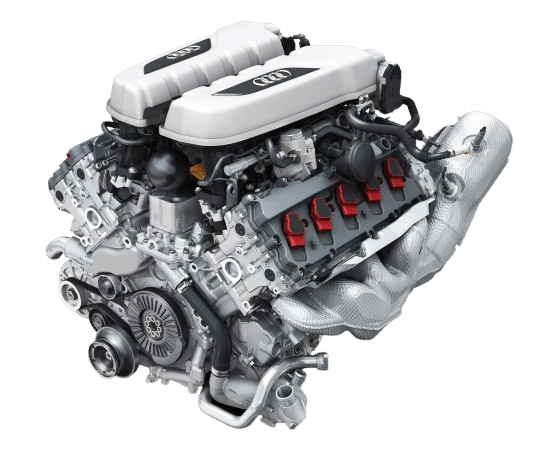
Porsche built the M80/01 around a dry sump lubrication system, a DOHC 40 valve layout, and titanium connecting rods inside a magnesium crankcase, all chosen to keep weight down and redline high. Displacing 5.7 liters and producing 603 horsepower at 8000 rpm, this engine shares its origin with a canceled Le Mans prototype program, which explains why it behaves differently from a standard 911 flat six once age and low mileage use enter the picture. Across the 2004, 2005, and 2006 production run, the core architecture stayed the same, so usage history tells you more about a given car’s risk than the year on the title.
Issue Severity and Repair Cost Overview
Issue | Severity | Typical Repair Cost |
Camshaft Pitting | Critical | $40,000 to $60,000 |
Ceramic Clutch (PCCC) Wear | High | $12,000 to $30,000 |
Ceramic Brake (PCCB) Replacement | High | $15,000 to $25,000 per axle |
Cooling System Failures | Medium to High | $3,000 to $12,000 |
Suspension Bushing Wear | Medium | $8,000 to $15,000 |
Fuel System Issues (Storage Related) | Medium | $2,000 to $8,000 |
Electrical and Electronics Faults | Medium | $500 to $5,000 and up |
Carbon Fiber Body Damage | Variable | $5,000 to $100,000 and up |
These figures reflect typical ranges that specialist shops report. Your exact cost depends on parts availability and the extent of wear our inspection finds.
Not sure what your Carrera GT actually needs?
What Causes Camshaft Pitting
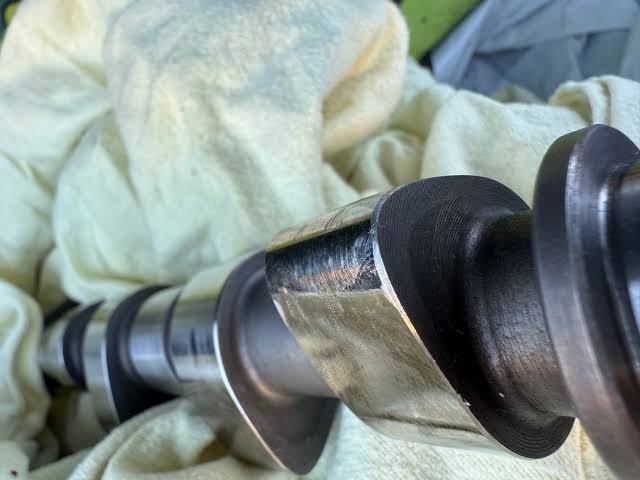
Pitting develops on the cam lobes when the oil film separating metal surfaces breaks down under repeated contact stress. Some of the original camshafts also carried metallurgical inconsistencies that made certain cars more prone to this wear regardless of how they were driven. Extended storage without running, aggressive driving before the oil reaches temperature, and short infrequent trips all accelerate the process on top of whatever baseline risk a given camshaft carries.
Camshaft Pitting
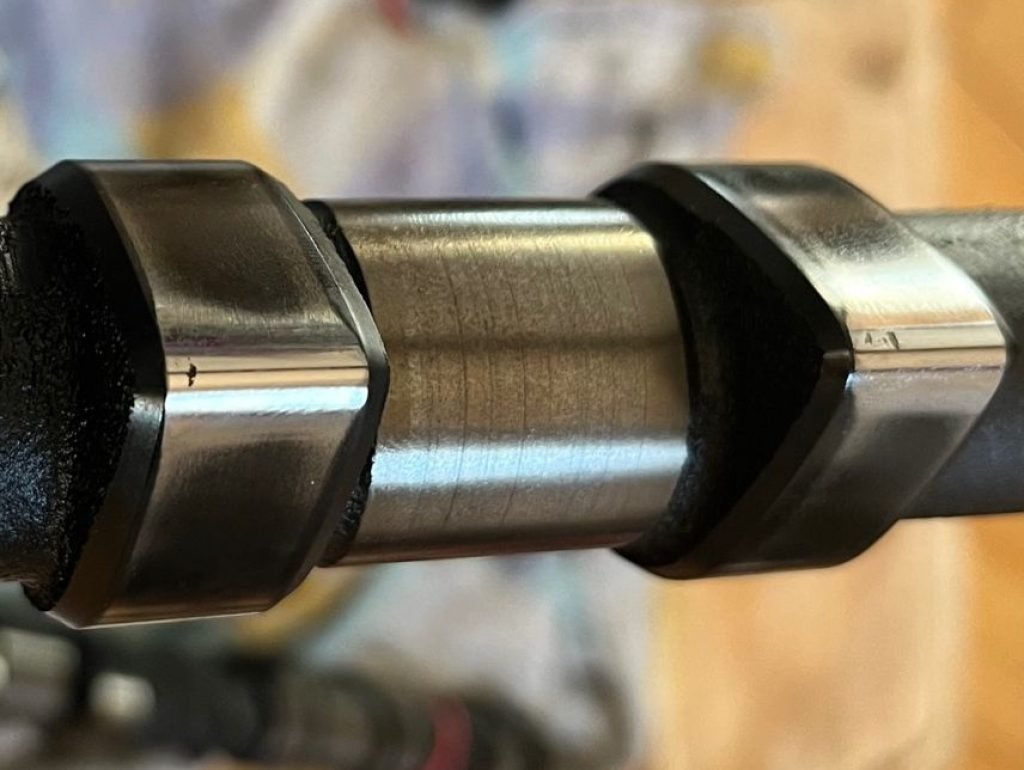
Camshaft pitting is the single most expensive thing that can go wrong on a Carrera GT, and understanding why it happens matters more than memorizing the symptom list.
Warning Signs
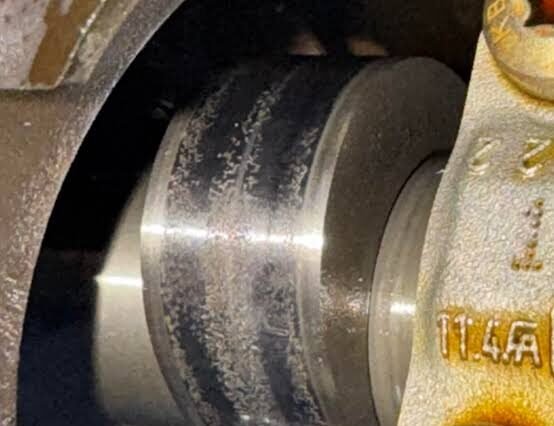
A rough or uneven idle is usually the first clue, often paired with a ticking or tapping sound from the valvetrain. Some owners notice a misfire code on the dash, a drop in responsiveness under acceleration, or metal debris showing up in the oil. A borescope inspection of the lobes gives a definitive answer well before the car starts showing these symptoms.
Repair Cost and Our View
Cam Follower Wear on Early Production Cars
Owners often confuse camshaft pitting and cam follower wear online, but they are distinct issues. Early build Carrera GTs left the factory with cam followers that wore faster than Porsche intended, and the company addressed this with updated components either from the factory or during subsequent service. A car with original, unaddressed followers carries elevated risk independent of camshaft lobe condition. Verifying follower status through borescope inspection is a standard part of any pre-purchase or annual check, and a car with documented updated followers is not at elevated risk from this particular issue.

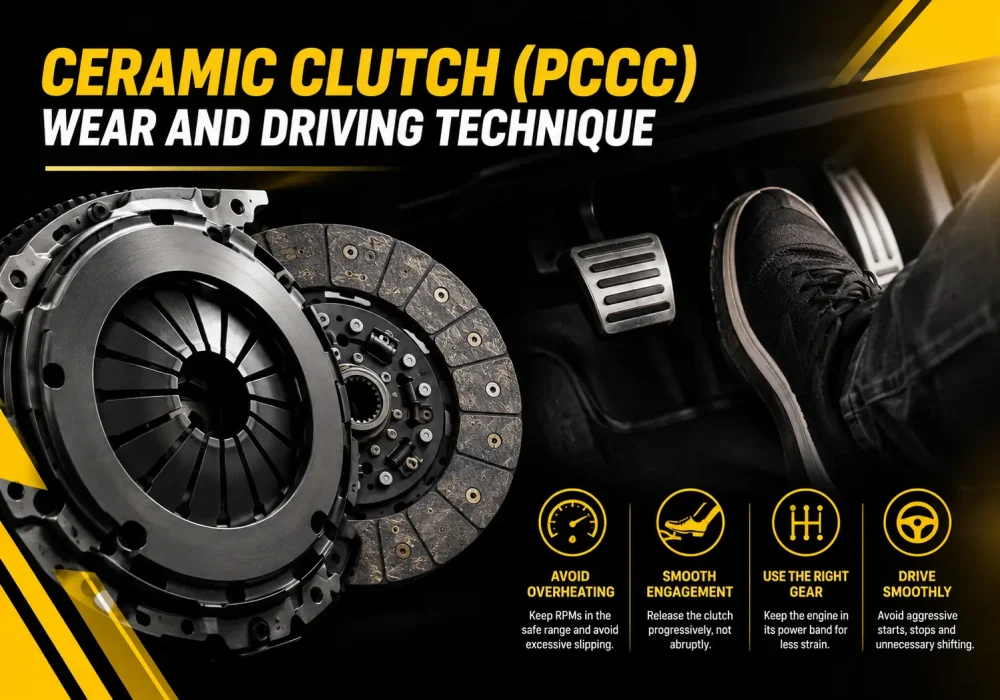
Ceramic Clutch (PCCC) Wear and Driving Technique
The Porsche Ceramic Composite Clutch behaves differently from a conventional friction clutch, and that difference is the root of most clutch complaints. It wants quick, smooth engagement and appropriate throttle rather than slipping or feathering, and drivers who learn that technique find the clutch entirely predictable. Watch for clutch slip under load, a noticeably higher engagement point, difficulty finding neutral, or a burning smell during hard driving.
Replacement requires engine removal and typically costs $30,000 to $50,000 including labor. The wide range in reported clutch lifespan, from a couple thousand miles to well over ten thousand, says more about driving habits than it does about the component’s inherent durability. We check wear percentage through diagnostic software at every annual service so owners see the trend before it becomes a failure.
Cooling System Failures
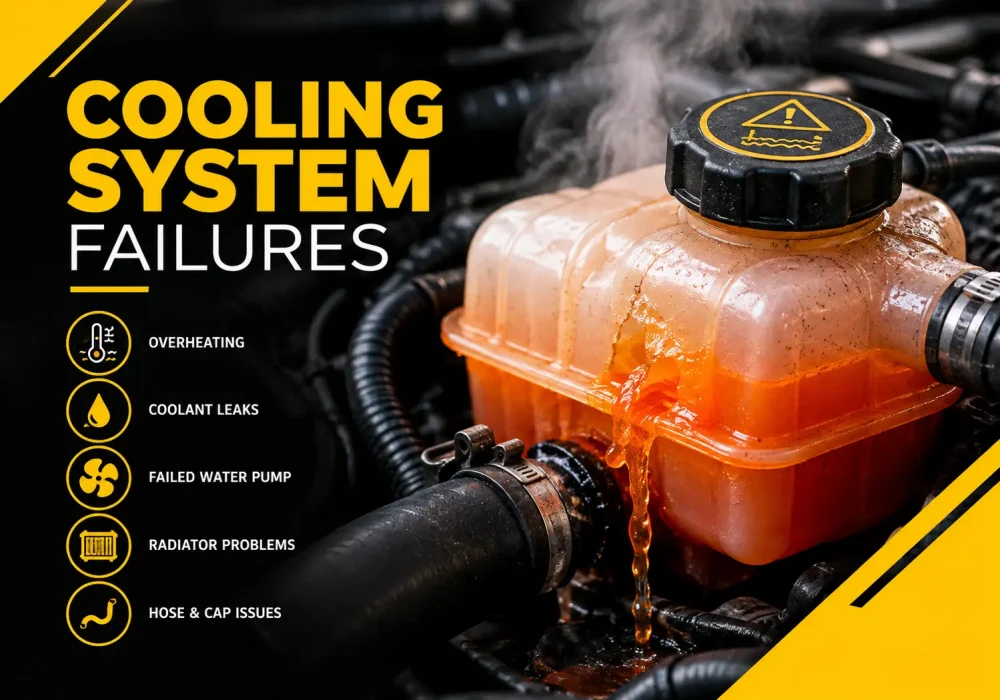
A V10 mounted directly behind the cabin puts constant demand on the cooling system, and this is one area where age catches up with every Carrera GT regardless of mileage. Watch for overheating in traffic or hot weather, a coolant warning light, low coolant level, a sweet smell from the engine bay, or white residue around hose connections.
Causes include age related hose degradation, cracking in the plastic expansion tank, auxiliary water pump failure, radiator fin damage, and thermostat failure. A comprehensive refresh covering hoses, the expansion tank, auxiliary pumps, and the thermostat typically costs $3,000 to $12,000. We recommend hose replacement on a ten year interval regardless of appearance, since the consequence of a cooling failure on this engine is more severe than on a commuter car.
Suspension Bushing Wear and the 2004 to 2005 Ball Joint Recall
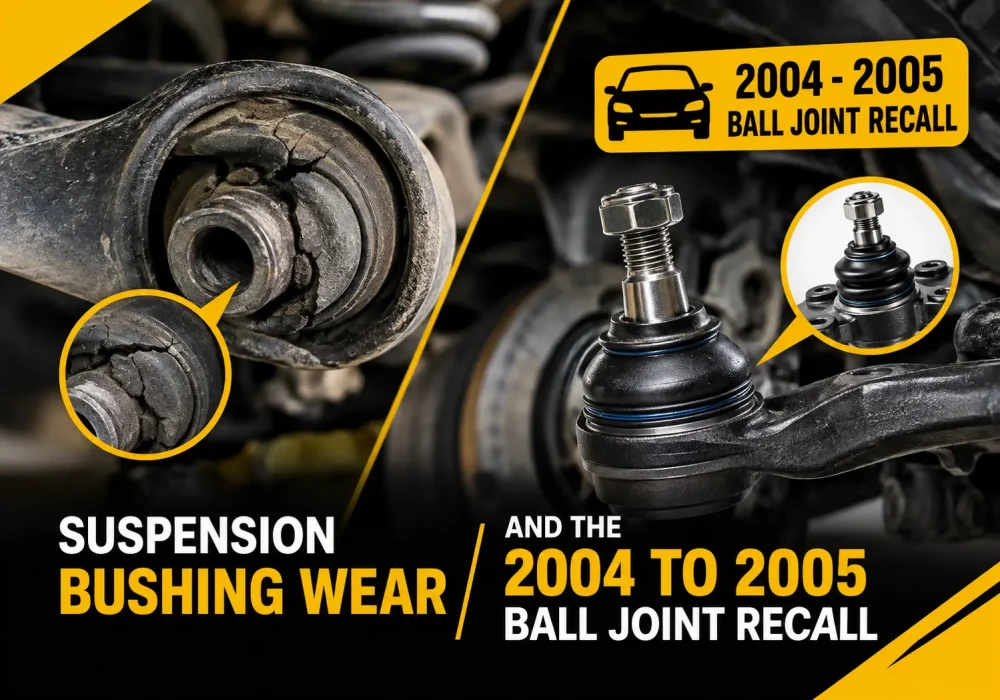
The Carrera GT’s pushrod suspension with double wishbone geometry is sophisticated and durable, but rubber and polyurethane bushings can age over time regardless of how many miles the car has accumulated. Watch for vague steering feel, clunks over bumps, uneven tire wear, wandering at highway speed, or creaking during slow maneuvers. A full bushing replacement with corner balance and alignment typically runs $8,000 to $15,000.
In addition to normal suspension wear, certain 2004 and 2005 Carrera GTs were affected by NHTSA recall 23V-241 involving the suspension spherical joints. The recall covered 489 potentially affected vehicles. If you are evaluating a Carrera GT from this production period, ask the seller for documentation confirming that the recall inspection or required repair was completed. This recall-related issue is separate from routine bushing wear and applies only to the affected vehicles.
Fuel System Issues From Storage
More than almost any other system on this car, fuel problems trace back to how the car is used rather than how it was built. Fuel degrades sitting in the tank and lines, injectors clog with residue from old gasoline, and a fuel pump that sits unused for months can lose the ability to maintain consistent pressure. Expect hard starting after a long sit, rough cold idle, a fuel smell in the garage, or hesitation during acceleration. Repairs covering injector cleaning or replacement, pump testing, and system inspection generally run $2,000 to $8,000. Regular operation, fresh fuel and appropriate storage procedures can reduce the risk of fuel-system problems associated with long-term storage.


Electrical and Electronics Faults
Twenty years of age catches up with wiring, connectors, and stored electronics the same way it does on any complex car, Porsche or otherwise. Expect occasional warning lights, intermittent feature failures, battery drain, or climate control quirks, sometimes compounded by rodent damage during storage or moisture intrusion. Diagnostic testing followed by connector cleaning, targeted wiring repair, or component replacement resolves most cases for $500 to $5,000 or more depending on what is found. A battery tender and climate controlled storage prevent a meaningful share of these faults before they start.
Ceramic Brake (PCCB) Aging
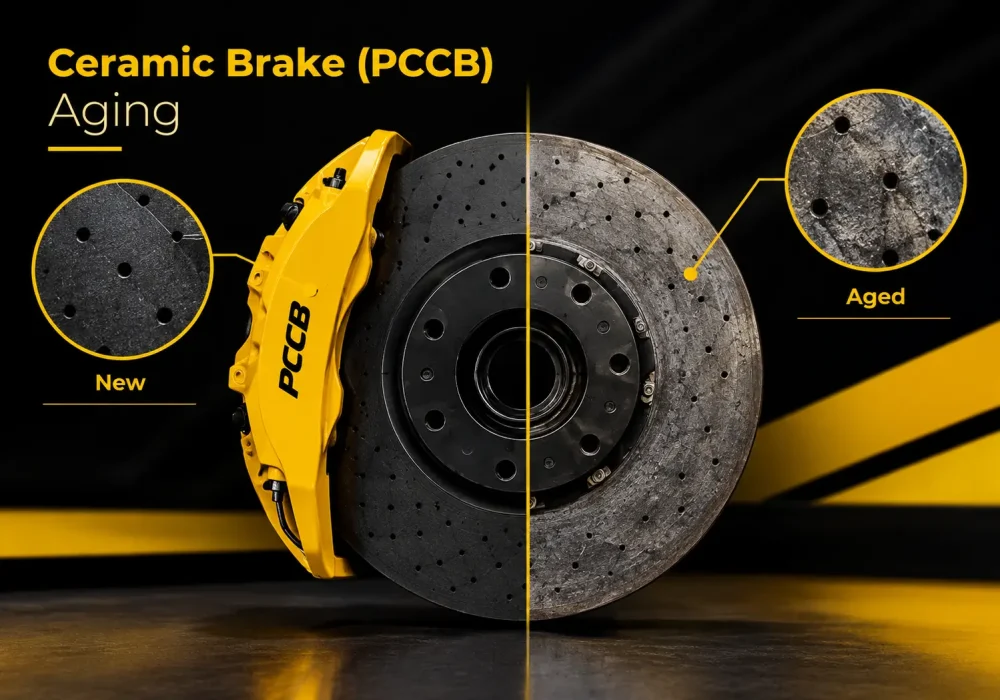
Every Carrera GT left the factory with Porsche Ceramic Composite Brakes, and how they age is more nuanced than a simple pass or fail inspection. In the first decade of normal use, PCCB rotors typically hold up well. Between roughly ten and fifteen years, surface cracking starts to appear, and this is where judgment matters most, since some surface cracking is cosmetic and some signals a structural issue that calls for replacement. After fifteen to twenty years, most rotors warrant a professional evaluation regardless of appearance. Replacement with factory rotors runs $15,000 to $25,000 per axle, which makes rotor condition a meaningful factor in any purchase negotiation.
Carbon Fiber Monocoque and Body Damage
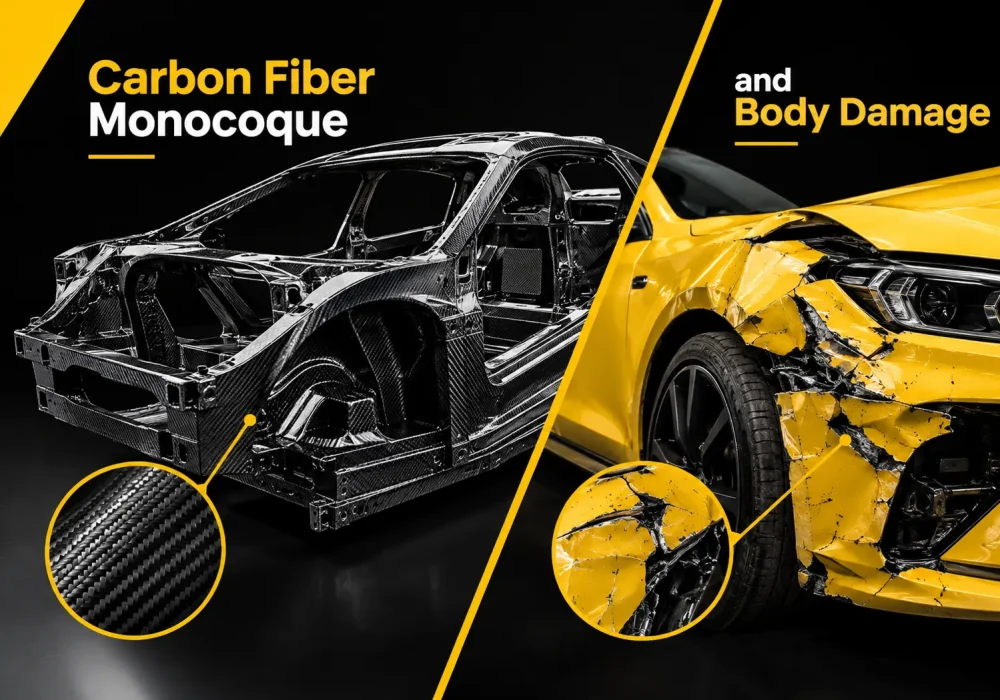
The Carrera GT’s carbon fiber monocoque is central to what makes the car light and stiff, and it is also what makes collision history matter more here than on a steel bodied car. Watch for visible cracks or chips, paint peeling or bubbling over carbon panels, changing panel gaps, creaking from the body structure, or signs of water intrusion. Cosmetic clear coat damage from UV exposure is repairable and relatively affordable. Structural monocoque damage requires a specialist with genuine carbon fiber repair experience, and depending on severity, cost ranges anywhere from $5,000 for minor panel work to well over $100,000 for structural repair. Any accident history on a Carrera GT deserves more scrutiny than it would on a conventional car, since improper prior repairs can be difficult to detect without specialist inspection.
What a Carrera GT Actually Costs to Own Each Year
Pre-Purchase Inspection Checklist
If you are shopping for a Carrera GT, work through this list before you commit.
- Pull fault codes from the engine control unit and review history before clearing anything
- Borescope the cam lobes and confirm whether updated cam followers are installed
- Check PCCC clutch engagement and request current wear percentage documentation
- Inspect PCCB rotors for cracking and have a specialist distinguish cosmetic from structural
- Review service records for oil change frequency relative to calendar time, not just mileage
- Ask the seller to confirm the 2004 to 2005 suspension ball joint recall, if applicable
- Inspect the carbon fiber monocoque and body panels for signs of prior accident repair
- Ask how long the car sat between drives under its current and prior ownership

How We Diagnose a Carrera GT Concern
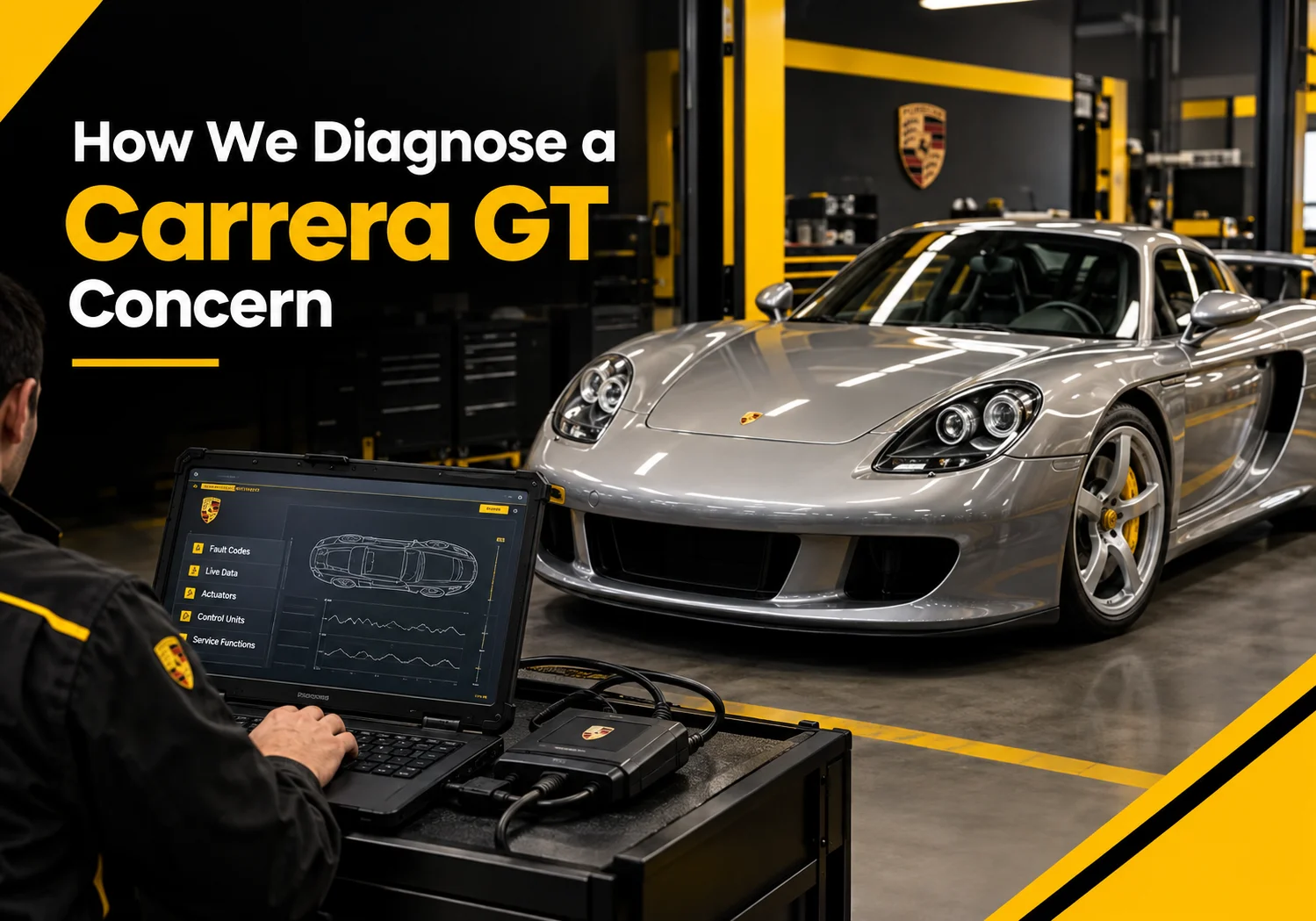
Our process starts with a full fault code pull from the engine control unit, followed by a borescope inspection of the cam lobes and followers. We evaluate PCCC engagement under load, pressure test the cooling system, inspect PCCB rotors and suspension bushings while the car is on the lift, and check the monocoque and body panels for any sign of prior repair. We document every finding with photos before recommending any work, so you see exactly what we see.
Our Take: What We Recommend for Carrera GT Owners
We see more damage caused by inconsistent driving habits and deferred inspection than by any flaw in Porsche’s original engineering. The V10 was built to run, and cars that sit idle in a climate controlled garage for most of the year tend to develop camshaft and fuel system problems sooner than cars driven on a regular rotation. Our recommendation is simple: treat scheduled inspection as part of ownership, not a reaction to a symptom, and learn the clutch before you worry about the engine.

Why Owners Trust Emegatronic With Their Carrera GT
Our technicians work directly with the M80/01 platform rather than treating it like a generic high performance engine, covering camshaft, clutch, cooling, suspension, brake, and body concerns under one documented process. We explain findings in plain terms before any work begins. If you are weighing a rebuild rather than a repair, our Porsche engine rebuild guide for Bridgeport, CT owners walks through that decision in more detail, and our repair shop directory can connect you with a trusted specialist near you.


 Trustindex verifies that the original source of the review is Google.
 Trustindex verifies that the original source of the review is Google.
 Trustindex verifies that the original source of the review is Google.
 Trustindex verifies that the original source of the review is Google.
 Trustindex verifies that the original source of the review is Google.
 Trustindex verifies that the original source of the review is Google.
 Trustindex verifies that the original source of the review is Google.
 Trustindex verifies that the original source of the review is Google.
 Trustindex verifies that the original source of the review is Google.
Own a Carrera GT? Let's keep it that way
Meet Our Team Behind the Work

Elio Mitri

Jorge Monteiro

James Moran

Micheal Keklik
Porsche Carrera GT Issues FAQ
Camshaft pitting is the most serious issue in terms of cost, while clutch wear tied to driving technique is the most frequently discussed. Both are manageable with proper inspection and habits.
With proper maintenance from a specialist who knows the platform, yes. Most of the car's reputation for trouble traces back to clutch misuse, deferred inspection, or extended storage rather than a design flaw in the V10 itself.
Full camshaft replacement requires pulling the engine and typically runs $40,000 to $60,000, depending on parts availability and the extent of wear found.
Camshaft pitting affects the lobe surface itself and can appear on any car over time. Cam follower wear was a specific early production issue that Porsche addressed with updated components, and it mainly affects cars that never received the update.
Learn quick, smooth engagement with appropriate throttle, and avoid slipping or riding the pedal in traffic. Technique affects clutch life more than mileage does.
Pull engine control unit fault codes, borescope the cam lobes and followers, check PCCC wear percentage, inspect PCCB rotors, ask the seller to confirm the suspension recall if applicable, and review the monocoque for accident history.
Budget $10,000 to $20,000 annually for insurance, storage, and specialist service, separate from any major repair like a clutch or camshaft replacement.
Emegatronic diagnoses and addresses Carrera GT specific concerns across the camshaft, clutch, cooling, suspension, brake, and body systems, using a process built around this platform's documented failure points.