
Air-Cooled Resurrection Porsche 911 Turbo Engine Rebuild For Sale
Call For Estimate
Why Choose the Emegatronic Rebuild?
A world-class engine must look as good as it performs. Every Emegatronic build includes a complete aesthetic restoration: Whether you are looking for a concours-level restoration or a high-performance From 2.0L to 3.8L or 4.0L “RS-spec” street-beast, we provide the documentation, the precision, and the passion your Porsche deserves.

(203) 332 7244 Call Us
Description
Your 930, 964 or 993 Turbo carries one of the most respected forced-induction flat-six architectures Porsche ever built. But a turbocharged boxer engine ages differently than a naturally aspirated one. Boost multiplies cylinder pressure, heat soak accelerates bearing wear, and decades of use expose tolerances that were tight the day the engine left Zuffenhausen. Emegatronic rebuilds these engines to factory-plus tolerances, using OEM-spec and performance-grade components, without erasing the analog character that makes an air-cooled 911 Turbo worth owning.
Signs Your Air-Cooled 911 Turbo Engine Needs Attention
A turbocharged flat-six telegraphs its wear differently than a naturally aspirated 911. Because boost amplifies whatever weakness already exists in the bottom end, small issues surface faster and compound quicker.
- Rising oil consumption between changes, often paired with a haze at cold start
- Exhaust smoke under boost, a sign of worn piston rings, valve guides, or turbo seals
- Sluggish spool or inconsistent boost delivery from the KKK or aftermarket turbocharger
- Cylinder-to-cylinder compression variance beyond factory spec
- Bottom-end knock, rod bearing chatter, or main bearing noise under load
- Persistent oil seepage at the case half seam or around the head studs
- 90,000 to 120,000 miles logged since the last major service or rebuild
- Erratic oil pressure readings, especially at idle after a hot shutdown
Where a Top-End Job Ends and a Full Rebuild Begins
A top-end refresh handles the cylinder heads, pistons, rings, and valvetrain, the components most exposed to combustion heat and boost pressure. It does not touch the crankcase, crankshaft, or oil delivery system. A full rebuild opens the entire engine, including the case halves, crankshaft, main and rod bearings, oiling system, and the turbocharger and boost control hardware as one integrated system. Most turbocharged flat-six engines showing bottom-end symptoms need the full scope, since a turbo engine’s oil system, boost path, and internals are interdependent in a way naturally aspirated engines are not.
Inside an Emegatronic 911 Turbo Rebuild
Every core, whether it is a numbers-matching 930 SE or a track-focused 993 Turbo S, moves through the same sequence in our Bridgeport shop.
Teardown, Cleaning, and Failure Analysis
We disassemble the long block completely and send components through hot-tank cleaning and vapor blasting to strip years of carbon deposit and oil sludge. From there we run a dimensional inspection, checking cylinder bores, crank journals, and case bores against factory tolerance charts before any machining decision gets made. This step tells us whether we are looking at normal wear or a developing failure pattern.
Crankcase and Rotating Assembly Machining
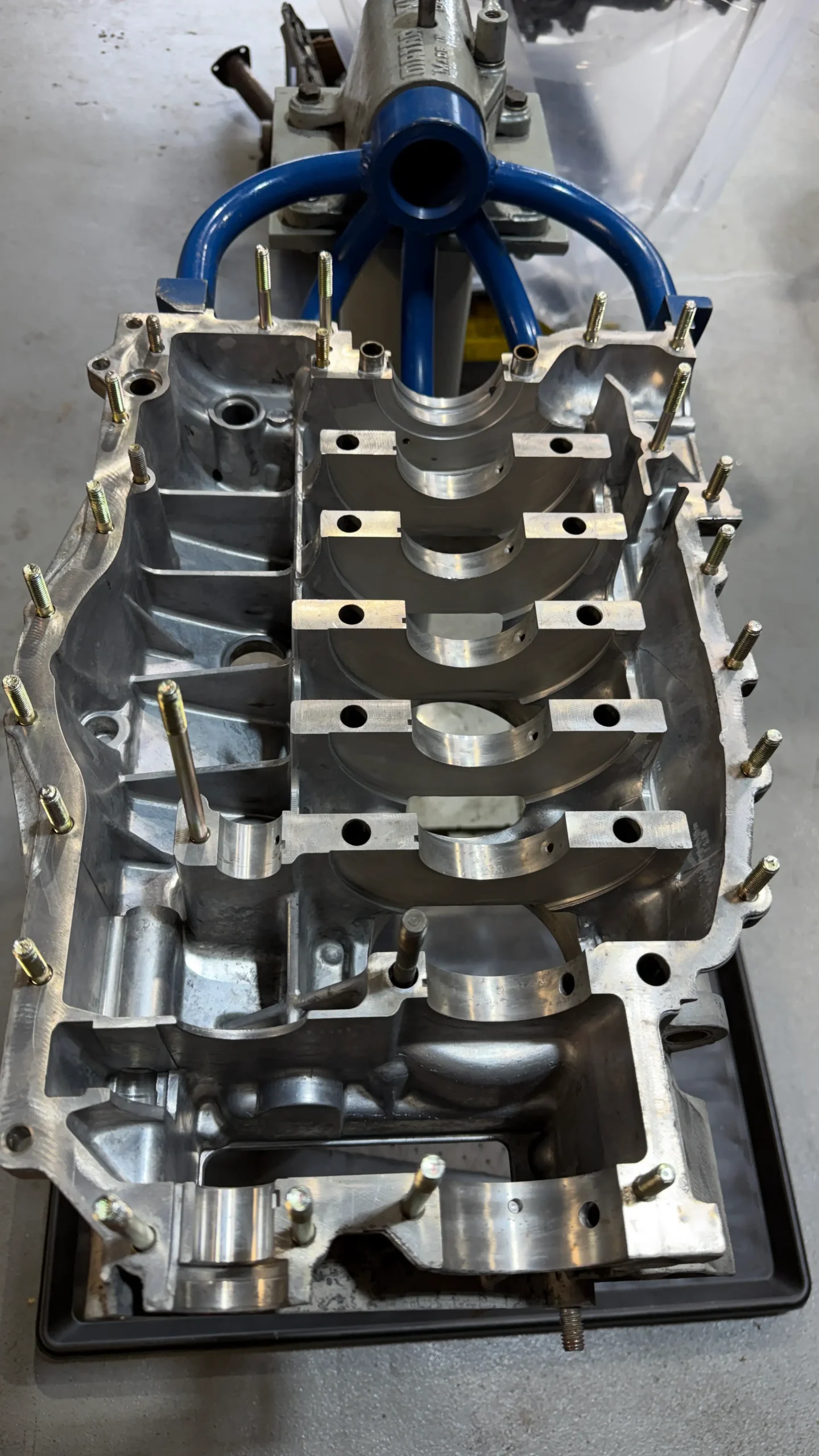
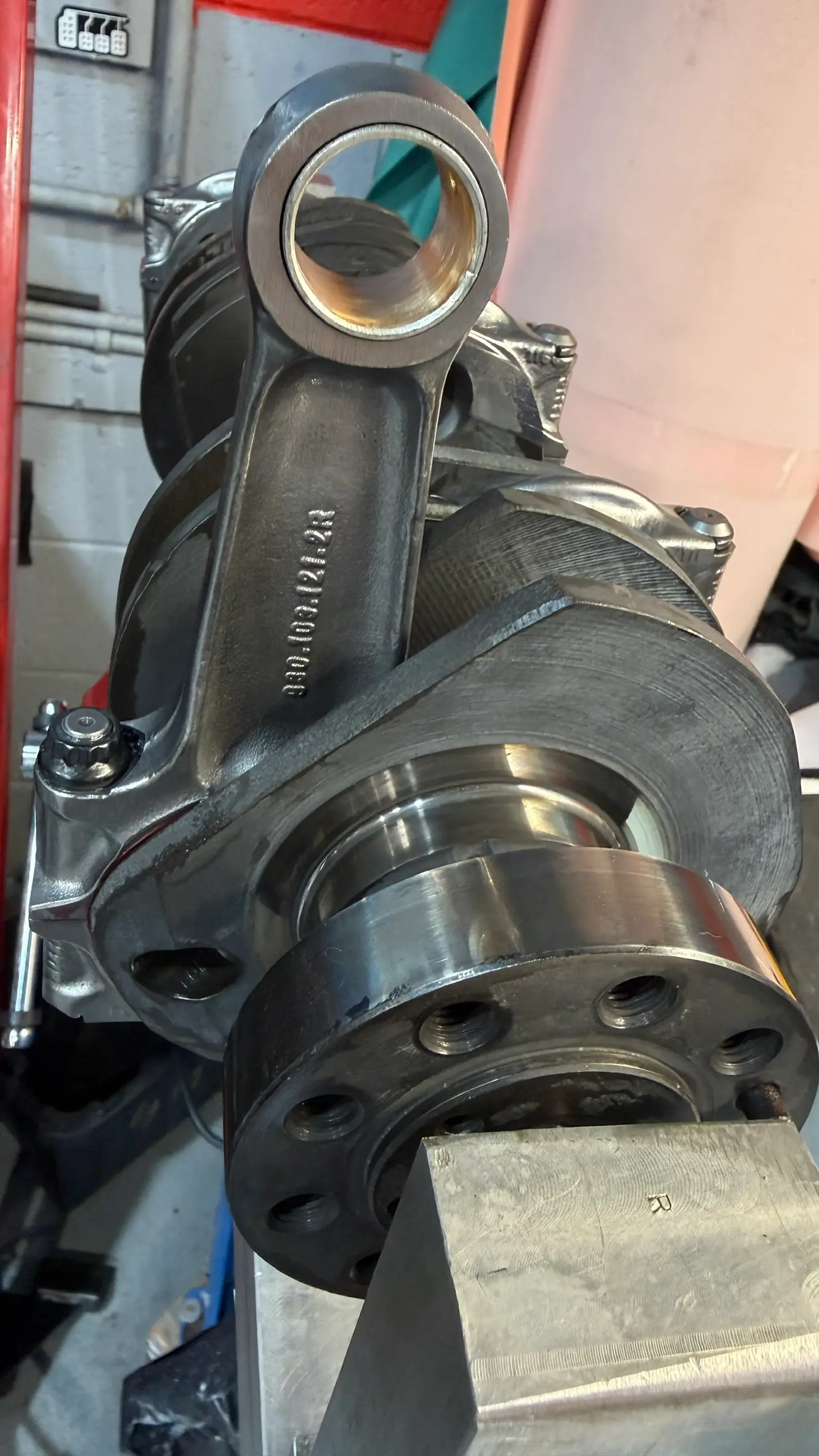
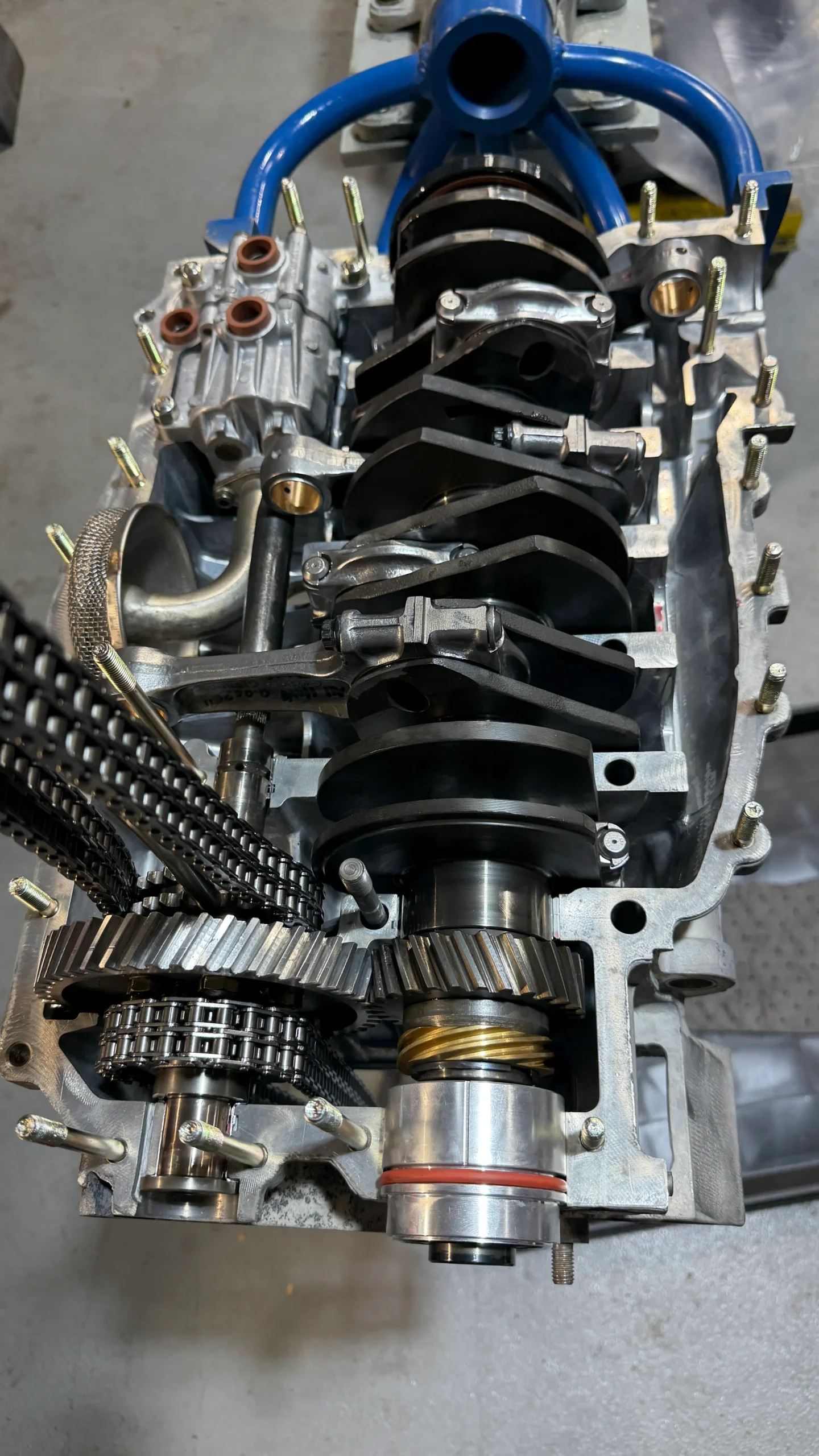
The crankshaft goes through magnaflux crack detection, gets polished on the journals, and is dynamically balanced with the rotating assembly as a matched set. We check the magnesium or aluminum case halves for line-bore alignment, align-hone where the bearing saddles have walked out of round, and flow the oil galleries to protect lubrication under sustained boost.
Cylinder Head and Valvetrain Rebuild
- Phosphor bronze valve guide inserts replace the factory guides, improving heat transfer away from the valve stem and cutting friction
- A three-angle valve job reshapes the seats for better flow in the low-to-mid lift range where a turbo engine actually lives in daily driving
- Head decks get precision-milled flat, eliminating the sealing surface irregularities that cause the classic weeping-case symptom
- New valve springs and retainers go in as standard, with titanium retainers available for engines built to hold higher RPM
- Factory head studs come out in favor of high-strength or performance-grade studs, addressing the stretch and leak pattern common on higher-mileage turbo engines
Turbocharger and Boost System Rebuild
The forced-induction hardware is what separates a 911 Turbo rebuild from any naturally aspirated Carrera build, and it is the section most independent shops skip or shortcut.
- Turbocharger core inspected for shaft play, compressor wheel damage, and bearing wear, then rebuilt or replaced based on findings
- Wastegate actuator tested and boost control solenoids or vacuum lines checked against factory calibration
- Oil feed and drain lines to the turbo center housing inspected for coking and replaced where flow is restricted
- Intercooler core and charge piping pressure-tested for leaks and checked for internal oil fouling
- Post-rebuild boost curve verified across the RPM band to confirm spool characteristics match specification
Fuel Delivery and Ignition Calibration
CIS or CIS-Motronic fuel metering, the fuel distributor, and ignition timing all get checked and calibrated as part of the same build, not bolted on afterward. Air-fuel behavior under boost gets particular attention, since a lean condition under load is one of the fastest ways to damage a freshly rebuilt turbo engine.
Bearings, Seals, and Drivetrain Hardware
We install new main and rod bearings, timing chains, chain guide rails, and tensioners as standard on every rebuild. A full gasket and seal package, including upgraded Viton seals at the case and oil return points, replaces the factory rubber that hardens and shrinks with age.
Oil System and Lubrication Circuit
Boost load demands more from an oiling system than natural aspiration does. We inspect and rebuild or replace the oil pump when clearances fall outside spec, pressure-test the oil cooler and lines for cracking, and confirm oil pressure holds steady across the full RPM range before the engine goes back in the car.
Cosmetic and Concours-Level Finishing
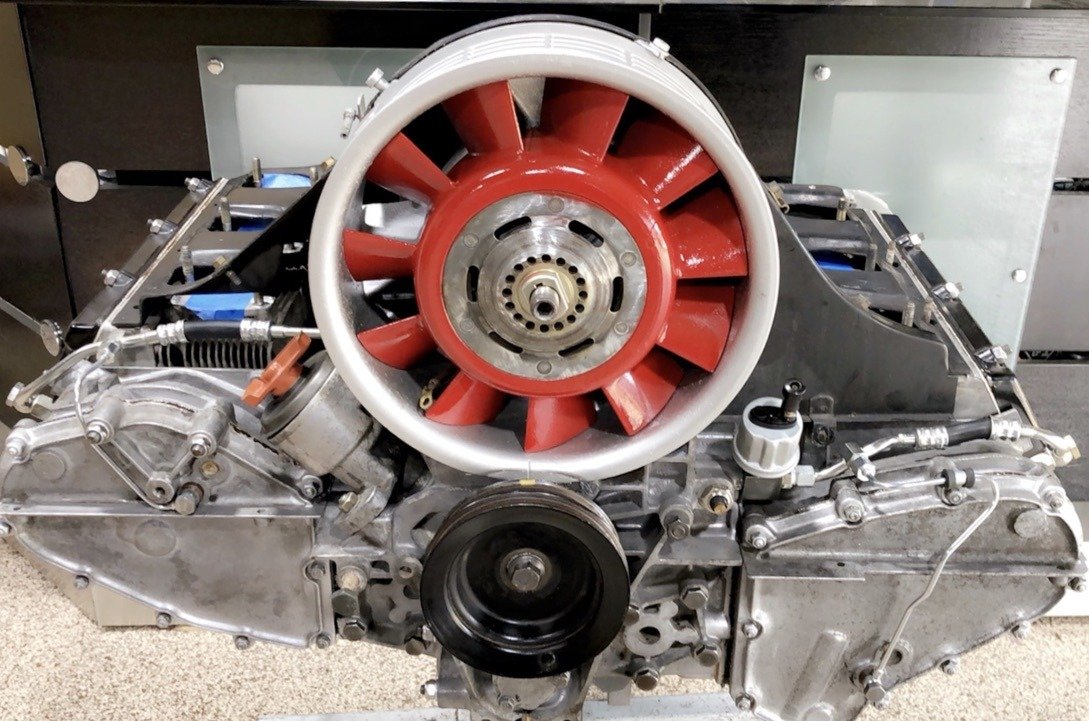
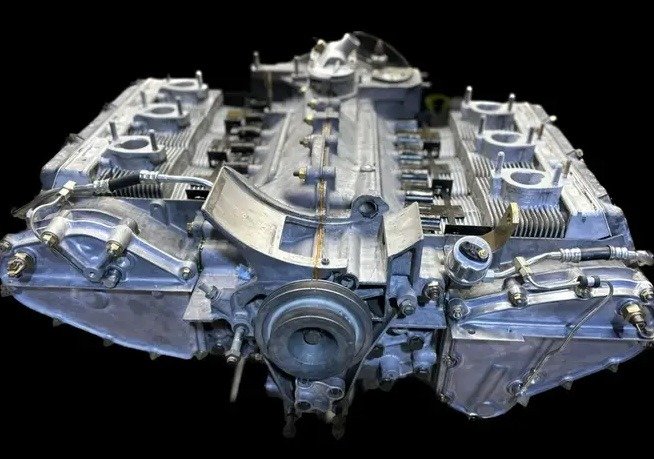
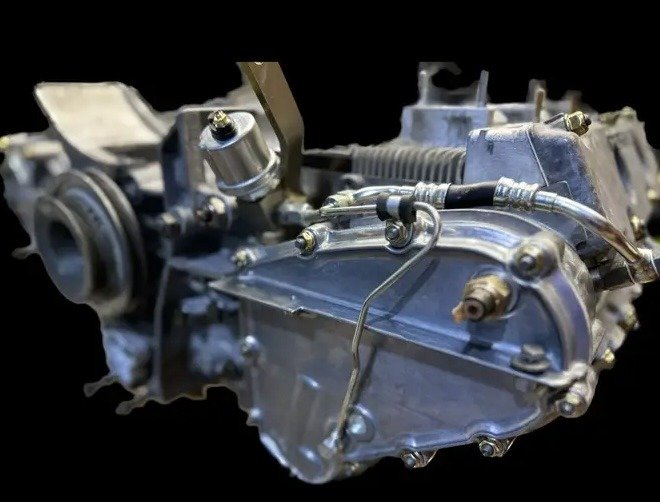
For collectors and concours builds, we offer powder-coated fan and valve covers, re-plated fasteners and hardware, chromated fan housings, and vapor-blasted aluminum castings for a finish that matches the mechanical work underneath.
Dyno Verification and Break-In Protocol
Every rebuild goes through cylinder-by-cylinder leak-down and compression testing before final sign-off. We run the engine cold and hot on a test stand to confirm oil pressure, chain tension, and coolant and oil temperatures under simulated load, then verify boost response and wastegate behavior against target curves. Dyno time is available on request for performance and custom builds. Every customer leaves with a written break-in protocol to protect new rings, bearings, and cam lobes through the critical first heat cycles.
Packages, Warranty, and Logistics
| Package | What’s Included | Fits |
|---|---|---|
| Standard | Full teardown, case and crank machining, new bearings, seals, and gaskets, factory-spec valve job, turbo inspected and serviced | Daily drivers and owners prioritizing reliability |
| Performance | Everything in Standard plus phosphor bronze guides, performance head studs, three-angle valve job, upgraded valvetrain, turbo rebuilt or upgraded | Spirited road use and occasional track days |
| Concours / Custom | Everything in Performance plus forged pistons, displacement or turbo upgrade options, full cosmetic restoration | Collectors, restorations, and numbers-matching builds |
Final pricing depends on your engine core’s condition, parts selection, and any custom scope, confirmed after we inspect the block.
Warranty Terms
Every Emegatronic rebuild carries a 12-month or 12,000-mile warranty, whichever comes first, covering workmanship and the internal components we install: crankcase, crankshaft, cylinder heads, valvetrain, bearings, turbocharger work, and sealing. The warranty excludes damage from skipped break-in procedures, neglected oil or coolant service, over-boosting beyond specification, or failures in ancillary systems outside the rebuild scope. Coverage stays active as long as you follow the provided break-in protocol and complete the first scheduled oil service on time.
Core Shipping and Logistics
We provide crating instructions or arrange freight pickup for your engine core. Every core gets inspected on arrival, with any additional damage found beyond the original scope quoted separately before work begins. Finished engines ship crated and insured. Local drop-off is available at our Bridgeport, CT facility, and we regularly handle logistics for customers across Fairfield County and shipping clients worldwide.
Model Coverage
We rebuild the complete air-cooled 911 Turbo range: the 930 (1975 to 1989), 964 Turbo (1990 to 1994), and 993 Turbo (1995 to 1998), across manual and Tiptronic transmission variants alike.
Frequently Asked Questions
Should I rebuild my numbers-matching engine or source a replacement core?
If your case, crank, and heads carry matching numbers tied to the VIN, we push hard to save them, since that traceability affects collector value far more than the cost difference between rebuilding and swapping in a fresh core. For a driver-focused Turbo with no matching-numbers history, sourcing a healthy replacement core can sometimes get you back on the road faster.
What actually drives the final invoice up or down once you open the engine?
Two things move the number most: how much of the original case, crank, and heads survive machining without needing replacement, and how far you go on parts, from stock-spec internals to forged pistons or a displacement bump. We hold off on a firm number until the block is on the bench and we can see actual wear.
Do you find problems that weren’t visible before the engine came apart?
Regularly. Case porosity, hairline cracks near the head stud bosses, and turbo center-housing wear rarely show up until we bore-scope or magnaflux the parts. When that happens, we stop, call you with photos and a revised quote, and wait for your go-ahead before machining anything further.
Will I get documentation of what was actually done to my engine?
Yes. Every rebuild leaves with a build sheet listing measured tolerances, parts installed by part number, torque specs used, and leak-down and boost test results. That paperwork matters for resale, insurance valuation, and matching-numbers verification down the road.
Does a 930’s rebuild differ from a 993 Turbo’s, or is it the same job?
Related but not identical. The 930’s turbo, fuel metering, and case design predate the 993 Turbo’s twin-turbo, Varioram-adjacent hardware, so guide material, stud spec, and boost calibration all shift by generation. We scope each build against the specific engine code, not a one-size template.
What happens if my core turns out to be beyond economical repair?
On rare high-mileage or previously neglected cores, case damage or crank wear can push machining cost past what a rebuild is worth. When we see that early, we tell you before spending your money on further teardown, and we can usually source a comparable replacement core if you want to proceed a different way.
Can you convert my engine to a different displacement or turbo spec while it’s apart?
Yes, within the Concours and Custom package. Since the case is already open for machining, that’s the point in the process where a displacement increase or turbo upgrade adds the least redundant labor cost compared to doing it as a standalone project later.
How do I know my rebuilt engine won’t detonate or run lean under boost once it’s back in the car?
We verify the air-fuel curve and ignition timing under simulated boost on the stand before the engine ships, and we offer dyno confirmation for anyone who wants logged data rather than a sign-off on faith. A rushed break-in is the most common cause of early failure on a freshly rebuilt turbo engine, which is why we send a written protocol home with every build.
Additional information
| Weight | 400 lbs |
|---|





Reviews
There are no reviews yet.