Reflashing The ECU of a Porsche Carrera GT (980)
$7,000.00
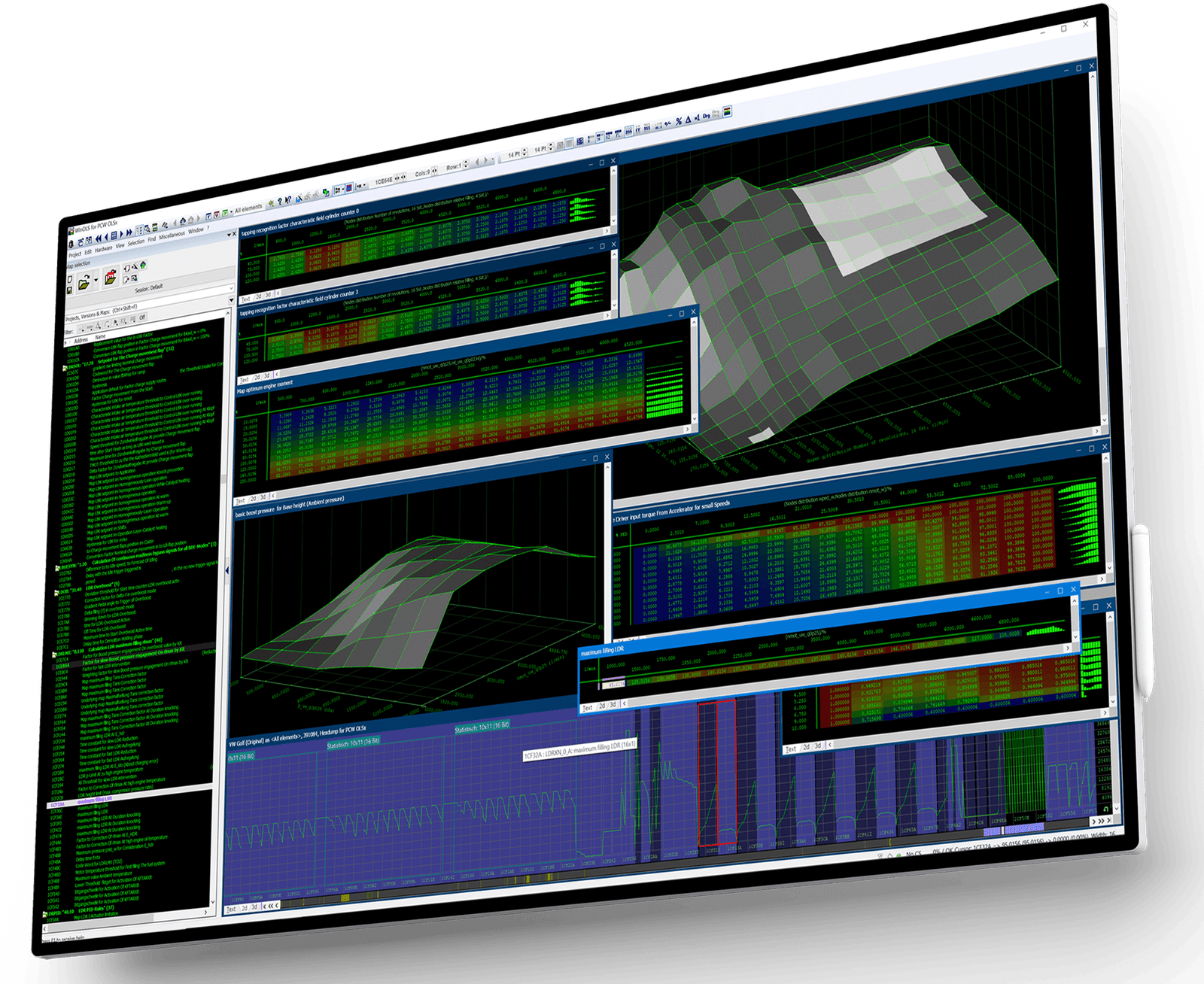
Reflashing the ECU of a Porsche Carrera GT (980) is a specialized process that refines the 5.7L V10’s factory settings. While the Carrera GT is already a pinnacle of analog engineering, a modern reflash focuses on “waking up” the engine by smoothing out the torque curve and sharpening its legendary throttle response.

(203) 332 7244 Call Us
Description
The 980-generation Carrera GT already represents a pinnacle of analog engineering, so a Porsche Carrera GT tuning session isn’t about chasing raw power the way a turbocharged reflash would be. The 5.7L V10 is naturally aspirated, and the work here is refinement: smoother torque delivery, sharper throttle response, and a rev limiter that lets the engine hold its power band a little longer.
This page covers what a Carrera GT V10 reflash changes, how the flash process works on the car’s dual Bosch ME7.1.1 ECUs, what results owners typically see, and what to consider before booking a session at our Bridgeport, CT facility.
Carrera GT Stage 1 Reflash: Horsepower and Torque Gains
A Stage 1 Carrera GT reflash adjusts the ignition timing map and the fuel-to-air ratio tuning tables. Because the platform is naturally aspirated, gains come from refinement of existing maps rather than added boost, so the numbers are modest compared to what a turbocharged Porsche 980 performance tune could show.
| Metric | Stock | Reflashed (Avg.) | Gain |
| Horsepower | 612 hp | ~635–640 hp | +23 to 28 hp |
| Torque | 590 Nm | ~615–630 Nm | +25 to 40 Nm |
| Rev Limit | 8,400 RPM | 8,600 RPM | +200 RPM |
These figures are typical averages, not a guarantee for every car. Actual results vary with fuel quality, ambient temperature, and the individual car’s baseline condition — we can walk through dyno results from prior sessions on request.
Key Changes: Throttle Response, Torque Curve, and Rev Limiter
Throttle Response Upgrade
The Carrera GT’s drive-by-wire throttle carries a small amount of factory-programmed dampening, added originally to make the car easier to drive smoothly in city traffic. A reflash removes this buffer, so pedal input reaches the throttle body without delay. On a car with this light a flywheel, that change is noticeable within the first few meters of driving.
Mid-Range Torque Curve Smoothing
The factory fuel and ignition maps carry a slight dip in torque between 3,000 and 4,000 RPM, added to meet global emissions and fuel-quality standards across different markets. Retuning these maps closes that dip, giving a more linear pull from the lower mid-range through to redline instead of a flat spot mid-pull.
Rev Limiter Adjustment
Raising the rev limiter from 8,400 RPM to 8,600 RPM is a small change on paper, but it extends the usable power band in every gear — useful during track sessions or sustained high-speed runs where holding a gear longer matters more than outright peak numbers.
Drivability and Efficiency
- Clutch engagement: Refining low-RPM fuel delivery makes the PCCC ceramic clutch, known for being grabby at low speed, noticeably easier to modulate in stop-and-go traffic.
- Fuel economy: Under light load or steady cruising, an optimized Lambda fuel map can produce a small efficiency gain — not the primary reason most owners tune the car, but a real side effect of correctly calibrated air-fuel ratios.
Bosch ME7.1.1 ECU Flash Process, Step by Step
The Carrera GT uses dual Bosch ME7.1.1 ECUs, one per bank, running in a master-slave configuration. Both units are reprogrammed through the OBD-II port — no ECU removal or bench flashing is required, and the housings stay sealed.
A typical session covers:
- Baseline read — the stock file is pulled from both ECUs and archived before any changes are made.
- Map calibration — ignition timing, fuel-to-air ratio, Lambda targets, and intake flap control timing are adjusted together, since these maps interact with each other rather than working in isolation.
- Vmax limiter removal — the factory top speed limiter is lifted. In practice, the car’s physical gearing remains the limiting factor at roughly 205 mph, so this step is more about removing an artificial ceiling than unlocking real-world top speed.
- Write and verify — both ECUs are flashed and checked for successful write completion before the car leaves the bay.
- Road/dyno confirmation — a short pull confirms the new maps are behaving as calibrated.
A session typically runs a few hours from baseline read to final verification, not counting any additional diagnostic work if the car hasn’t been serviced recently.
Why Ignition Timing, Fuel, and Intake Flap Maps Are Tuned Together
These maps aren’t adjusted in isolation, because each one changes how the others should behave. Advancing ignition timing for higher-octane fuel shifts the point of peak cylinder pressure, which in turn changes how rich or lean the Lambda targets in the fuel map need to be to avoid running lean under load. The variable intake manifold flaps add a third variable: their timing controls how much air reaches the cylinders at a given RPM, which affects how much ignition advance the engine can tolerate before knock becomes a risk.
Tuning one map without the others is how amateur reflashes go wrong — an ignition table advanced for higher octane without a matching fuel map adjustment can lean the engine out under load, which is a real risk on a naturally aspirated V10 running near 8,600 RPM.
Is the Carrera GT ECU Tune Reversible? Resale Value Explained
Originality matters on a collector-grade car like the Carrera GT, and resale value is often tied directly to how close the car stays to its factory-delivered state. Every reflash includes a handheld OBD dongle preloaded with the car’s original stock file, so the ECUs can be restored to 100% factory calibration at any time — whether for a sale, an inspection, or simply reverting the tune.
Warranty, Emissions, and Fuel Requirements Before Tuning
- Emissions testing: More aggressive maps can affect results in regions with strict MOT or SMOG testing. Ask about a compliance-friendly calibration if the car needs to pass periodic inspection.
- Fuel requirement: The ignition timing advance assumes consistent access to 93 octane or 98 RON fuel. Running lower-octane fuel after the tune increases knock risk.
- Warranty status: If the car is still under any manufacturer or extended warranty, confirm coverage terms before flashing — some warranty providers treat ECU modification as grounds for review.
- Compatibility: This calibration applies to the 980-generation Carrera GT’s factory Bosch ME7.1.1 hardware; it is not a bolt-on file for other Porsche V10 or V8 platforms.
Carrera GT Exhaust and Reflash Combo: Extra Horsepower Gains
Owners chasing more than refinement often pair the reflash with a straight-pipe exhaust or high-flow catalytic converters. Combined, these typically push gains closer to +40–50 hp over stock and open up the V10’s exhaust note considerably — audibly closer to the naturally aspirated character the LMP1-derived engine was built around.
Carrera GT ECU Reflash FAQ
How much horsepower does a Carrera GT reflash add?
On average, 23 to 28 hp over the stock 612 hp rating, with torque gains of roughly 25 to 40 Nm. Combining the reflash with a straight-pipe exhaust or high-flow cats can push total gains to 40–50 hp.
Is a Carrera GT ECU tune reversible?
Yes. Every reflash ships with a handheld OBD dongle carrying the original stock file, allowing a full return to factory calibration at any time.
Does the reflash affect resale value?
Not if it’s kept reversible. Because the stock file is archived and restorable, the car can be returned to original spec before a sale or inspection, which is the main lever that protects resale value on a collector car like this.
Can the reflash be combined with exhaust modifications?
Yes. A straight-pipe exhaust or high-flow catalytic converter setup is the most common pairing, and it’s what typically pushes gains into the 40–50 hp range rather than the Stage 1 baseline.
Do I need to remove the ECUs to flash a Carrera GT?
No. Both Bosch ME7.1.1 units are flashed through the OBD-II port with the housings sealed and in place.
Where can I get a Carrera GT reflashed?
This service is available at our Bridgeport, CT facility, specializing in Porsche Carrera GT DME tuning and diagnostics.




Related products
M96/M97 Nikasil Liner Conversion Kit: 3.4L to 3.7L
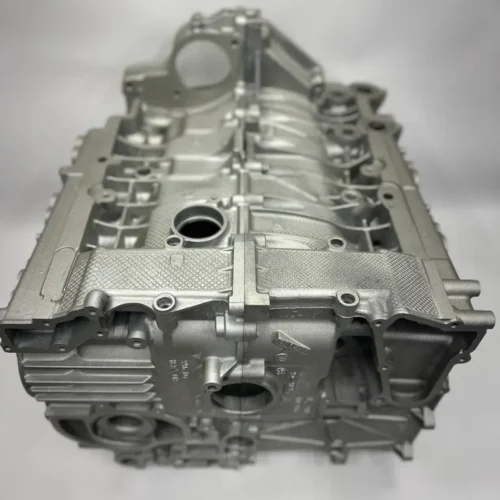
Porsche Engine Block for M96/M97 (1998-2001) 3.4L
Porsche Engine Block for M96/M97 (2006-2008) 3.8L
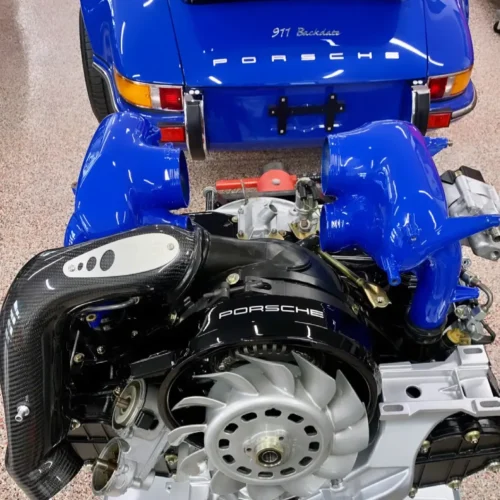
The Ultimate Air-Cooled Resurrection: Porsche 964 Engine Rebuild

Reviews
There are no reviews yet.