M96/M97 3.6L to 3.9L Nikasil Liner Conversion | Closed-Deck 100mm Bore
Price range: $2,700.00 through $4,100.00
Part# EL99636R / EL99639R | Bore: 100mm | Stroke: 82.8mm | $2,700.00 – $4,100.00 | In Stock
The factory Porsche M96 and M97 engines (found in 996/997 Carreras and 986/987 Boxster/Caymans) are notorious for bore scoring, cracked cylinders (D-chunking), and ovality. Our aluminum wet liner conversion eliminates these risks by fundamentally re-engineering the block’s architecture.

(203) 332 7244 Call Us
Description
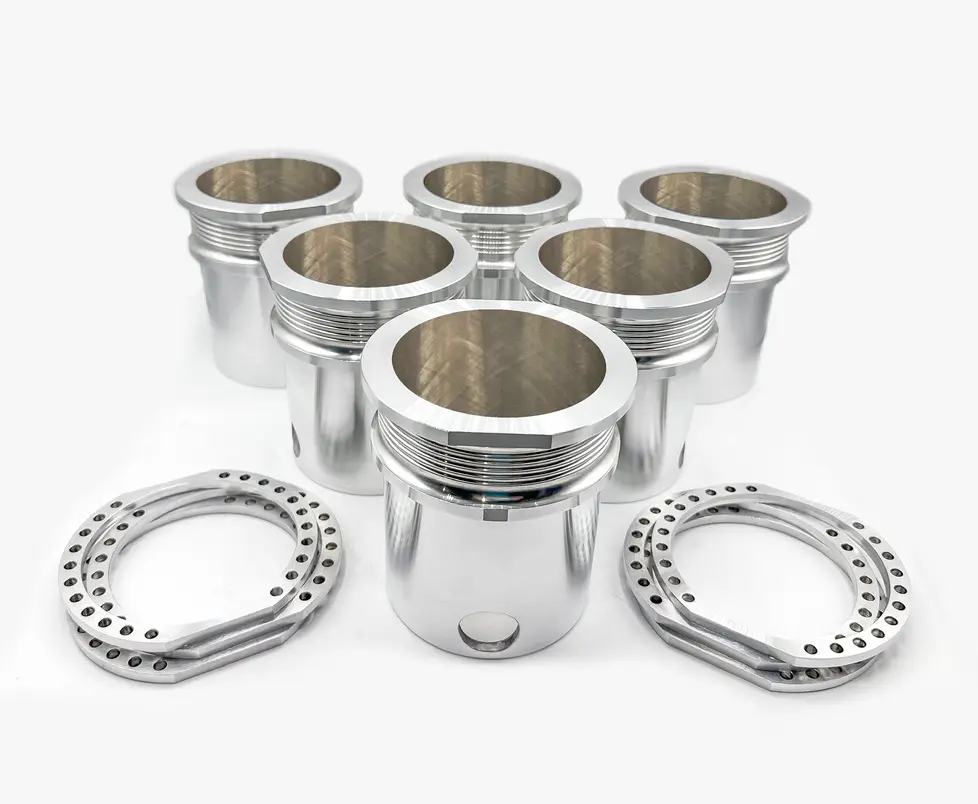
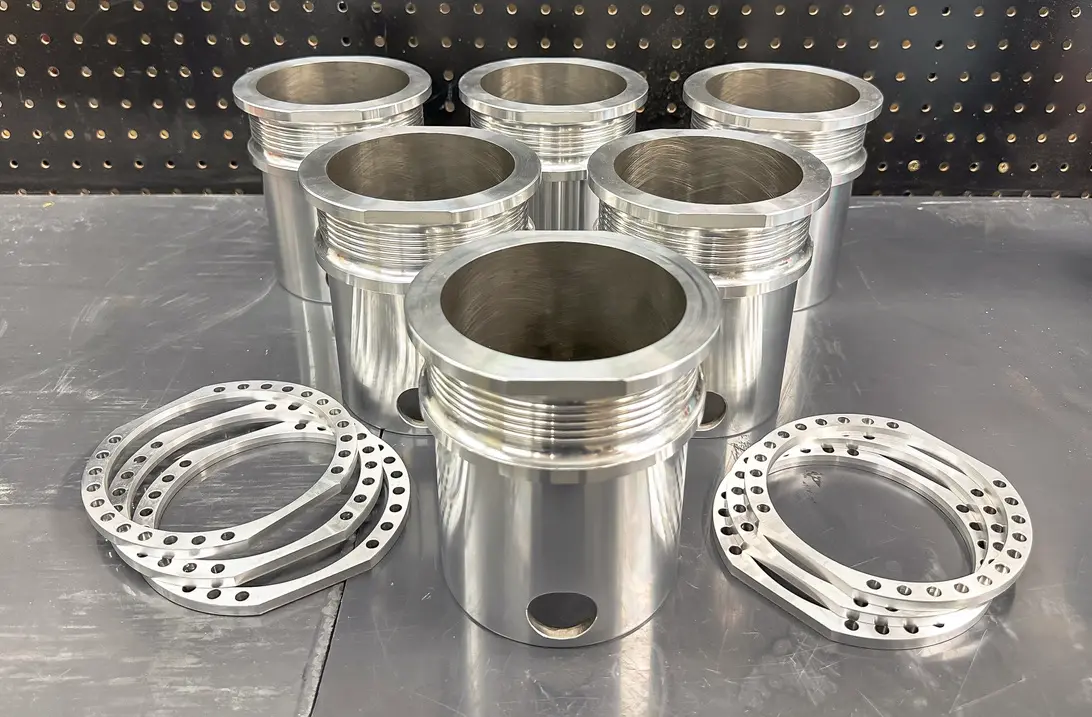
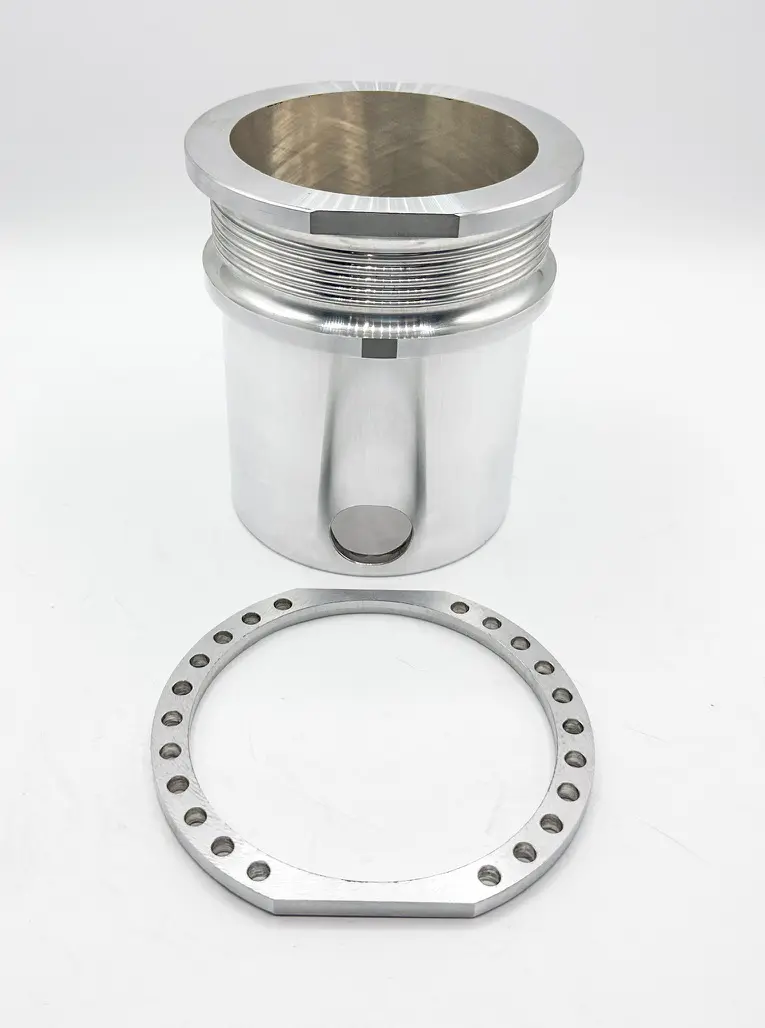
Factory Porsche M96 and M97 engines — found in the 996/997 Carrera and 986/987 Boxster/Cayman — use cast-in Lokasil cylinder bores that are prone to bore scoring, cylinder cracking (D-chunking), and ovality. This conversion replaces the Lokasil bores entirely with closed-deck aluminum wet liners plated in genuine Nikasil, taking displacement from 3.6L to 3.9L while resolving the structural weaknesses built into the factory block.
The Problem With the Factory M96/M97 Block
Porsche cast the M96 and M97 cylinder bores directly into the aluminum block using Lokasil, a silicon-infused aluminum matrix. Lokasil bonds poorly with the surrounding block material and lacks the hardness of a true plated bore. Under thermal cycling and mechanical load, this design produces three recurring failure modes:
- Bore scoring — the piston rings scuff and smear the soft Lokasil surface, accelerating oil consumption and compression loss.
- D-chunking — the open-deck architecture leaves the top of the cylinder unsupported, letting the bore flex and crack, often shedding a “D”-shaped chunk of material.
- Ovality and taper — the unsupported bore deforms out of round even on low-mileage engines, breaking piston ring seal.
The Conversion: What Changes
1. Aluminum Wet Liners (Not Steel or Cast-Iron Sleeves)
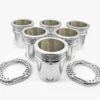
The stock Lokasil bore is bored out and replaced with a machined aluminum alloy liner. Aluminum liners expand and contract at the same rate as the surrounding block, unlike steel or cast-iron sleeves, which have a different thermal expansion coefficient and can loosen (“drop”) inside the bore over time and heat cycles.
- Thermal synchronization — matched expansion rates keep the liner seated permanently, without the interference-fit loosening seen in dissimilar-metal sleeves.
- Wet-liner cooling — the liner sits in direct contact with engine coolant, pulling heat away from the piston rings more effectively than the factory’s cast-in bore, which relies on indirect heat transfer through the surrounding aluminum.
2. Genuine Nikasil Plating (Nickel Silicon Carbide)
The liner bore surface is plated in Nikasil — the same nickel-silicon-carbide coating used on air-cooled 911 cylinders and Porsche’s Mezger GT3/Turbo engines.
- Bore scoring eliminated — Nikasil is a hard, low-friction surface that resists the scuffing that destroys Lokasil bores.
- Reduced ring friction — the smoother plated surface improves oil control and can yield a modest naturally aspirated horsepower gain from reduced internal drag.
3. Closed-Deck Structural Conversion
The factory M96/M97 block uses an open-deck design, leaving the top of each cylinder unsupported by the block casting. This conversion adds a precision-machined support deck at the top of the cylinders, converting the block to a closed-deck configuration.
- Bore rigidity — the closed deck locks the cylinder in place under combustion pressure, eliminating the flex that causes D-chunk cracks and ovality.
- Forced-induction capability — the added structural support brings the M96/M97 platform up to a strength level suitable for reliable turbocharged or supercharged operation, which the factory open-deck design cannot sustain long-term under boost.
Displacement and Fitment
This kit takes a 3.6L M96/M97 block to 3.9L using a 100mm bore and the factory 82.8mm stroke. A second configuration is available as a piston-and-liner bundle for builders who prefer a matched, balanced set at time of purchase. Confirm your specific engine code (M96.01–M96.05, M97.01/M97.02) before ordering, since factory bore and stroke dimensions vary by model year and engine variant.
Factory vs. Converted Block
| Feature | Porsche Factory (M96/M97) | This Closed-Deck Wet Liner Conversion |
| Bore Material | Lokasil (cast-in silicon matrix) | Aluminum wet liner, Nikasil-plated |
| Cylinder Design | Open-deck (unsupported) | Closed-deck (fully supported) |
| Cooling Path | Indirect heat transfer through block | Direct wet-liner coolant contact |
| Common Failure Modes | Bore scoring, D-chunking, ovality | Structurally resistant to all three |
| Forced Induction Rating | Not recommended | Rated for turbo/supercharged use |
| Displacement | Fixed at 3.6L | Expandable to 3.9L (100mm bore) |
How This Compares to Other Repair Methods
Bore scoring and D-chunking can also be addressed with direct Nikasil replating or steel/dry sleeve installation. Each method carries different tradeoffs:
| Method | Addresses Bore Scoring | Addresses D-Chunking/Ovality | Cooling Behavior | Long-Term Fix |
| Direct Nikasil Replating | Yes | No — plating cannot correct an unsupported open deck | Same as factory | Limited by plating thickness (typically 0.004–0.006 in per side) |
| Steel/Cast-Iron Sleeves | Yes | Partial — depends on deck support | Reduced — different expansion rate can cause the sleeve to loosen | Risk of sleeve drop under heat cycling |
| Aluminum Nikasil Wet Liner + Closed Deck (this kit) | Yes | Yes — closed deck eliminates bore flex | Improved — direct wet-liner coolant contact | Addresses the root structural cause, not just the symptom |
Direct Nikasil replating restores the bore surface but leaves the open-deck architecture unchanged, so cracking and ovality risk remains. Steel or cast-iron sleeves fix the wear surface but introduce a dissimilar-metal thermal mismatch that can cause the sleeve to shift over time. This conversion is the only approach of the three that corrects the deck design itself.
Related Work to Consider
Any M96/M97 block opened for a liner conversion is also the correct time to inspect or replace the intermediate shaft (IMS) bearing, a separate and unrelated failure point on the same engine family. Addressing both during the same build avoids opening the engine a second time.
Frequently Asked Questions
What causes bore scoring in Porsche M96 and M97 engines?
Bore scoring happens when the factory Lokasil cylinder surface — a cast-in silicon-aluminum matrix — wears unevenly under piston ring contact, since Lokasil is softer and bonds less consistently with the block than a plated bore.
What is D-chunking?
D-chunking refers to a cylinder wall cracking and breaking away in a D-shaped fragment, caused by the factory open-deck design leaving the top of the bore unsupported and prone to flexing under combustion pressure.
Why use aluminum liners instead of steel sleeves?
Aluminum liners expand and contract at the same rate as the surrounding engine block. Steel or cast-iron sleeves have a different expansion rate, which can cause the sleeve to loosen inside the bore after repeated heat cycles.
Does this conversion increase horsepower?
The Nikasil-plated bore surface reduces piston ring friction compared to the factory Lokasil surface, which can produce a modest naturally aspirated power gain; the larger 3.9L displacement adds further output beyond the factory 3.6L configuration.
Can this block support a turbocharger or supercharger?
Yes. The closed-deck conversion adds structural support at the top of the cylinders that the factory open-deck M96/M97 block lacks, bringing the block to a strength level suited to forced induction.
What is the difference between this conversion and direct Nikasil replating?
Direct Nikasil replating recoats the existing bore surface but leaves the factory open-deck design unchanged, so cracking and ovality risk remains. This conversion replaces the liner entirely and adds closed-deck support, addressing the structural cause rather than just the bore surface.
Does the bore size affect the factory bore spacing or block dimensions?
No. The 100mm bore is machined within the original block casting; the conversion does not alter external block dimensions or mounting points.
Should the IMS bearing be replaced during this conversion?
It is not part of this kit, but since the engine must already be disassembled for the liner conversion, most builders replace or inspect the IMS bearing at the same time to avoid a second teardown.
| Feature | Porsche Factory (M96/M97) | Our Closed-Deck Wet Liners |
|---|---|---|
| Bore Material | Fragile Lokasil (Silicon Matrix) | Ultra-Hard Nikasil Plating |
| Cylinder Design | Open-Deck (Unsupported) | Closed-Deck (Maximum Support) |
| Cooling | Indirect Heat Transfer | Direct \\\\\\\\\\\\\\\\\\\\\\\\\\\\\\\\\\\\\\\\\\\\\\\\\\\\\\\\\\\\\\\\\\\\\\\\\\\\\\\\\\\\\\\\\\\\\\\\\\\\\\\\\\\\\\\\\\\\\\\\\\\\\\\"Wet\\\\\\\\\\\\\\\\\\\\\\\\\\\\\\\\\\\\\\\\\\\\\\\\\\\\\\\\\\\\\\\\\\\\\\\\\\\\\\\\\\\\\\\\\\\\\\\\\\\\\\\\\\\\\\\\\\\\\\\\\\\\\\\" Coolant Contact |
| Durability | High risk of scoring/cracking | Lifetime Structural Integrity |
| Displacement | Fixed | Oversize Options (e.g. 3.6L to 4.0L) |




Related products

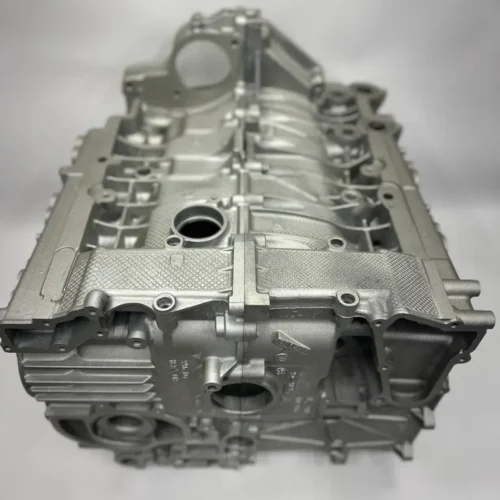
Porsche Engine Block for M96/M97 (2004-2006) 3.2L
Reviews
There are no reviews yet.