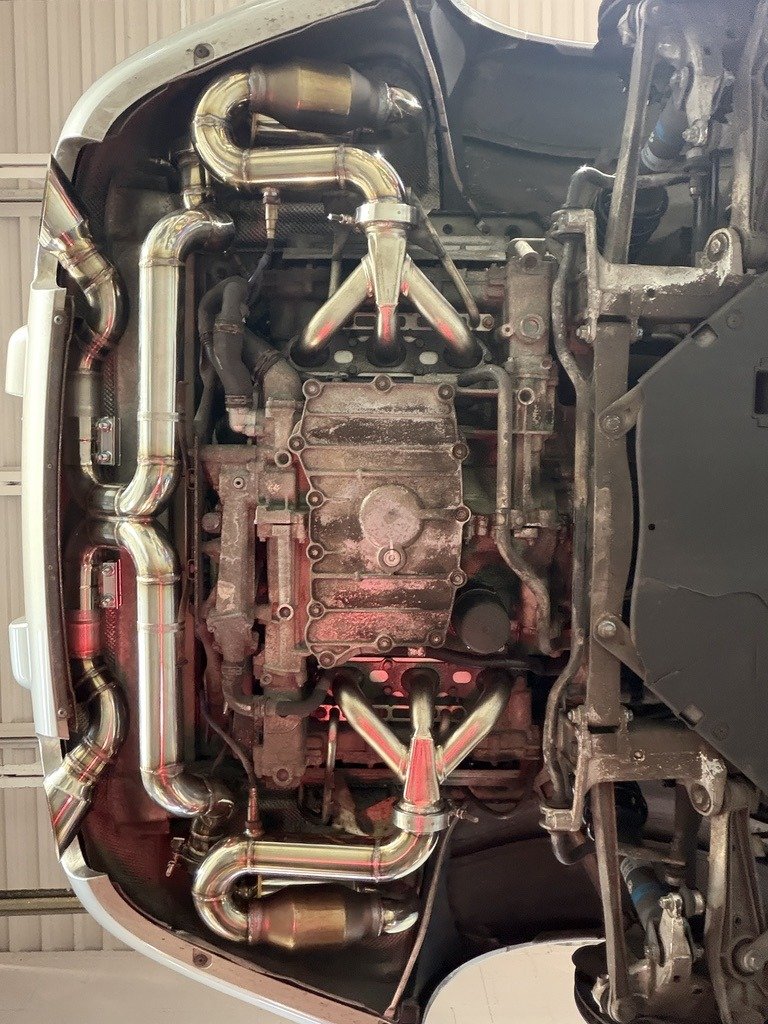
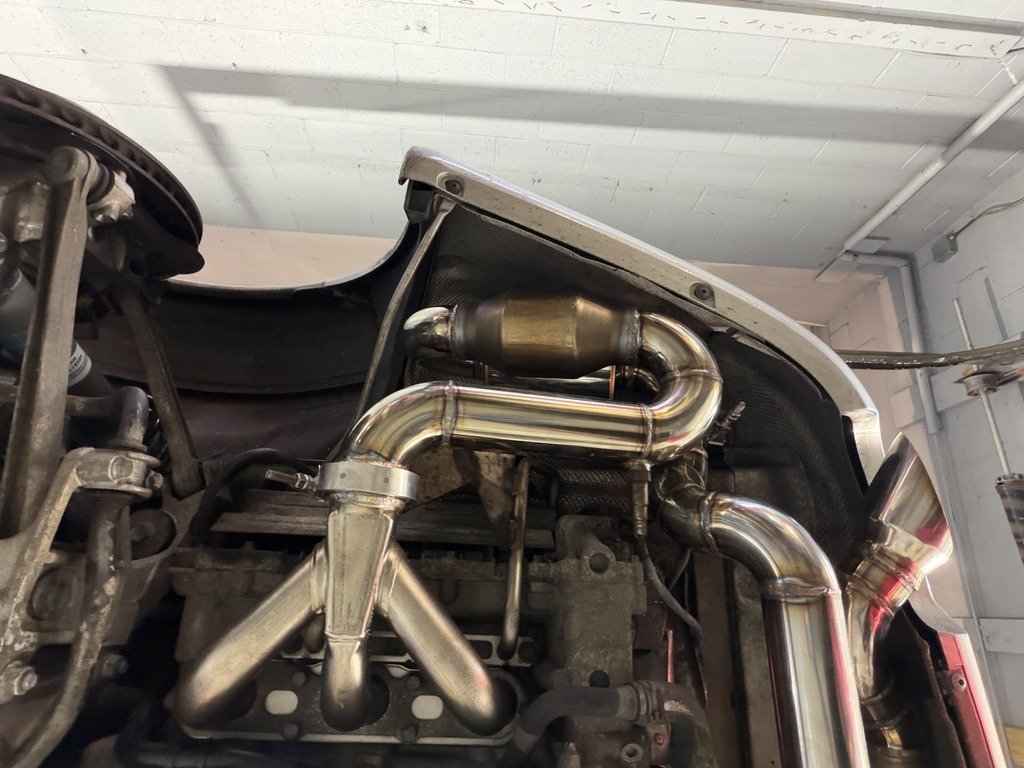
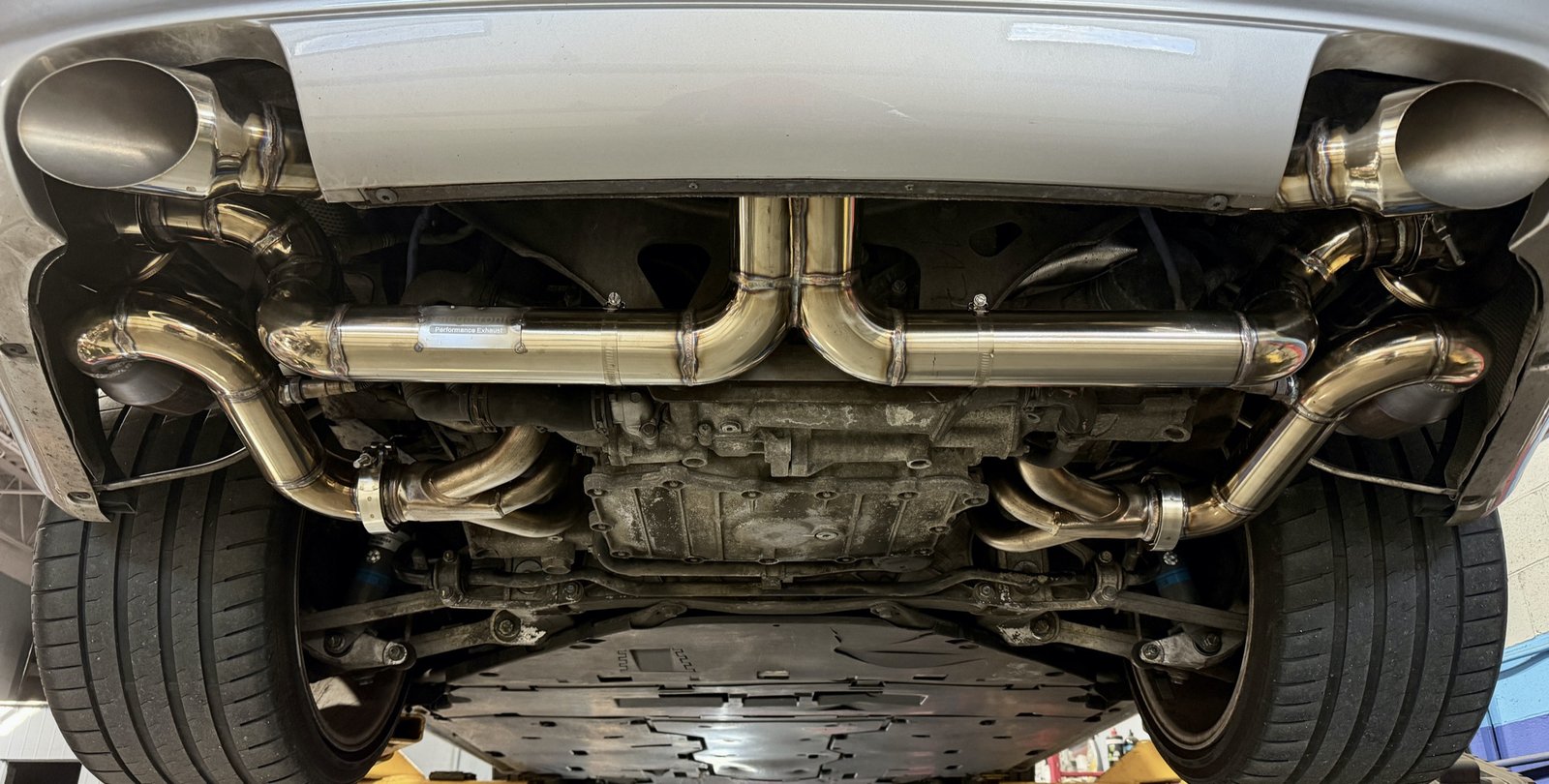
Custom Porsche Exhaust for 996, 997, Boxster and Cayman
Price range: $6,000.00 through $6,500.00
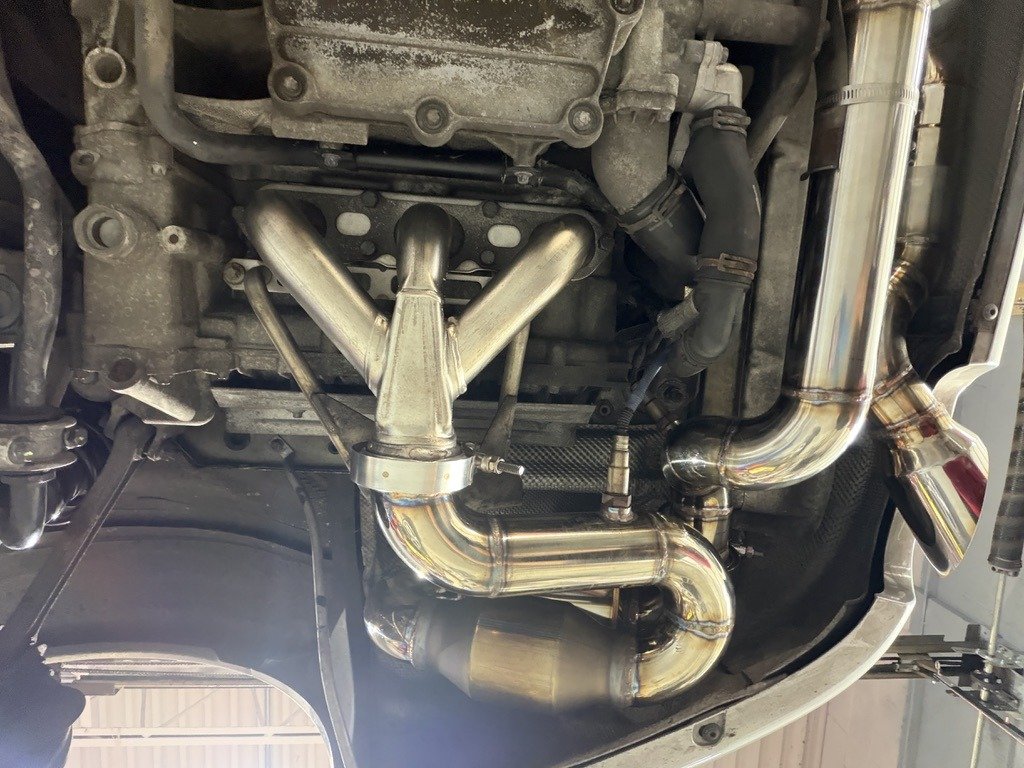
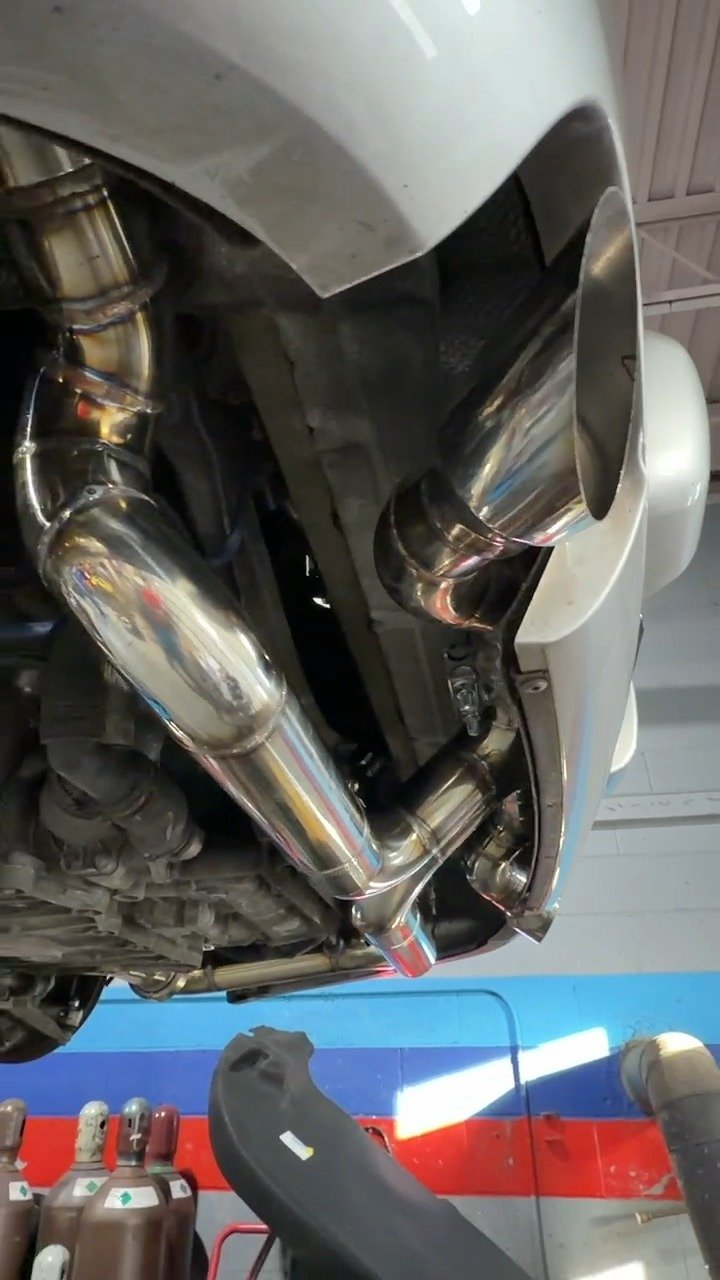
Upgrade your Porsche flat six with the Emegatronic Custom Exhaust System, engineered for selected 996, 997.1, 997.2, Boxster 986, Boxster 987 and Cayman 987 applications. Built from mandrel bent 304 stainless steel with OEM matched flanges, a straight through muffler and your choice of a 200 cell high flow catalytic converter or cat delete configuration.

(203) 332 7244 Call Us
Description
Designed for Porsche flat six applications, the Emegatronic Custom Exhaust System replaces restrictive factory exhaust components with a free flowing stainless steel configuration engineered around the original Porsche chassis geometry.
Built for selected Porsche 996, Porsche 997.1, Porsche 997.2, Porsche Boxster 986, Porsche Boxster 987 and Porsche Cayman 987 applications, the system uses mandrel bent 304 stainless steel tubing, OEM matched flanges and a straight through muffler design for improved exhaust flow and a more pronounced flat six exhaust note.
Choose between a 200 cell high flow catalytic converter configuration or a cat delete configuration according to your vehicle, intended use and local emissions requirements.
Porsche Exhaust System Built Around the Flat Six
The Porsche M96 and M97 engines have a distinctive naturally aspirated flat six character that can be masked by restrictive exhaust components and factory muffling.
This custom exhaust is designed to provide a more direct exhaust path while maintaining the mounting geometry required for the specified Porsche application.
The result is a sharper exhaust note with stronger high RPM character and improved exhaust gas flow.
Rather than designing a universal exhaust around multiple vehicle platforms, the system is configured around the Porsche chassis, engine application, flange position, tubing layout and exhaust hanger locations.
Porsche Models and Engine Applications
This exhaust system is designed for selected Porsche models equipped with M96 and M97 flat six engines.
| Porsche application | Model generation | Engine family |
| Porsche 996 | 1998 to 2005 | M96 |
| Porsche 997.1 | 2005 to 2008 | M96 / M97 |
| Porsche 997.2 | 2009 to 2012 | M97 |
| Porsche Boxster 986 | 1997 to 2004 | M96 |
| Porsche Boxster 987 | 2005 to 2008 | M96 / M97 |
| Porsche Cayman 987 | 2006 to 2008 | M97 |
Exact engine code and chassis configuration should be confirmed before ordering because exhaust flange position, tubing configuration and mounting geometry can vary between applications. The current product page identifies M96.01 through M96.05 and M97.01 through M97.21 as relevant engine codes.
304 Stainless Steel Construction
The exhaust uses 304 grade stainless steel, a commonly used material for performance exhaust systems because of its corrosion resistance, thermal durability and suitability for fabricated exhaust components.
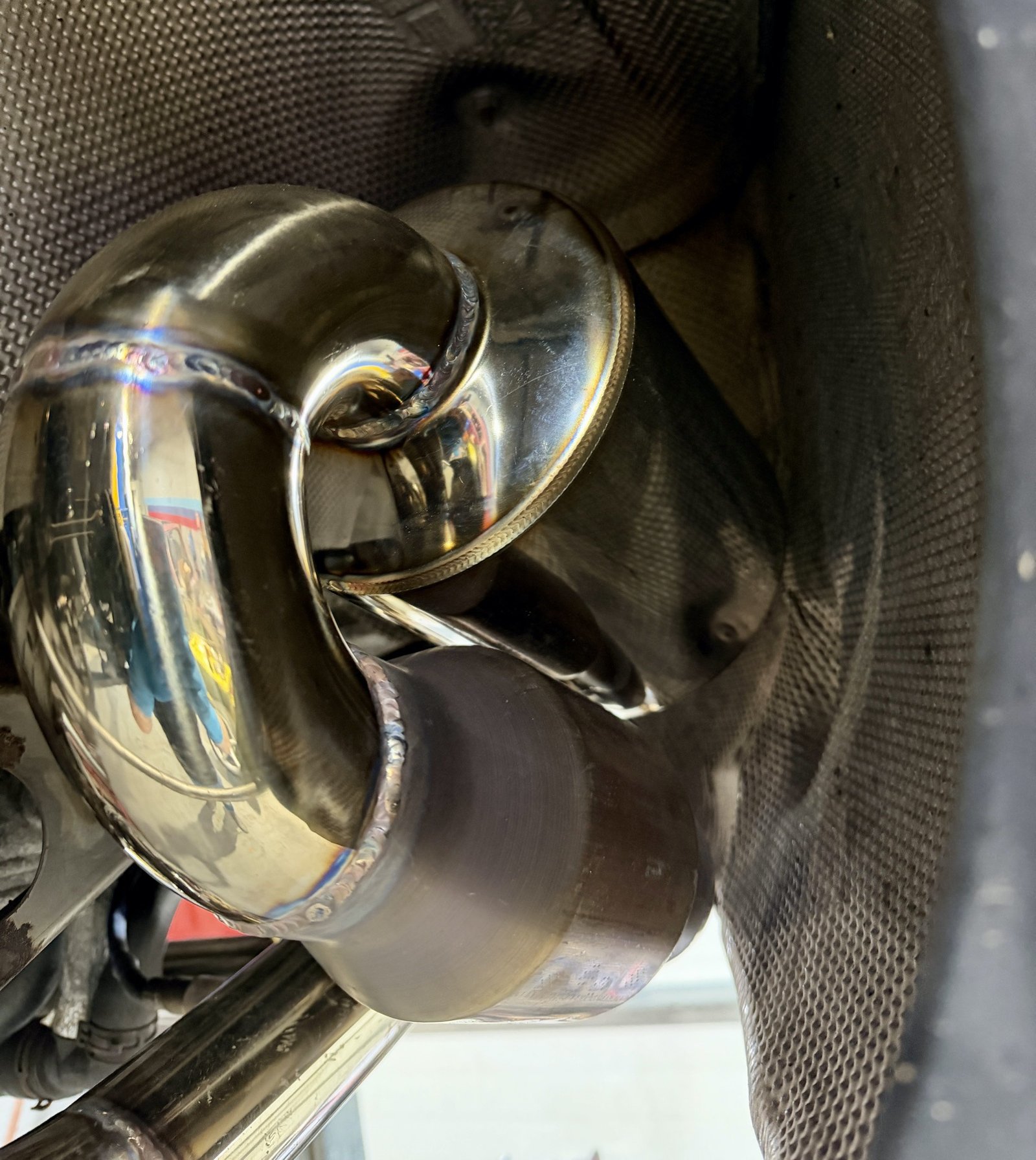
The tubing is mandrel bent rather than mechanically crushed during bending.
This maintains a more consistent internal diameter through the bends and helps reduce unnecessary disruption to exhaust gas flow.
Construction specifications
| Component | Specification |
| Tubing | 304 grade stainless steel |
| Pipe construction | Mandrel bent |
| Internal passage | Consistent diameter through bends |
| Flanges | OEM matched bolt flange |
| Muffler | Free flow straight through design |
| Finish | Brushed stainless steel |
| Catalyst option | 200 cell high flow catalytic converter |
| Alternative | Cat delete configuration |
| Fitment | Application specific |
| Mounting | OEM mounting geometry |
These specifications are based on the current Emegatronic product information.
200 Cell High Flow Catalytic Converter
The 200 cell catalytic converter option is intended for owners who want a performance oriented exhaust configuration while retaining a catalytic converter.
A high flow catalyst provides a less restrictive exhaust path than many conventional high cell count catalytic converters while continuing to provide emissions control.
The exact emissions and road legality of any modified exhaust depend on the vehicle and jurisdiction, so local regulations should always be checked before installation.
The 200 cell configuration is also consistent with performance Porsche exhaust systems offered by other specialist manufacturers, although specifications and performance results differ between products.
Cat Delete Exhaust Configuration
The cat delete version removes the catalytic converter from the exhaust path.
Without the catalyst substrate in the exhaust stream, there is less restriction and the exhaust note becomes more pronounced. It is generally suited to track, competition, show or off road applications where permitted.
Removing the catalytic converter can also change downstream oxygen sensor readings and may trigger catalyst efficiency related fault codes on the vehicle ECU.
For street driven Porsche models, confirm emissions requirements before selecting this configuration.
Exhaust Flow and Engine Response
Exhaust design affects how efficiently combustion gases leave the engine.
A restrictive exhaust can increase exhaust backpressure. A properly engineered free flowing system can reduce restriction and improve the conditions under which exhaust gases exit the cylinder.
On a naturally aspirated flat six, exhaust system design also influences scavenging, volumetric efficiency, exhaust pulse behavior and throttle response.
Actual horsepower and torque changes depend on:
- Porsche chassis
- Engine code
- Existing exhaust components
- Headers
- Catalytic converters
- ECU calibration
- Intake configuration
- Engine condition
- Dyno methodology
For this reason, a specific horsepower increase should not be promised without vehicle specific dyno testing.
Straight Through Muffler Design
The muffler uses a free flow straight through configuration rather than relying primarily on multiple restrictive chambers.
This allows exhaust gases to travel through the muffler with less obstruction while changing the acoustic character of the vehicle.
The result is a more noticeable flat six sound under acceleration and at higher engine speeds while maintaining a controlled exhaust character during normal driving.
Porsche Exhaust Sound
The objective is not simply to make the Porsche louder.
The goal is to expose more of the mechanical character of the flat six engine.
Expect a more pronounced exhaust note during acceleration, stronger high RPM presence and greater mechanical detail compared with a conventional factory exhaust.
Sound level will vary depending on the Porsche model, engine, catalytic converter configuration, headers and other exhaust components.
OEM Fitment and Mounting Geometry
The system is designed around the specified Porsche application rather than using a universal exhaust layout.
OEM matched flanges help position the system correctly at the factory connection points.
The exhaust hanger locations are also designed around the vehicle’s existing mounting geometry.
During installation, the technician should verify:
- Flange alignment
- Exhaust hanger position
- Pipe clearance
- Muffler clearance
- Oxygen sensor positioning
- Exhaust tip alignment
- Heat shielding clearance
- Exhaust leaks
A professional installation is recommended, particularly on older Porsche vehicles where factory exhaust hardware may have corrosion or seized fasteners.
Porsche 996 Custom Exhaust
For Porsche 996 owners, the system provides a performance oriented alternative to the factory exhaust configuration.
The 996 application covers Porsche 911 models from the 996 generation, with exact fitment dependent on the engine and chassis configuration.
Relevant search terms include:
Porsche 996 exhaust system, Porsche 996 custom exhaust, Porsche 996 performance exhaust, Porsche 996 sport exhaust, Porsche 996 exhaust upgrade, Porsche M96 exhaust and Porsche 996 stainless steel exhaust.
Porsche 997 Custom Exhaust
The Porsche 997 platform includes both 997.1 and 997.2 configurations.
Because exhaust architecture and engine specifications can vary between these generations, the exact vehicle should be confirmed before ordering.
The system is intended for selected 997 applications using the relevant M96 and M97 flat six engine configurations.
Relevant search terms include:
Porsche 997 exhaust system, Porsche 997 custom exhaust, Porsche 997 performance exhaust, Porsche 997.1 exhaust, Porsche 997.2 exhaust, Porsche 997 sport exhaust, Porsche M97 exhaust and Porsche 997 stainless steel exhaust.
Porsche Boxster and Cayman Exhaust
The same engineering principles apply to selected Porsche Boxster 986, Boxster 987 and Cayman 987 applications.
These cars use horizontally opposed flat six engines where exhaust routing, heat management, catalyst placement and muffler packaging are important considerations.
Confirm the exact model year and engine code before purchasing.
Technical Specifications
| Specification | Emegatronic Custom Exhaust |
| Product type | Porsche performance exhaust system |
| Engine configuration | Flat six |
| Engine families | M96 and M97 |
| Material | 304 stainless steel |
| Tubing | Mandrel bent |
| Muffler design | Straight through |
| Catalyst option | 200 cell high flow |
| Alternative configuration | Cat delete |
| Flange | OEM matched |
| Mounting | Application specific |
| Finish | Brushed stainless steel |
| Application | Porsche 996, 997.1, 997.2, Boxster 986, Boxster 987 and Cayman 987 |
| Installation | Application specific bolt on configuration |
| Price | $6,000 to $6,500 |
Current Emegatronic specifications list the system at $6,000 to $6,500 and identify the two available conversion configurations.
What Is Included?
The exact contents should be confirmed against the selected vehicle configuration before purchase.
The system is available with:
- 200 cell catalytic converter configuration
- Cat delete configuration
- 304 stainless steel exhaust components
- Application specific exhaust tubing
- OEM matched connection flanges
- Exhaust mounting provisions
Installation Considerations
Before installation, inspect the existing Porsche exhaust system for:
- Corroded fasteners
- Damaged exhaust flanges
- Cracked exhaust hangers
- Failed gaskets
- Damaged oxygen sensors
- Heat shield interference
- Previous exhaust modifications
The vehicle should be lifted securely and the exhaust system allowed to cool completely before removal.
After installation, inspect all joints for leaks and verify clearance from the engine, chassis, suspension components, heat shields and bodywork.
Is the Porsche Custom Exhaust Street Legal?
This depends on the selected configuration and the emissions regulations applicable to the vehicle.
The 200 cell catalytic converter version retains a catalytic converter.
The cat delete version removes emissions control equipment and may not be legal for public road use in many jurisdictions.
Always check your state and local emissions requirements before purchasing or installing a modified exhaust system.
Will the Exhaust Cause a Check Engine Light?
The possibility depends on the configuration and vehicle calibration.
A cat delete configuration can alter downstream oxygen sensor readings because the catalyst is no longer present to condition the exhaust gases before the sensor.
This can result in catalyst efficiency related diagnostic trouble codes.
The 200 cell catalytic converter configuration retains catalyst functionality and is therefore the more appropriate configuration for customers who need a catalyst equipped exhaust.
Can It Be Used With Headers?
Yes, provided the complete exhaust configuration is compatible with the specific Porsche.
Headers change exhaust flow closer to the cylinder heads, while the rear exhaust system controls flow, acoustic characteristics and catalyst or muffler behavior further downstream.
When combining headers, catalytic converters, mufflers and an ECU calibration, the complete system should be considered rather than evaluating each component independently.
Can It Be Used With an ECU Tune?
An ECU calibration can be used alongside exhaust modifications, but calibration should be matched to the actual hardware installed on the vehicle.
Changes in exhaust flow can affect oxygen sensor readings, fuel trims and engine calibration.
Any claimed horsepower improvement should be supported by vehicle specific dyno testing rather than a generic estimate.
Frequently Asked Questions
What Porsche models does this custom exhaust fit?
The system is designed for selected Porsche 996, 997.1, 997.2, Boxster 986, Boxster 987 and Cayman 987 applications using M96 and M97 flat six engines. Confirm your exact year and engine code before ordering.
Is the Porsche custom exhaust made from stainless steel?
Yes. The current specification lists mandrel bent 304 grade stainless steel construction.
Does it have a catalytic converter?
You can choose between a 200 cell high flow catalytic converter configuration and a cat delete configuration.
Is the cat delete version suitable for street driving?
Emissions laws vary by location. Removing the catalytic converter can make a vehicle non compliant with road emissions requirements, so the local regulations should be checked before installation.
Does a 200 cell catalytic converter improve exhaust flow?
A 200 cell high flow catalyst is designed to provide a less restrictive flow path than many higher cell count conventional catalysts. Actual flow characteristics depend on the complete catalyst and exhaust design.
Will this exhaust make my Porsche louder?
Yes. The straight through muffler design and reduced exhaust restriction produce a more pronounced exhaust note, particularly during acceleration and at higher RPM.
Does the exhaust improve horsepower?
A less restrictive exhaust can improve exhaust flow and may produce measurable power gains. Actual results depend on the engine, chassis, exhaust configuration, headers, ECU calibration and other modifications.
Is this a Porsche 996 performance exhaust?
Yes, the product is designed for selected Porsche 996 applications using the relevant M96 engine configurations.
Is this a Porsche 997 performance exhaust?
Yes, selected Porsche 997.1 and 997.2 applications are supported. Exact fitment should be confirmed by year and engine code.
What is the difference between a sport exhaust and a cat delete?
A sport exhaust can retain catalytic converters while improving flow and sound. A cat delete removes the catalytic converter entirely and therefore has different emissions, sound and diagnostic implications.
Does the exhaust require cutting or welding?
The current product information describes the specified applications as bolt on configurations using OEM matched connection points. A technician should verify the actual vehicle before installation.




Related products
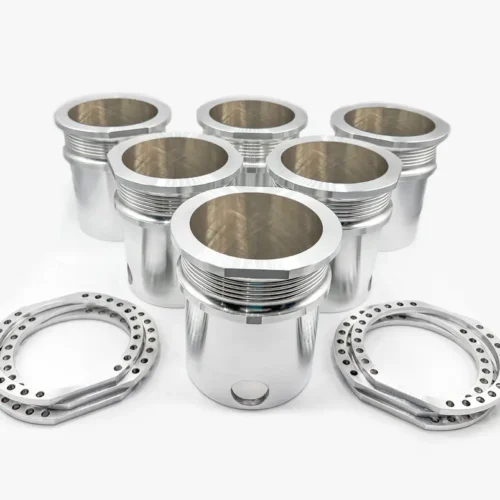
Porsche 997 M96 Engine Nikasil Cylinder Liners Conversion Kit: 3.8L to 4.1L
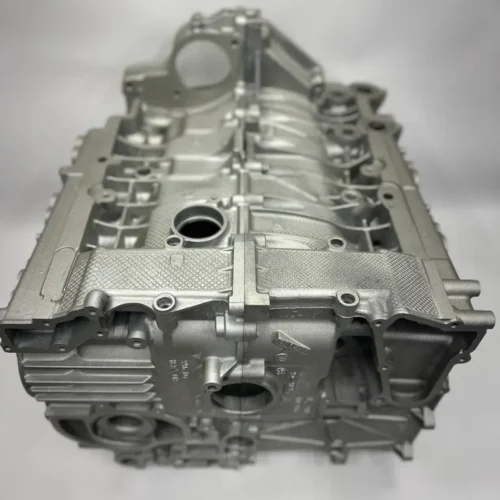
Porsche Engine Block for M96/M97 (2005-2007) 3.6L
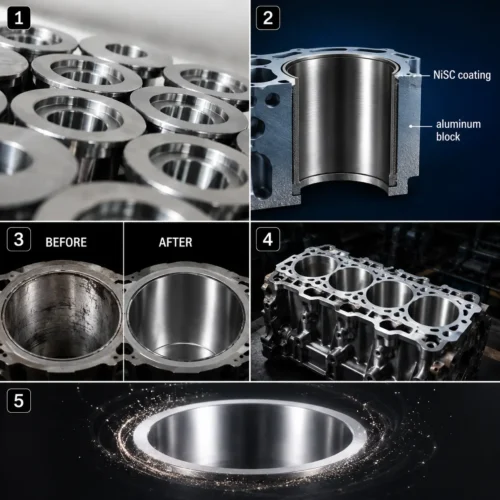
M96/M97 Nikasil Liner Conversion Kit: 3.4L to 3.7L

Reviews
There are no reviews yet.