
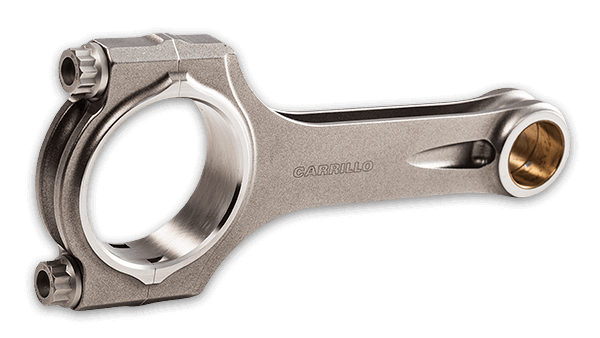
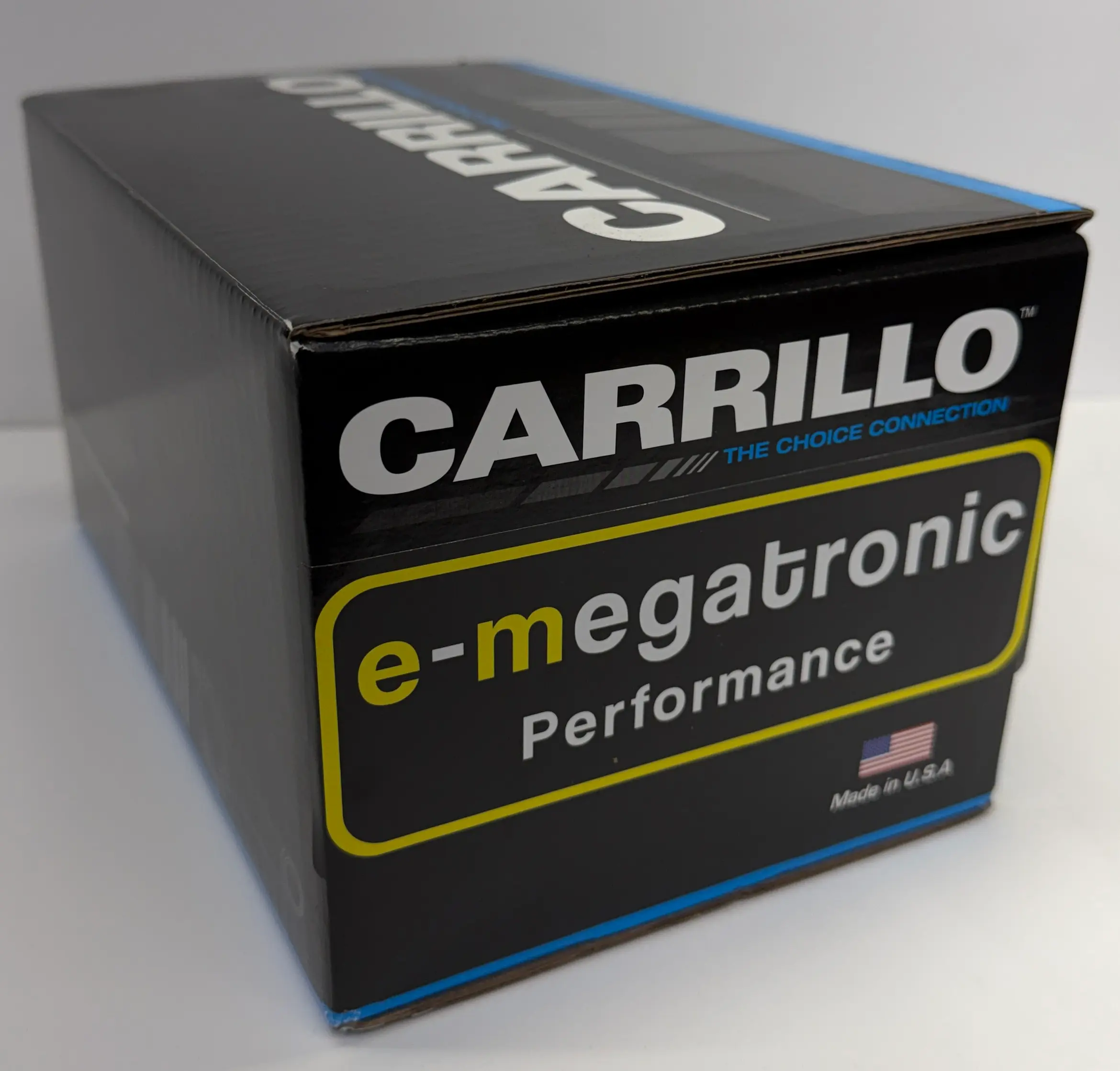
Porsche 996 997 3.6L 3.8L Carrillo Connecting Rod
$1,800.00
Carrillo Connecting rods were founded by Fred Carrillo in 1963. Fred approached the challenges of manufacturing with the idea of no compromise. He knew the never ending quest for speed would require the same desire in component manufacturing. This Carrillo philosophy is as evident today as it was at Carrillo’s conception in 1963.

(203) 332 7244 Call Us
Description
EVERY CONNECTING ROD IS A SYMPHONY OF PRECISION: MATERIAL SPECIALIST, FORGING PRECISION, PRODUCTION CRAFTSMAN, DESIGN ENGINEERS AND ENGINE SPECIALISTS EACH CONTRIBUTE KNOW-HOW AND ARTISTRY.
This connecting rod is a forged replacement rod engineered by CP-Carrillo for the Porsche M96 and M97 flat-six engines found in the naturally aspirated 996 and 997 Carrera and Carrera S, displacing 3.6 liters and 3.8 liters. It replaces the factory powdered-metal rod with a fully machined, tunnel-bore Pro-H beam design built from proprietary 4330M chromoly steel. The rod carries Porsche OEM cross-reference number 99610398502 and ships as a matched set of six for a complete flat-six rebuild.
Engine builders specify this rod when the original connecting rod shows fatigue, when the build targets RPM levels beyond factory redline, or when the rebuild scope calls for a stronger bottom end than the stock part supports.
Which Porsche 996 and 997 Engine Codes Accept This Connecting Rod?
The M96 and M97 engine families cover several displacement and generation combinations. The table below identifies which chassis and engine codes this specific 3.6L/3.8L non-turbo rod fits.
| Chassis | Model Years | Engine Code | Displacement | Application |
| 996 Carrera | 2002-2004 | M96/03 | 3.6L | Naturally aspirated |
| 996 Carrera S | 2002-2004 | M96/03 | 3.6L | Naturally aspirated |
| 997.1 Carrera | 2005-2008 | M96/05 | 3.6L | Naturally aspirated |
| 997.1 Carrera S | 2005-2008 | M97/01 | 3.8L | Naturally aspirated |
| 997.2 Carrera | 2009-2012 | MA1.01 | 3.6L | Naturally aspirated |
| 997.2 Carrera S | 2009-2012 | MA1.02 | 3.8L | Naturally aspirated |
This rod is built for the non-turbo M96/M97 crankshaft journal and pin geometry. Turbo and GT3 applications use a different rod length and pin bore width, and buyers rebuilding a 996 Turbo, 997 Turbo, or 997 GT3 engine need the corresponding turbo-spec or GT3-spec Carrillo rod instead.
What Are the Exact Dimensional Specifications of This Rod?
Every dimension below matters for piston-to-rod clearance, wrist pin fitment, and rotating assembly balance during the rebuild.
| Specification | Value |
| Center-to-center length | 5.590 inches (142.0 mm) |
| Big end bore diameter | 2.2047 inches (56.0 mm) |
| Big end width | 0.764 inches |
| Small end (pin) width | 0.818 inches |
| Wrist pin bore diameter | 22 mm, bushed, full floating |
| Rod bolt size | 3/8 inch |
| Advertised weight per rod | 545 grams |
| Beam profile | Pro-H, tunnel-bore construction |
| Material | 4330M vacuum-arc-remelted chromoly steel |
| Quantity per set | 6 rods |
What Material and Manufacturing Process Sets This Rod Apart from a Stock Porsche Rod?
CP-Carrillo machines this rod from a single billet of 4330M chromoly steel rather than casting or sintering it from powdered metal, which is how the factory Porsche rod is produced. The tunnel-bore process bores the big end and beam from one solid piece instead of joining a cap to a separate beam section, which removes a stress-concentration point common to two-piece designs. Each rod goes through shot peening to relieve surface stress and raise fatigue resistance before final dimensional inspection.
The wrist pin end uses a bronze bushing with a full-floating pin, which spreads pin load across a wider bearing surface and reduces small-end wear compared to the press-fit pin arrangement Porsche uses from the factory.
What Rod Bolt Options Come with This Connecting Rod, and How Do They Compare?
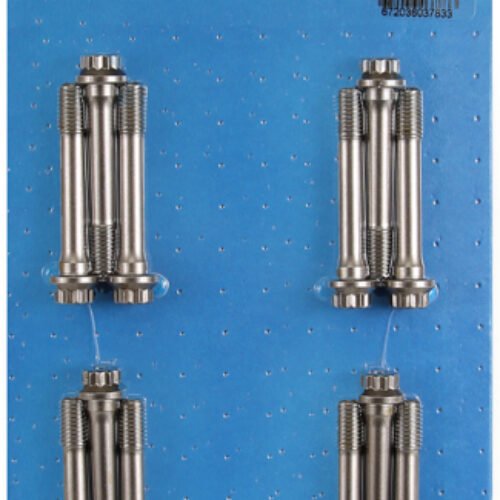
Rod bolt selection changes the RPM ceiling and fatigue life of the rotating assembly. CP-Carrillo offers this rod with two bolt choices.
| Bolt Designation | Material | Ultimate Tensile Strength | Recommended Use |
| WMC-H7 | H11 tool steel | 220,000 psi | Street builds and RPM levels up to factory redline |
| CARR-S7 (upgrade) | MP35N alloy | 285,000 psi | Builds targeting sustained RPM beyond 8,500 |
A rod bolt operates under cyclic tensile load every engine revolution, so bolt fatigue strength directly limits how far a build can safely rev. Buyers planning a high-RPM performance build should specify the CARR-S7 bolt at time of order rather than upgrading later, since bolt stretch specs and torque values differ between the two.
Why Do Stock M96 and M97 Connecting Rods Fail Under Sustained High RPM?
The factory Porsche rod is a powdered-metal fracture-split design, chosen for production cost and consistent cap alignment rather than ultimate fatigue strength. Under sustained high load, three failure patterns show up repeatedly in the M96/M97 platform:
- Big end bore distortion from repeated bolt stretch cycles, which increases bearing clearance over time
- Fatigue cracking at the beam-to-cap transition, accelerated by detonation or lean fuel conditions
- Bushing and pin wear at the small end once oil film breaks down at sustained high RPM
A forged, tunnel-bore rod with a floating pin bushing addresses all three failure points directly, which is the primary reason engine builders upgrade during a bottom-end rebuild rather than reusing the factory rod.
How Much Weight Does This Rod Save Compared to the Factory Rod?
| Rod Type | Weight per Rod | Weight Variance Across a Set of 6 |
| Factory Porsche M96/M97 rod | 615 to 696 grams (varies by weight class) | Up to 9 grams (factory tolerance) |
| CP-Carrillo Pro-H rod | 545 grams | Matched within 1 gram per set |
Lower reciprocating mass reduces the load on the crankshaft main bearings and lowers piston-to-rod inertia loading at high RPM, while tighter weight matching across the set reduces vibration from rotating assembly imbalance.
Which Type of Engine Build Is This Rod Suited For?
| Build Type | Fit for This Rod |
| Stock displacement rebuild after IMS bearing failure or rod bearing wear | Direct fit, no machining changes required |
| Naturally aspirated performance build with cam and head work | Recommended, especially with the CARR-S7 bolt upgrade |
| Displacement stroker build using an aftermarket crankshaft | Requires a custom-length Carrillo rod, not this standard-length part |
| 996 Turbo, 997 Turbo, or GT3 rebuild | Not compatible, requires the corresponding turbo or GT3-spec rod |
What Should a Buyer Confirm Before Ordering This Connecting Rod?
- Engine code and displacement (M96 3.6L, M96 3.6L 997.1, M97 3.8L, or MA1 series) match the chassis
- Whether the build is naturally aspirated, since turbo and GT3 engines use a different rod length and pin width
- Bolt selection, WMC-H7 for street use or CARR-S7 for sustained high-RPM builds
- Bearing clearance targets, since rod bearing selection changes based on oil clearance specified during machining
- Crankshaft journal condition, since a worn or out-of-round journal affects big end bore fit regardless of rod quality
Installation, Warranty, and Support
Emegatronic installs this connecting rod as part of a full engine rebuild at its Bridgeport, Connecticut facility, with crankshaft inspection, bearing clearance setting, and rotating assembly balancing included in the machining process. Rods purchased as a standalone part ship crated and insured, with fitment confirmed against the customer’s engine code before the order ships. Contact a specialist at (203) 332-7244 or info@emegatronic.com to confirm engine code compatibility and bolt selection before placing an order.
Frequently Asked Questions
Can I reuse my original rod bolts with a new Carrillo rod?
No. Rod bolts stretch permanently once torqued to spec, and reusing a stretched bolt on a new rod risks bolt failure under load. Every Carrillo rod ships with its own matched bolt set, and that bolt should never be swapped onto a different rod or reused after a prior torque cycle.
Does swapping to a Carrillo rod require a different oil pump or oiling system?
No change to the oil pump or oil galleries is needed. The rod’s oiling requirement at the wrist pin bushing matches the factory splash and pressure-fed lubrication path already built into the M96/M97 block, so no oil system modification accompanies this upgrade.
Will this rod pass a compression or leak-down test differently than a stock rod?
Rod selection does not affect compression or leak-down readings, since those tests measure ring seal and valve seal, not connecting rod strength. A Carrillo rod changes fatigue tolerance and RPM ceiling, not cylinder sealing performance.
How long does a shop typically take to install this rod during a rebuild?
Installing the rod itself takes a few hours once the crankcase is open, but the surrounding work, bearing clearance setting, rotating assembly balancing, and reassembly, extends a full rebuild timeline to two to four weeks depending on parts availability and machine shop backlog.
Can this rod be reused in a future rebuild if the engine is opened again later?
Yes, within limits. A forged Carrillo rod can go through multiple rebuild cycles if it passes magnaflux crack inspection and big end bore measurement each time the engine comes apart, unlike a factory powdered-metal rod, which most shops replace outright rather than re-certify after high-mileage service.




Related products
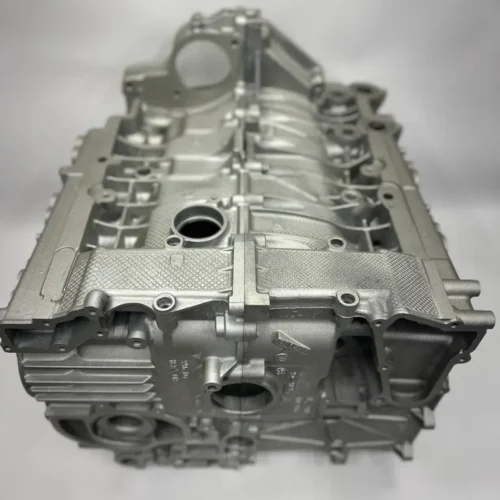
Genuine OEM Porsche Engine Block for M96/M97 (2000-2004) 3.2L
Porsche Engine Block for M96/M97 (2006-2008) 3.8L

Reviews
There are no reviews yet.