
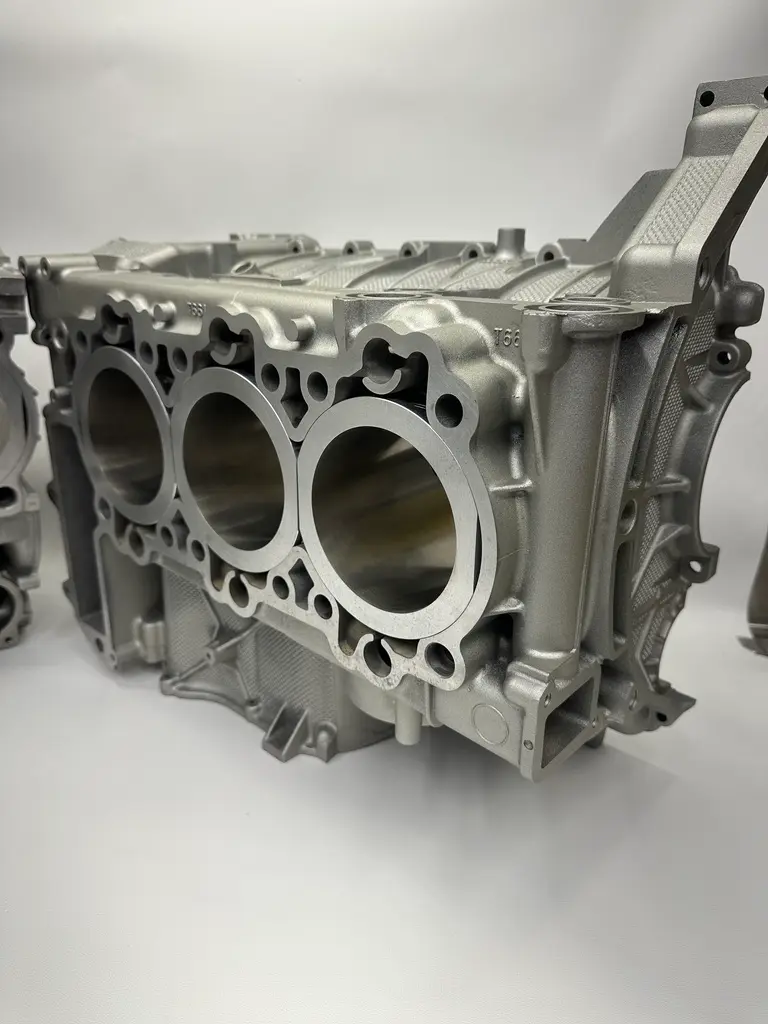
Genuine OEM Porsche Engine Block for M96/M97 (2000-2004) 3.2L
Price range: $7,500.00 through $8,500.00
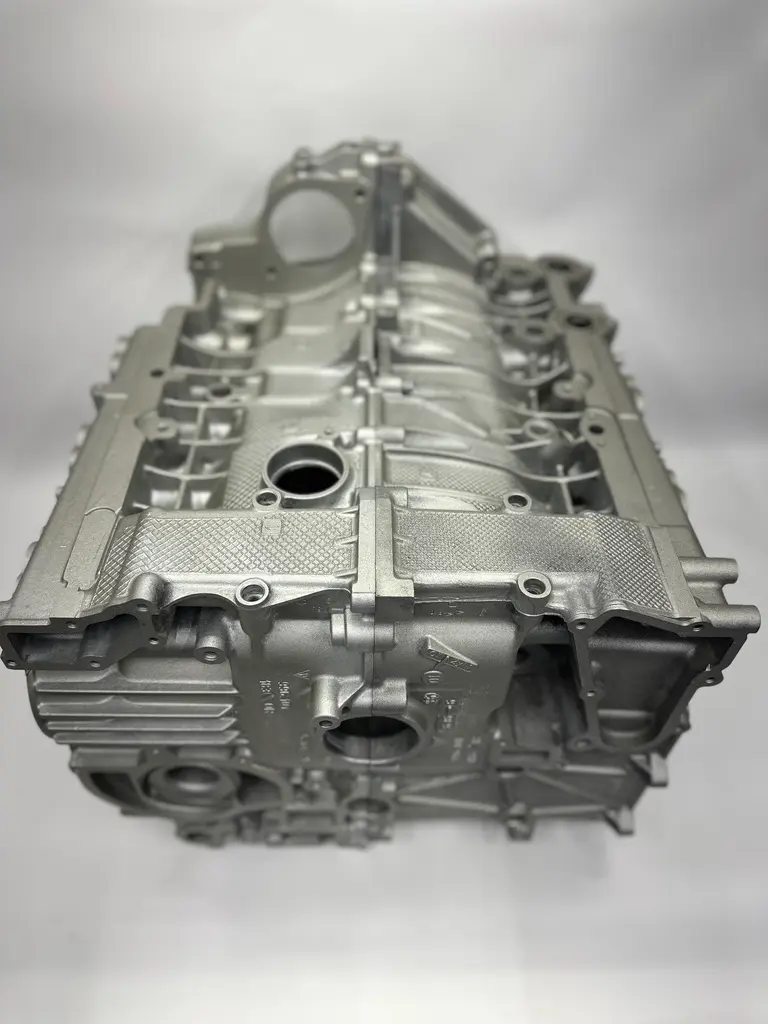
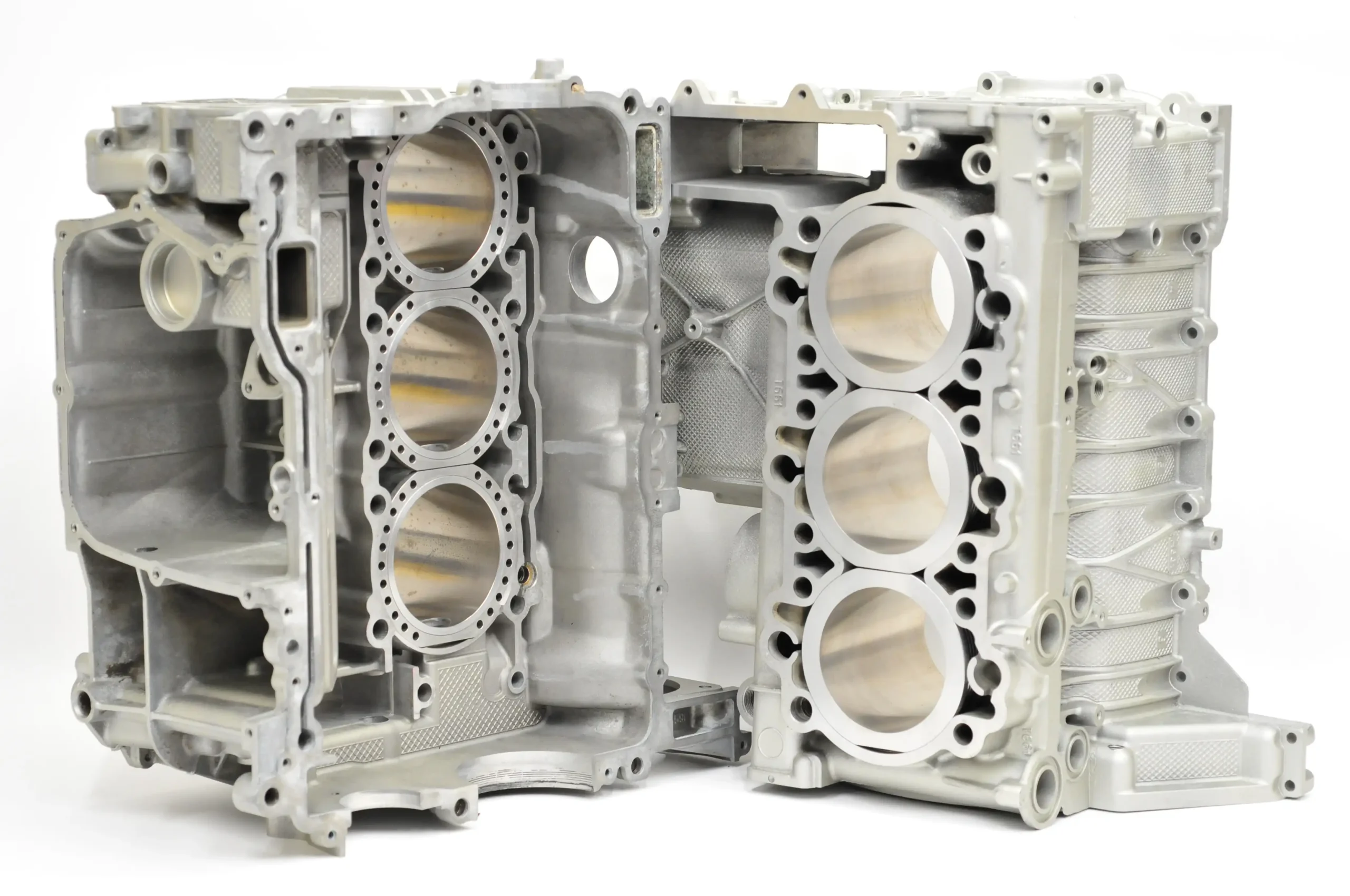
The Porsche M96 M97 engine block is designed as a precision foundation for rebuilding and upgrading selected Porsche flat six engines.
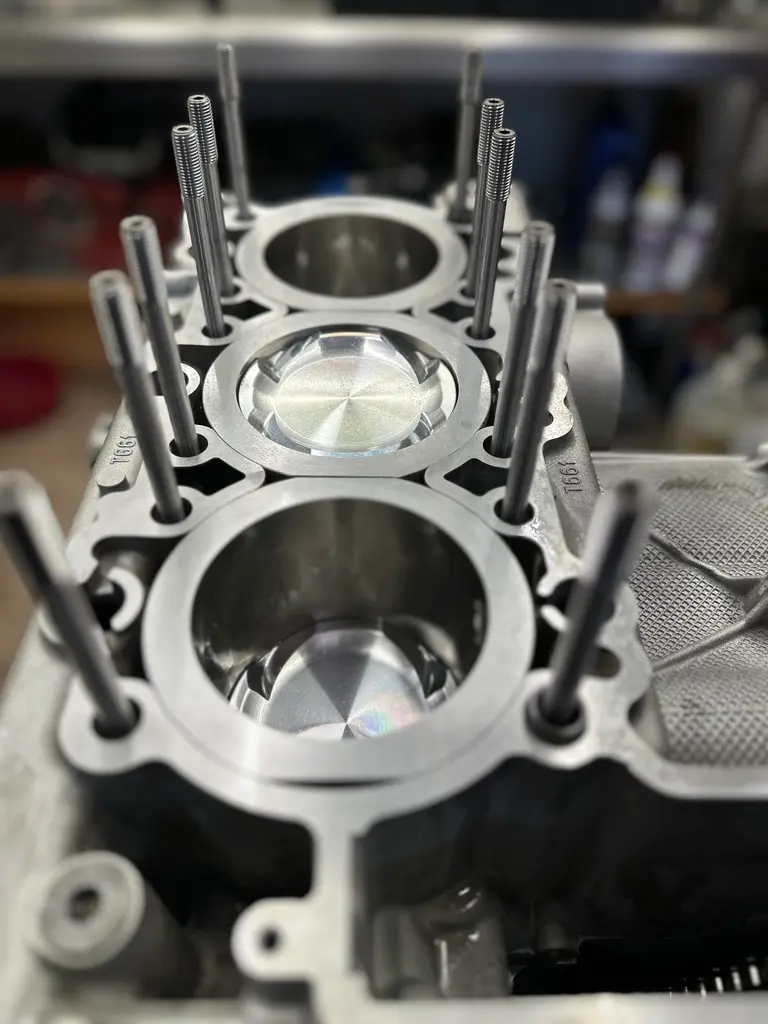
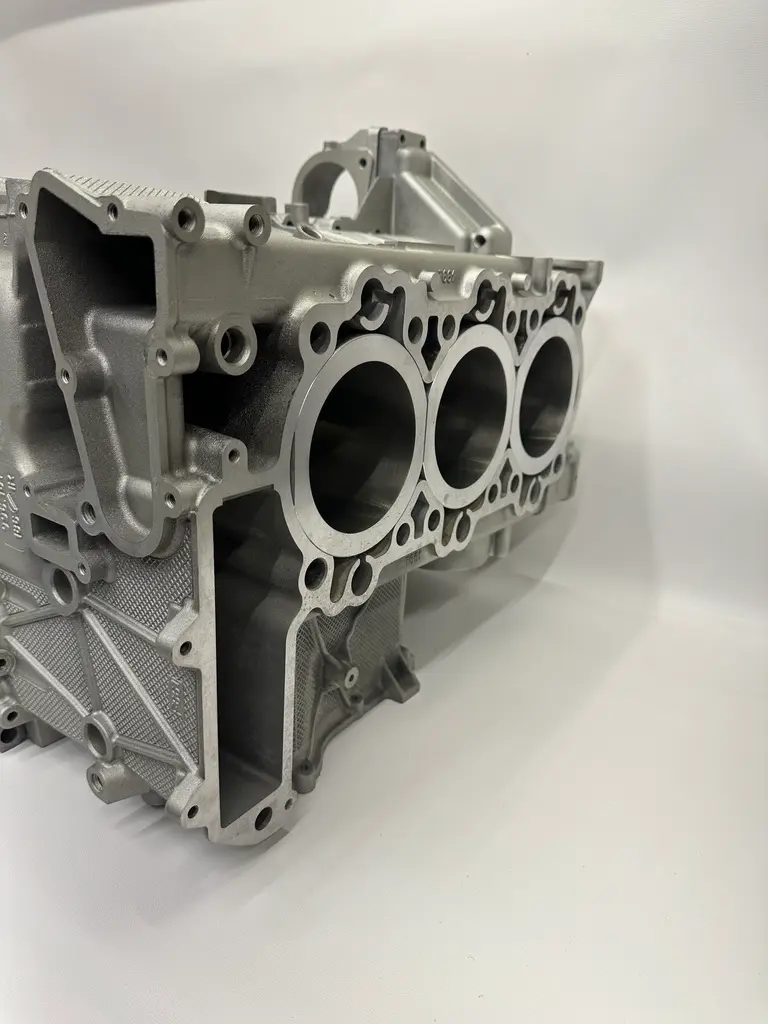
With aluminum construction, closed deck wet liners, machined cylinder surfaces, and Nikasil nickel silicon carbide plating, the block is designed around the structural and dimensional requirements of a performance engine rebuild.
The available 3.2L configuration provides a replacement foundation, while the 3.2L to 3.8L conversion with pistons gives builders an option for increasing displacement.
Because Porsche produced multiple M96 and M97 engine variants, exact engine code verification is recommended before ordering.

(203) 332 7244 Call Us
Description
The Porsche M96 and M97 flat six engines are widely used across the 986 Boxster, 996 911, and later 987 Boxster and Cayman platforms. When an original engine case has cylinder damage, bore wear, cracking, or other structural problems, replacing the complete engine block can provide a stronger and more practical foundation for a professional rebuild.
This Porsche engine block is engineered for M96 and M97 based engine applications and is available in a 3.2L configuration or as a 3.2L to 3.8L conversion using the appropriate piston configuration.
The block uses an aluminum construction with Nikasil nickel silicon carbide plated closed deck wet liners. The cylinder liners are machined and installed directly into the engine block to provide a controlled cylinder surface for piston and ring operation.
This configuration is designed for performance engine rebuilding where cylinder stability, bore integrity, thermal management, and long term durability are critical.
Which Porsche M96 and M97 Engines Can Use This Engine Block
The M96 and M97 engine families include several different engine codes, displacements, cylinder head configurations, camshaft drive systems, and vehicle applications. Because of these differences, engine code verification is important before ordering.
The 3.2L M96 applications include the M96.21 used in the 2000 to 2002 Porsche Boxster S and the M96.24 used in the 2003 to 2004 Porsche Boxster S.
The M97 family was introduced in later applications. M97.20 is associated with 2.7L Boxster and Cayman applications, while M97.21 is associated with 3.4L Boxster S and Cayman S applications.
Because Porsche produced multiple variations of the M96 and M97 architecture, this engine block should be selected according to the exact engine code, model year, displacement, cylinder heads, crankshaft, connecting rods, pistons, and intended engine configuration.
What Are the Main Specifications of This Porsche Engine Block
| Specification | Details |
| Product Type | Porsche M96 M97 performance engine block |
| Engine Family | Porsche M96 and M97 |
| Base Configuration | 3.2L |
| Conversion Option | 3.2L to 3.8L with pistons |
| Engine Layout | Flat six |
| Construction | Aluminum engine block |
| Cylinder Liner Type | Closed deck wet liners |
| Cylinder Surface | Nikasil nickel silicon carbide plating |
| Liner Installation | Machined and installed in block |
| Application | Porsche performance engine rebuilding |
| Intended Use | Replacement, rebuild, performance and displacement conversion |
| Turbo Conversion Testing | Tested under 45 PSI turbo conversion setup |
| Available Configuration | 3.2L or 3.2L to 3.8L with pistons |
| Fitment Verification | Required before purchase |
The current product listing confirms the aluminum construction, Nikasil nickel silicon carbide plated closed deck wet liners, machined and installed liners, 3.2L configuration, and 3.2L to 3.8L conversion option.
Why Does Nikasil Plating Matter in an M96 M97 Engine
Nikasil is a nickel silicon carbide cylinder coating used to provide a hard and wear resistant cylinder surface.
In a performance engine, the cylinder wall must maintain dimensional stability while supporting piston movement, piston ring sealing, combustion pressure, and heat transfer. A properly machined Nikasil cylinder surface provides the controlled bore finish required for piston and ring operation.
For an M96 or M97 engine rebuild, cylinder condition is particularly important because bore wear, scoring, out of round conditions, and damaged cylinder surfaces can make an otherwise usable engine case unsuitable for rebuilding without machining.
The nickel silicon carbide surface also provides a durable interface between the cylinder wall and piston rings when the bore is correctly prepared for the selected piston and ring package.
How Does the Closed Deck Wet Liner Design Improve the Engine Block
- A closed deck design provides greater support around the upper portion of the cylinder bore than an open deck arrangement.
- The cylinder structure has to withstand combustion pressure, piston side loading, thermal expansion, and mechanical loads generated by the crankshaft and connecting rods.
- The use of closed deck wet liners creates a reinforced cylinder structure while allowing the damaged or worn cylinder area to be replaced with a properly machined liner.
- For a performance oriented M96 or M97 rebuild, this makes cylinder geometry and liner installation important parts of the overall engine machining process.
What Does the 3.2L to 3.8L Conversion Include
The product is available in a 3.2L configuration and a 3.2L to 3.8L conversion configuration with pistons.
The 3.8L option is intended for builders who want to increase engine displacement rather than simply replace a damaged 3.2L block.
A displacement conversion requires more than changing the cylinder bore. The final engine specification must be matched across the crankshaft, connecting rods, pistons, cylinder dimensions, compression ratio, cylinder heads, camshaft timing, engine management, and supporting components.
For that reason, customers planning a 3.8L conversion should confirm their complete engine specification before purchasing the block.
Which Porsche Models Are Associated With the M96 and M97 Engine Families
The M96 and M97 families were used across several Porsche platforms.
| Porsche Model | Generation | Engine Code Examples | Displacement |
| Porsche Boxster | 986 | M96.22 | 2.7L |
| Porsche Boxster S | 986 | M96.21 | 3.2L |
| Porsche Boxster S | 986 | M96.24 | 3.2L |
| Porsche Boxster | 987 | M96.25 / M97.20 | 2.7L |
| Porsche Boxster S | 987 | M96.26 / M97.21 | 3.2L / 3.4L |
| Porsche Cayman | 987 | M97.20 | 2.7L |
| Porsche Cayman S | 987 | M97.21 | 3.4L |
| Porsche 911 Carrera | 996 | M96.04 | 3.4L |
| Porsche 911 Carrera | 996 | M96.03 | 3.6L |
The engine code and model year should always be checked before determining compatibility. Porsche used different M96 and M97 configurations across different model years and vehicle platforms.
Why Should You Replace the Original M96 M97 Engine Block
An engine block replacement becomes relevant when the original case cannot economically or reliably be returned to specification.
Common reasons include:
- Cylinder bore damage
- Cylinder scoring
- Excessive cylinder wear
- Damaged cylinder surfaces
- Cracked engine case
- Severe overheating damage
- Out of specification cylinder geometry
- Previous machining damage
- Performance engine conversion requirements
A replacement block can give the engine builder a controlled starting point instead of attempting to recover a severely damaged original case.
What Does This Engine Block Offer for a Performance Rebuild
- The block is designed around the areas that matter most during a professional engine rebuild.
- The aluminum block provides a lightweight structural foundation.
- The closed deck architecture supports the cylinder structure.
- Wet liners provide a replaceable cylinder interface.
- Nikasil plating provides a hard cylinder surface.
- Precision machining establishes the required cylinder geometry.
- The available 3.2L to 3.8L conversion gives builders a displacement upgrade path.
The block has also been tested under a 45 PSI turbo conversion setup, making the product relevant to high output engine projects where cylinder stability and block preparation are critical.
How Should the Block Be Prepared for Engine Assembly
The engine builder should verify every critical dimension before final assembly.
This includes cylinder bore diameter, bore roundness, cylinder taper, deck condition, liner installation, crankshaft alignment, main bearing housing condition, piston clearance, ring gap, connecting rod specification, crankshaft stroke, compression ratio, and cylinder head compatibility.
The final machining specification should be determined by the piston, ring, crankshaft, and connecting rod combination being installed.
A performance engine should not be assembled solely from nominal engine family specifications. Final clearances must be established from the actual components used in the build.
What Should You Check Before Ordering This M96 M97 Block
Before ordering, provide the following information to confirm compatibility.
| Required Information | Why It Matters |
| Porsche model | Determines vehicle platform |
| Model year | Porsche changed engine configurations by year |
| Engine code | Confirms the specific M96 or M97 variant |
| Original displacement | Determines the starting configuration |
| Current crankshaft | Important for displacement calculation |
| Connecting rods | Must match piston and crankshaft configuration |
| Pistons | Determines bore, compression and ring package |
| Cylinder heads | Important for compatibility |
| Camshaft system | M96 and M97 versions use different configurations |
| Intended displacement | Required for 3.2L or 3.8L configuration |
| Naturally aspirated or turbocharged | Determines performance requirements |
| Target power level | Helps determine the appropriate engine specification |
Is This a Complete Porsche Engine
No. This product is an engine block assembly rather than a complete ready to run engine.
The final engine requires the appropriate internal and external components, which can include the crankshaft, connecting rods, pistons, piston rings, bearings, cylinder heads, camshafts, timing components, oiling components, seals, gaskets, sensors, intake system, exhaust system, and engine management components.
The exact parts required depend on the selected engine configuration.
Is This Engine Block Suitable for a Turbocharged Porsche Build
The block has been tested under a 45 PSI turbo conversion setup, making it suitable for consideration in high boost performance applications when the complete engine is correctly engineered and assembled.
However, boost pressure alone does not determine engine reliability.
A turbocharged M96 or M97 build must also consider compression ratio, piston design, ring package, connecting rod strength, crankshaft condition, cylinder head sealing, head studs or fasteners, fuel delivery, engine management, ignition timing, intercooling, lubrication, cooling capacity, and detonation control.
The engine builder should therefore select the block as part of a complete powertrain specification rather than treating the block as an isolated upgrade.
How Does This Block Compare With Reusing a Damaged Factory Case
- Reusing the original case can make sense when the crankcase and cylinders remain within acceptable specifications.
- A damaged case can become expensive to recover when it requires extensive machining, cylinder repair, liner work, deck correction, or other structural repairs.
- A professionally machined replacement block provides a controlled foundation for the rest of the engine build.
- For high performance applications, starting with known cylinder geometry and properly installed liners can also simplify the engine builder’s machining and assembly process.
Which Engine Codes Should You Verify With Emegatronic
- For M96 and M97 applications, customers should verify the exact engine code before ordering.
- Relevant M96 and M97 codes include M96.21, M96.24, M97.20 and M97.21 for the 3.2L and later related applications, while other M96 variants such as M96.04 and M96.03 represent different 996 Carrera configurations.
- Do not assume that every engine carrying an M96 or M97 designation uses the same block specification.
What Is Included With the Porsche Engine Block
The selected configuration determines what is supplied.
The available configurations shown on this product page are:
- 3.2L engine block
- 3.2L to 3.8L conversion with pistons
The product page should be updated to clearly state exactly which machining operations, liners, pistons, coatings, and other components are included with each selectable configuration before purchase.
What Are the Main Benefits of This Porsche Engine Block
- A properly prepared M96 M97 engine block can provide:
- A fresh foundation for an engine rebuild
- Machined cylinder bores
- Nikasil nickel silicon carbide cylinder surfaces
- Closed deck cylinder support
- Installed wet liners
- Compatibility with selected M96 and M97 rebuild configurations
- A 3.2L replacement option
- A 3.2L to 3.8L displacement conversion option
- A foundation for naturally aspirated or properly engineered forced induction builds
Why Choose Emegatronic for an M96 M97 Engine Block
- Emegatronic specializes in Porsche engine components and engine rebuilding, with in-house technical experience across Porsche performance applications. The company is based in Bridgeport, Connecticut and offers Porsche engine parts and rebuilding services.
- For an M96 or M97 project, the important advantage is not simply buying an engine block. The correct block configuration has to match the complete engine build.
- If you are unsure which configuration you need, contact Emegatronic with your engine code and vehicle details before ordering.
Frequently Asked Questions About the Porsche M96 M97 Engine Block
Which Porsche engines use the M96 engine family?
The M96 family was used across several Porsche Boxster, 911 Carrera, and related applications. Exact engine codes and displacement vary by model year and vehicle.
Is the M96.21 a 3.2L engine?
Yes. M96.21 is a 3.2L engine code used in the 2000 to 2002 Porsche Boxster S.
Is the M96.24 a 3.2L engine?
Yes. M96.24 is associated with the 2003 to 2004 Porsche Boxster S and 2004 Boxster S Special Edition.
Is every M96 engine a 3.2L?
No. The M96 family includes 2.5L, 2.7L, 3.2L, 3.4L, and 3.6L configurations depending on the engine code and vehicle application.
Is every M97 engine a 3.4L?
No. M97 includes different displacements. For example, M97.20 is a 2.7L configuration while M97.21 is a 3.4L configuration.
Can this block be converted from 3.2L to 3.8L?
Yes. The product is offered with a 3.2L to 3.8L conversion option with pistons. The complete engine configuration must be matched to the selected displacement.
Does the block use Nikasil cylinders?
Yes. The product specification identifies nickel silicon carbide plated cylinders with closed deck wet liners.
Are the liners already installed?
Yes. The current product description states that the wet liners are machined and installed in the block.
Can this block be used for a turbo build?
The product has been tested under a 45 PSI turbo conversion setup. The complete turbocharged engine must still be engineered around appropriate pistons, rods, compression ratio, fueling, cooling, lubrication, engine management, and detonation control.
Does this product include a complete engine?
No. It is an engine block configuration. The final components required depend on the selected engine build.
How do I confirm whether this block fits my Porsche?
Provide the Porsche model, model year, engine code, original displacement, current crankshaft and piston configuration, and intended engine displacement. Emegatronic can then verify the appropriate configuration before purchase.
Additional information
| Conversion | 3.2L, 3.2L to 3.8L With Pistons |
|---|




Related products
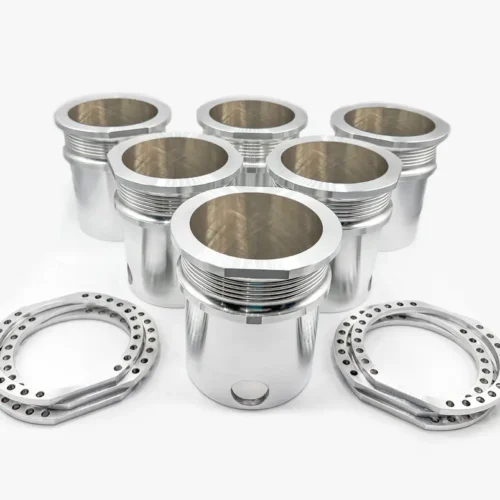
M96/M97 Nikasil Liner Conversion Kit: 3.4L to 3.7L
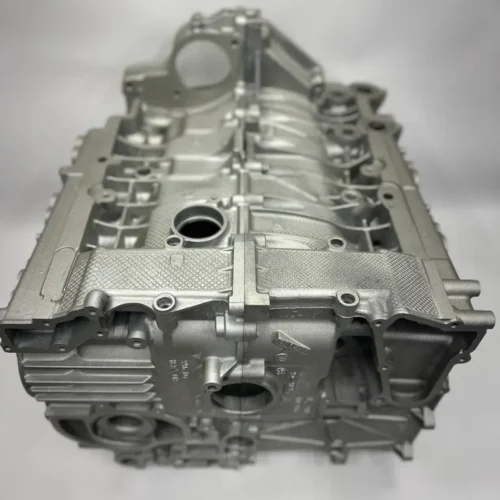
Porsche Engine Block for M96/M97 (2006-2008) 3.8L
Custom Porsche Exhaust for 996, 997, Boxster and Cayman
Porsche Engine Block for M96/M97 (1998-2001) 3.4L

Reviews
There are no reviews yet.