
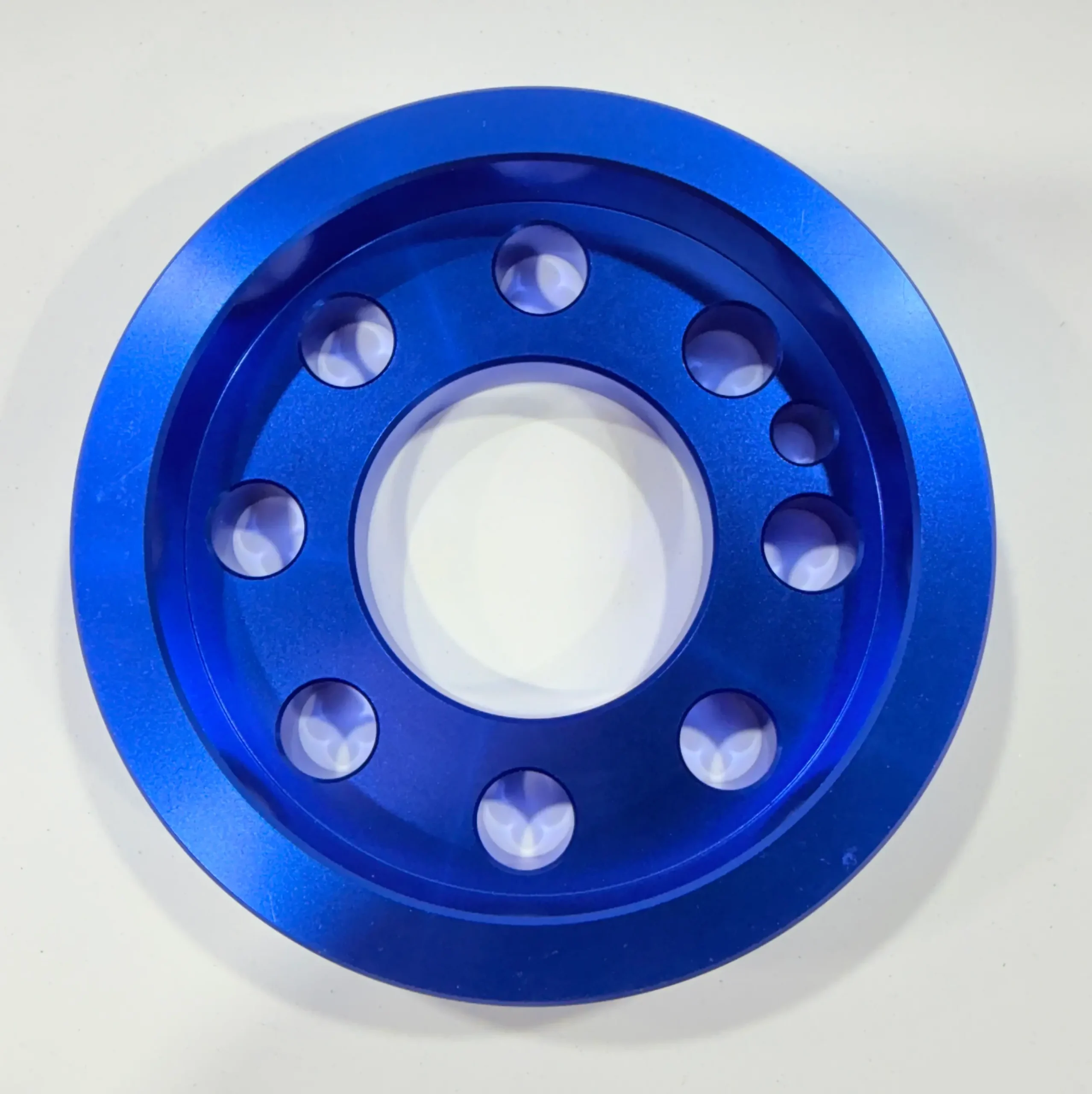
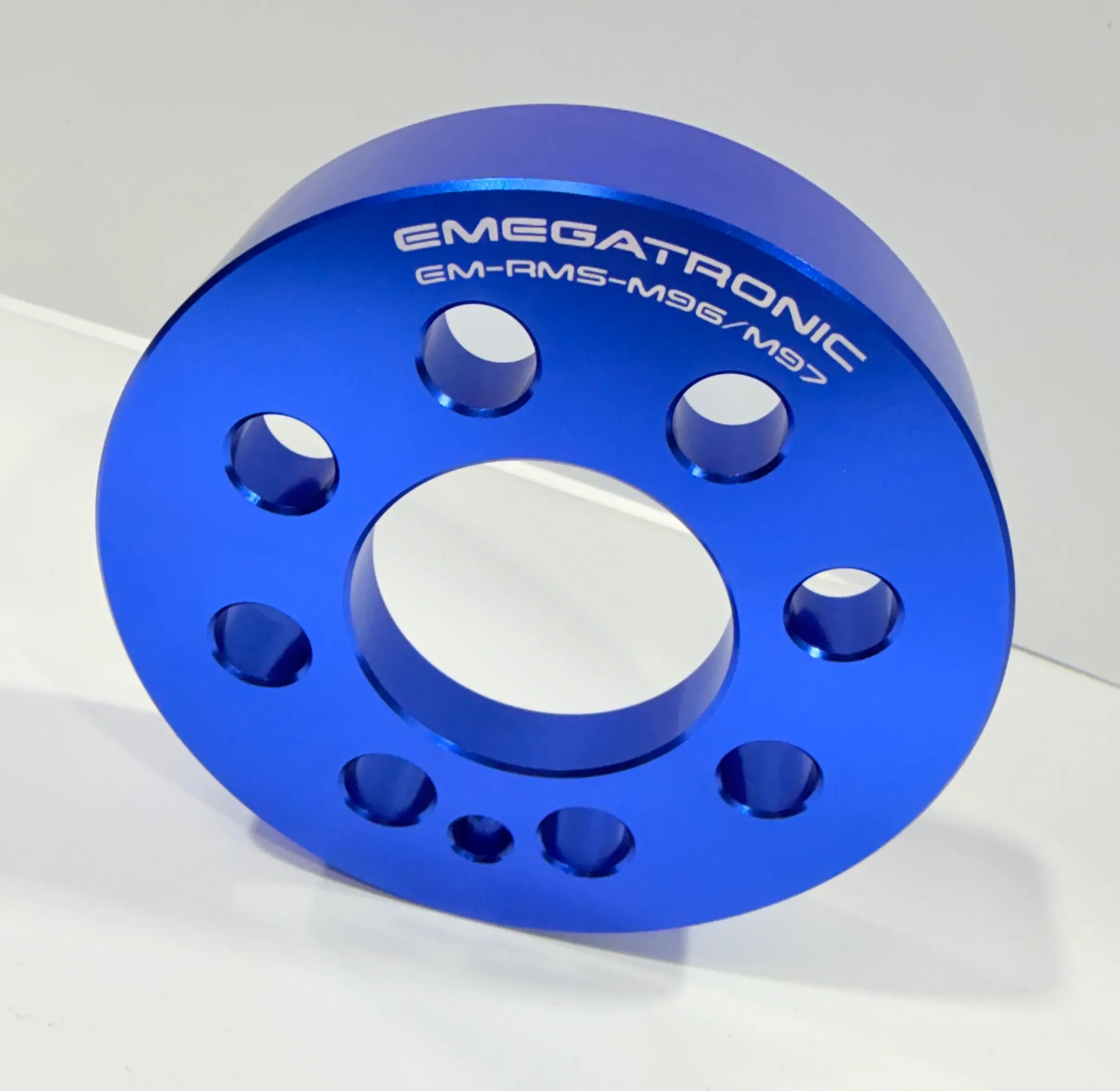
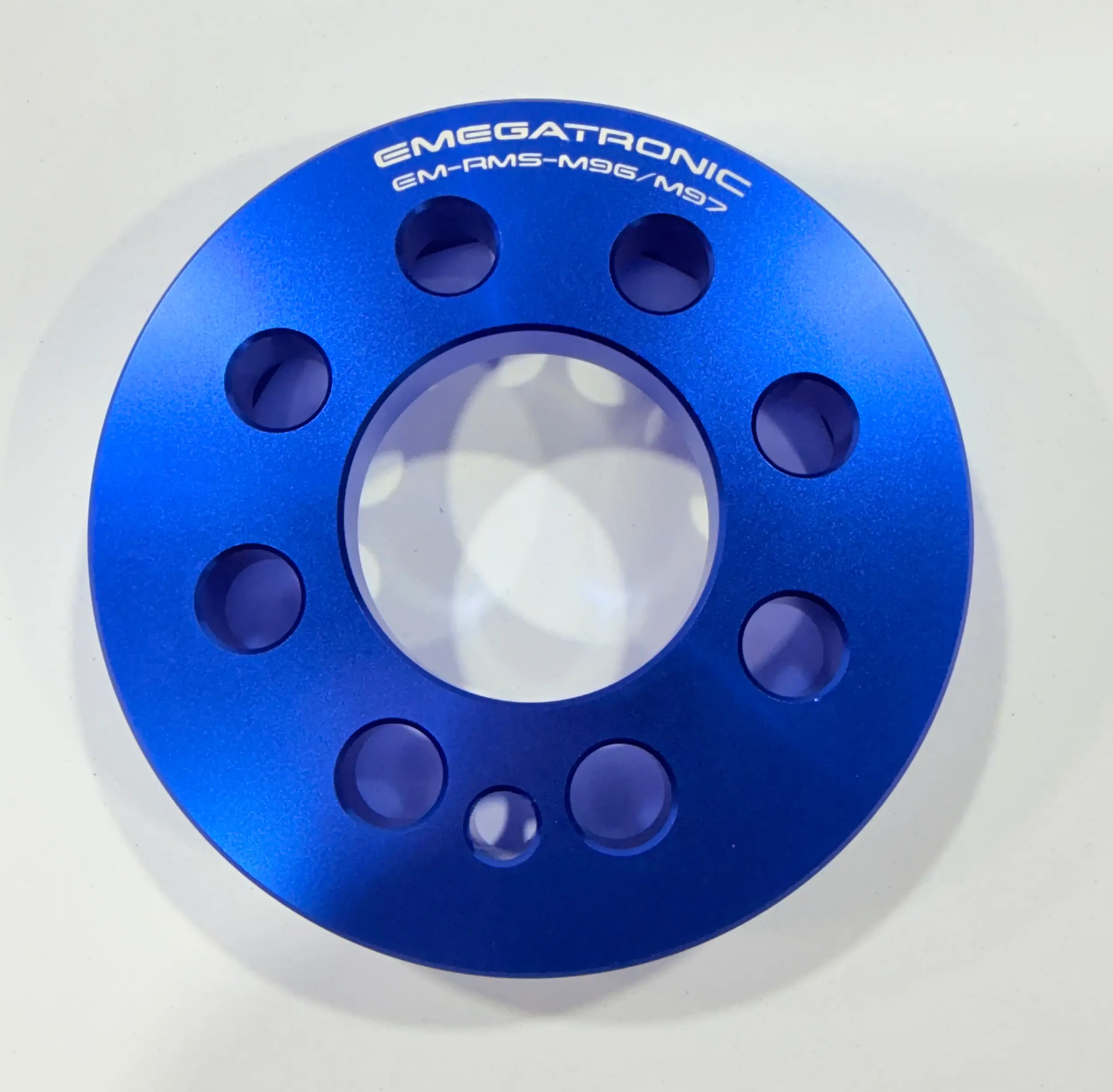
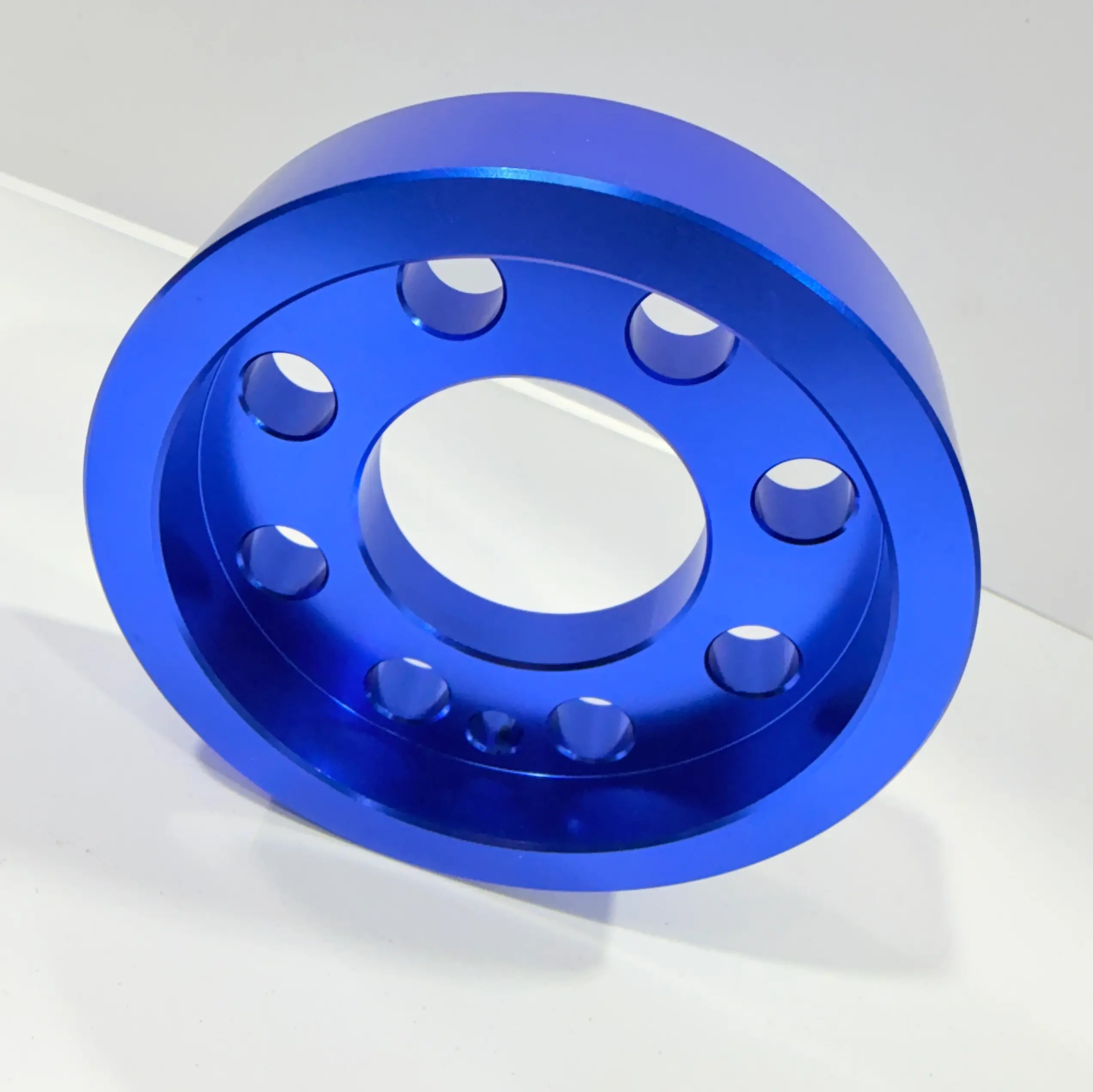
Porsche M96/M97 Rear Main Seal Installation Tool | 996, 997.1, 986, 987.1 & Cayman 987.1
$90.00
Part# EM-RMS-M97/M96
Fitment: Porsche 911 (996/997), Boxster (986/987), Cayman (987) | Engines: M96 & M97
The Rear Main Seal (RMS) is widely considered the “Achilles’ heel” of water-cooled Porsche engines. Even a fraction of a millimeter in misalignment can lead to catastrophic oil leaks, forcing you to redo the entire labor-intensive job.

(203) 332 7244 Call Us
Description
Most M96/M97 rear main seal leaks trace back to installation, not the seal itself. This tool was built around the two things hand installation cannot control: exact seating depth and dead-straight alignment with the crankshaft bore. Get both right and the seal holds. Miss either and you are pulling the transmission again.
Why Installing a Porsche M96/M97 Rear Main Seal Without This Tool Fails
The Teflon lip seal on M96 and M97 engines has zero tolerance for guesswork. Press it in slightly off-axis and the sealing lip never makes full contact with the crankshaft journal. Seat it at the wrong depth and the contact patch sits outside the designed wear zone from the first startup. Neither failure is visible on the bench. Both show up as an oil leak after the transmission is already back in.
At Emegatronic, correcting that mistake means 6 to 10 hours of labor back on the lift, costing $800 to $1,500 before a replacement seal is even ordered. This tool sets the correct depth and alignment in a single controlled press, using the flywheel bolts already on the engine.
Porsche M96/M97 Rear Main Seal Installation Tool — Technical Specifications (EM-RMS-M97/M96)
| Specification | Detail |
| Part Number | EM-RMS-M97/M96 |
| Material | CNC Machined 6061 Aluminum |
| Finish | Corrosion-Resistant Anodized Blue |
| Drive Type | Uses standard flywheel bolts for press-fit action |
| Application | Flywheel/Transmission side |
| Seal Type | PTFE (Teflon) — DRY installation only |
| Price | $90.00 USD |
| Availability | In Stock — Ships from USA Worldwide |
What Makes This RMS Tool Different
At Emegatronic, we’ve pulled enough M96 and M97 transmissions to know where these rear main seal jobs go wrong — depth and alignment, almost every time. This tool was designed around those two failure points specifically, so the PTFE crankshaft seals correctly the first time and the transmission stays out of the job.
Precision Depth Stop — Sets Seal to Exact Factory Spec
The hard stop built into this tool removes the biggest variable in M96/M97 rear main seal installation: depth. The PTFE crankshaft seal bottoms out at the exact factory-specified position every time, regardless of how much torque you apply to the flywheel bolts. Over-driving is physically impossible. Under-driving does not happen. The seal seats where it needs to, full stop.
Self-Centering Pilot — Keeps the PTFE Lip Square With the Bore
Cocking is the other common failure point on M96 and M97 rear main seals. The Teflon lip enters the bore at a slight angle, the contact patch is uneven, and the crankshaft seal leaks within a few hundred miles. The self-centering pilot mounts directly onto the crankshaft hub and keeps the seal square with the bore axis throughout the entire press. No tilting. No uneven seating.
CNC Machined 6061 Aluminum — Safe on Every Surface It Touches
The anodized blue 6061 aluminum construction does two things well: it holds its geometry across dozens of installations without distorting, and it won’t score or scratch the crankshaft sealing surface on contact. Harder materials risk surface damage on precision-machined engine components. This one doesn’t.
Uses Standard Flywheel Bolts — No Press, No Special Equipment
The tool drives using the existing flywheel bolt pattern. No hydraulic press, no workshop-only machinery, no adapters. Thread the bolts in a star sequence, tighten evenly, and the seal moves straight in. It works the same way in a fully equipped workshop as it does on a garage floor.
Porsche Models Compatible With This Rear Main Seal Tool
This rear main seal tool is designed for Porsche 911, Boxster, and Cayman models running the M96 or M97 flat-six engine, covering the flywheel/transmission side crankshaft lip seal on all variants listed below.
| Model | Generation | Years | Engine Code(s) |
| Porsche 911 | 996 | 1998–2005 | M96 |
| Porsche 911 | 997.1 | 2005–2008 | M97 |
| Porsche Boxster | 986 | 1997–2004 | M96 |
| Porsche Boxster | 987.1 | 2005–2008 | M97 |
| Porsche Cayman | 987.1 | 2006–2008 | M97 |
| Porsche 911 | 996 | 1998–2005 | M96 |
How Emegatronic Installs the Porsche M96/M97 Rear Main Seal Using This Tool
At Emegatronic we have done this job enough times to know exactly where it goes wrong. This walkthrough covers the full process, from transmission removal to final seal inspection, using the same tool and same method we use on every M96 and M97 engine that comes through the workshop.
Remove Transmission and Flywheel
Full access to the crankshaft flange and rear seal bore starts here. Pull the transmission and flywheel completely before touching anything else. This exposes the RMS housing, gives you room to inspect the sealing surfaces, and sets you up to do the job properly from the start.
Clean the Crankshaft Flange
Wipe the crankshaft flange, seal bore, and surrounding area completely dry. No oil, no grease, no silicone, nothing. PTFE seals on M96 and M97 engines are installed dry by design. Any contamination on the crankshaft sealing surface will compromise the seal from the moment it seats.
Place the New RMS Seal Onto the Tool
Load the rear main seal onto the installer before it goes anywhere near the engine. The tool supports the Teflon lip evenly around the full circumference, keeping it protected and correctly oriented going into the bore.
Center the Tool Onto the Crankshaft Hub
The self-centering pilot locates directly onto the crankshaft hub. Confirm the installer sits flush and square before threading a single bolt. If it is not centered now, the seal will not be either.
Thread Flywheel Bolts in a Star Pattern
Start all bolts by hand first, then work through them gradually in a cross sequence. The goal is even pressure across the full face of the installer. Uneven tightening at this stage is how the PTFE lip cocks in the bore.
Tighten Until the Tool Bottoms Out
Keep working through the star pattern until the hard stop is reached. That contact point is the factory seal depth for M96 and M97 engines. Stop there. There is nothing to gain by going further and the seal has nowhere left to go anyway.
Verify the Seal Is Seated Evenly
Before anything goes back on, check the seal face around the full crankshaft flange. It should be flush and even with no raised sections, folds, or gaps. Any of those means the seal needs to come out, not get covered up with a flywheel.
Reassemble Flywheel and Transmission
Clean the mating surfaces, follow Porsche torque specs for the flywheel bolts, and reassemble in the correct sequence. The seal did its job. The rest of the assembly needs to match.
This Tool vs. Porsche OEM Tool 9699/3 vs. Installing By Hand
The tool costs $90. A transmission removal to fix a bad seal installation costs $800 to $1,500. This comparison makes that decision straightforward.
| Feature | This Tool (EM-RMS-M97/M96) | By Hand |
| Cost | $90 | $0 |
| Correct Seal Depth | Yes | No |
| Self-Centering Alignment | Yes | No |
| Risk of Oil Leak | None | High |
| Available to the Public | Yes — ships direct | — |
| Uses Flywheel Bolts | Yes | No |
| Cost of a Wrong Install | None | $800–$1,500 redo |
Conclusion
Every M96 and M97 rear main seal job ends one of two ways: the seal holds, or the transmission comes back out. The difference between those two outcomes is not the seal brand, the mechanic’s experience, or how carefully it was pressed in by hand. It is whether the depth and alignment were controlled or estimated. This tool controls both. At $90, it is the only variable in this job worth eliminating before it costs you $1,500 to fix.
FAQs
What goes wrong when an M96/M97 rear main seal is installed without a depth tool?
The seal goes in too shallow or tilts slightly in the bore, and neither failure is visible at assembly. The crankshaft sealing lip makes contact with the wrong surface zone, the PTFE never gets a proper seat, and oil starts weeping past the crankshaft flange within a few hundred miles. By then the transmission is already back in.
Does the M96 and M97 engine use the same rear main seal tool?
Yes. The M96 and M97 share the same flywheel/transmission side seal bore geometry and installation depth requirements. The EM-RMS-M97/M96 covers all variants: 911 996 and 997.1, Boxster 986 and 987.1, and Cayman 987.1, with one tool.
Can this tool be reused across multiple jobs?
Yes. The CNC machined 6061 aluminum holds its geometry across dozens of installations without distorting or wearing. No consumable parts, no recalibration. At $90, most workshops recover the cost on the first job and the tool stays in the drawer indefinitely after that.
Why does the M96/M97 engine use a Teflon seal instead of rubber?
PTFE runs cooler, self-lubricates against the crankshaft journal, and outlasts rubber by a significant margin in this application. The trade-off is that a fluoropolymer crankshaft seal is completely unforgiving during installation. It cannot be adjusted or repositioned once it contacts the bore. Rubber tolerates small errors. This seal does not.
Does the engine need to come out?
No. The engine stays in the car. Removing the transmission and flywheel is enough to fully expose the crankshaft flange, rear oil seal bore, and RMS housing. This tool mounts directly on the flywheel bolt pattern, with no additional engine disassembly needed.
How do I confirm my Porsche has the M96 or M97 engine before ordering?
Check the engine code sticker on the door jamb or run your VIN through a Porsche specialist. As a general guide: 911 996 (1998 to 2005) and 997.1 (2005 to 2008), Boxster 986 (1997 to 2004) and 987.1 (2005 to 2008), and Cayman 987.1 (2006 to 2008) all use the M96/M97 flat-six platform this tool is built for.
- Material: 6061 Aluminum]
- Operation: Press-fit via flywheel bolts
- Seal Compatibility: Works with both OEM Porsche and OEM-supplier (Elring/Victor Reinz) PTFE seals. Note: PTFE seals must be installed DRY. Do not use grease/oil.
- Porsche 911: 2009–2012 (997.2), 2012–2016 (991.1)
- Porsche Boxster: 2009–2012 (987.2), 2013–2016 (981)
- Porsche Cayman: 2009–2012 (987.2), 2014–2016 (981)
- Engine Codes: MA1.01, MA1.02, MA1.20, MA1.21, MA1.22, MA1.23, MA1.70
Additional information
| Weight | 1 lbs |
|---|




Related products
Porsche Engine Block for M96/M97 (2004-2006) 3.2L

Reviews
There are no reviews yet.