

Nickel Silicon Carbide (NiSC)
Call For Price
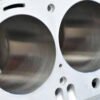
Nickel plating in cylinders—most commonly found as a Nickel Silicon Carbide (NiSC) coating (often referred to by the brand name Nikasil) or Electroless Nickel—is a high-performance surface treatment.

(203) 332 7244 Call Us
Description
Nickel plating in cylinders—most commonly found as a Nickel Silicon Carbide (NiSC) coating (often referred to by the brand name Nikasil) or Electroless Nickel—is a high-performance surface treatment.
It is primarily used to replace heavy cast-iron liners in aluminum engine blocks, making engines lighter and more efficient. Here are the primary benefits:
- Superior Wear Resistance
The plating creates an incredibly hard surface (often 500–700 HV or higher). In NiSC coatings, tiny particles of silicon carbide (a ceramic almost as hard as diamond) are embedded in the nickel. This allows the cylinder to withstand the constant friction of piston rings for hundreds of thousands of miles with minimal “bore wear.”
- Excellent Heat Dissipation
Unlike traditional steel or iron liners, which act as a thermal barrier, a thin layer of nickel allows heat to transfer directly from the combustion chamber into the aluminum cylinder block and then to the coolant. This leads to:
- Lower operating temperatures.
- Reduced risk of engine “knock” or detonation.
- The ability to run higher compression ratios.
- Better Oil Retention & Lubricity
The surface of nickel-plated cylinders is not perfectly smooth; it contains microscopic “peaks and valleys.”
- Oil Retention: These tiny valleys hold oil even under high pressure, ensuring a constant lubrication film between the piston and the wall.
- Low Friction: Nickel has a lower coefficient of friction than iron, which can lead to a slight increase in horsepower (typically 2–4%) and better fuel efficiency.
- Corrosion Protection
Nickel is naturally resistant to oxidation and chemical attacks. This is a massive benefit for:
- Marine engines exposed to salt air.
- Low-use vehicles where moisture can sit in the cylinders and cause rusting in iron-sleeved engines.
- Engines using high-sulfur fuels, though historically, very high sulfur levels were known to degrade early nickel coatings.
- Weight Reduction & Tighter Tolerances
Because the plating is applied directly to the aluminum bore (usually only 0.05mm to 0.1mm thick), there is no need for a thick, heavy iron sleeve. This allows for:
- Lighter engine blocks.
- Larger bore sizes within the same physical engine footprint.
Consistent thermal expansion, as the piston and the cylinder wall are both primarily aluminum and expand at similar rates.
Related products
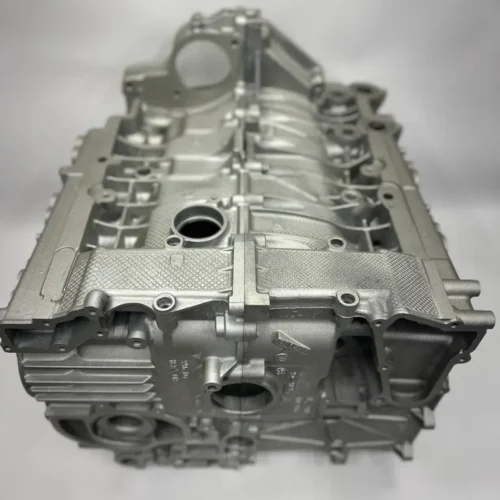
Porsche Engine Block for M96/M97 (2007-2008) 3.4L
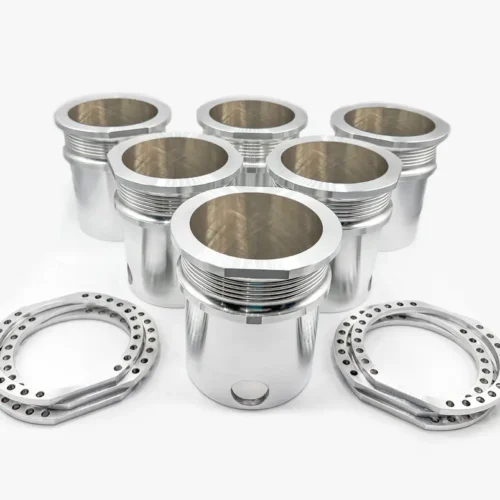
Porsche 997 M96 Engine Nikasil Cylinder Liners Conversion Kit: 3.8L to 4.1L
Porsche Engine Block for M96/M97 (2004-2006) 3.2L
Porsche Engine Block for M96/M97 (2000-2004) 3.2L
Recently Viewed Products
Porsche Engine Block for M96/M97 (2004-2006) 3.2L
Reviews
There are no reviews yet.