M96/M97 Nikasil Liner Conversion Kit: 3.4L to 3.7L
Price range: $2,700.00 through $4,100.00
Part# EL99634R / EL99637R | $2,700.00 – $4,100.00 | In Stock Bore: 100mm | Stroke: 78mm | Fits: 996 Carrera (1998–2001), extends to related M96/M97 platforms
The factory Porsche M96 and M97 engines (found in 996/997 Carreras and 986/987 Boxster/Caymans) are notorious for bore scoring, cracked cylinders (D-chunking), and ovality. Our aluminum wet liner conversion eliminates these risks by fundamentally re-engineering the block’s architecture

(203) 332 7244 Call Us
Description
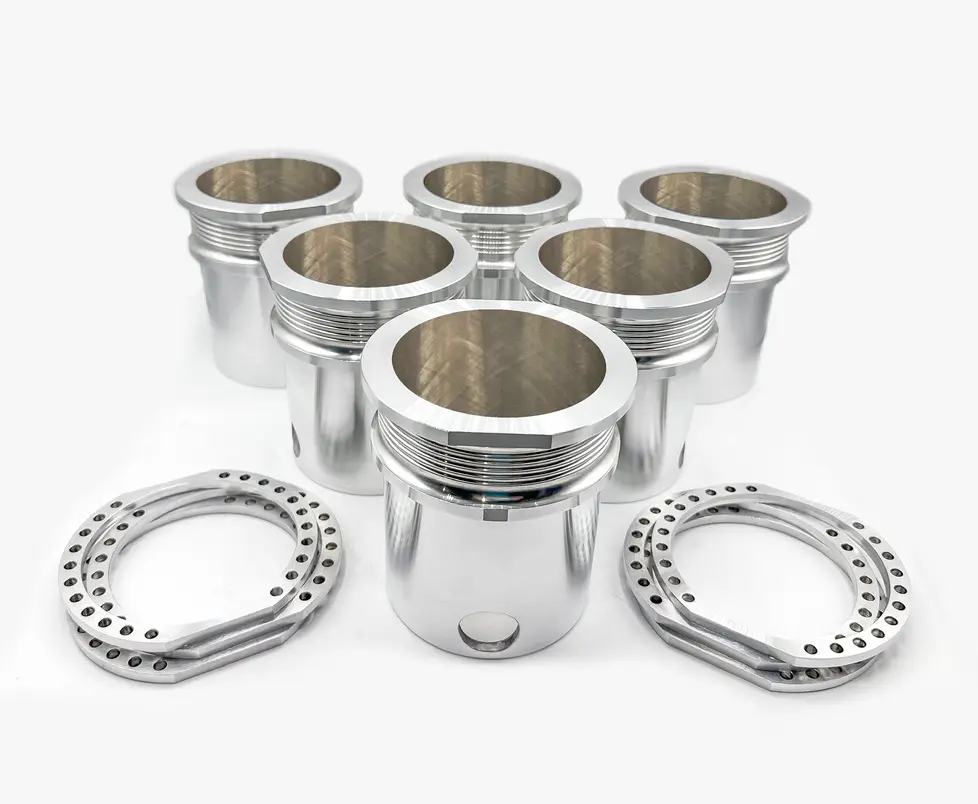
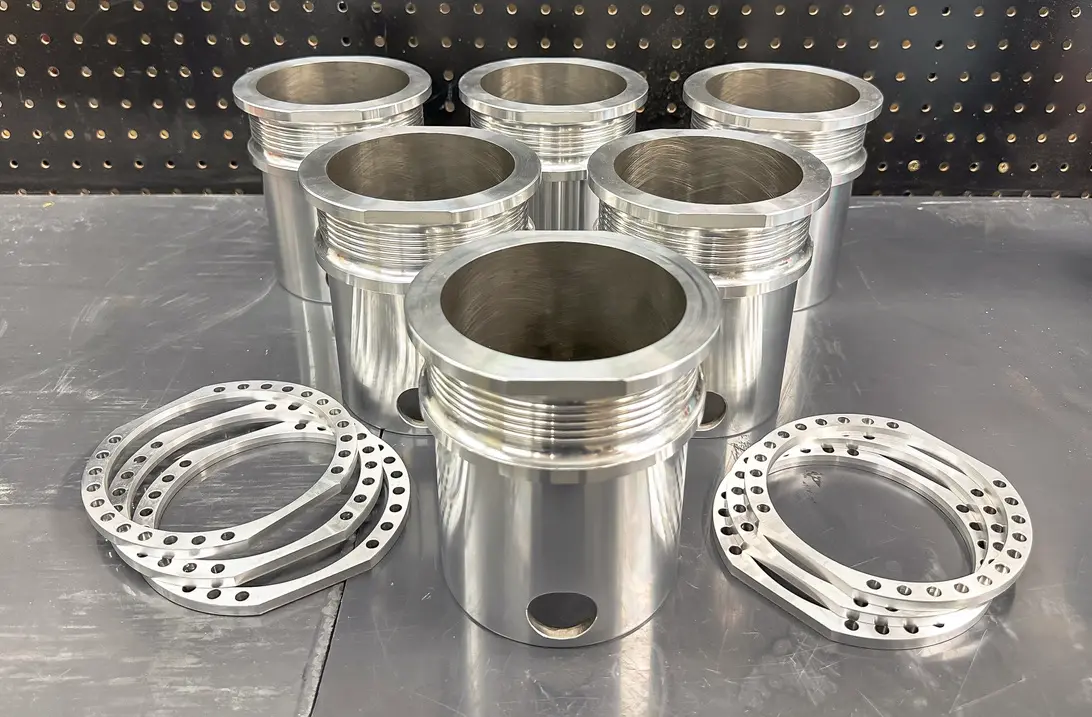
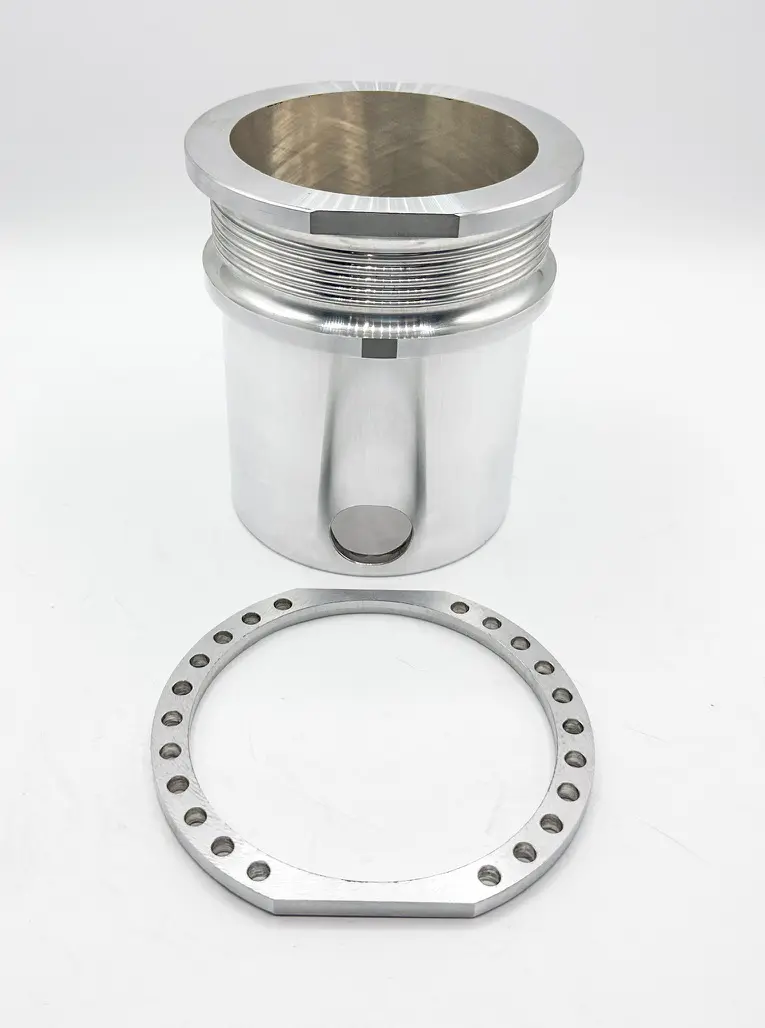
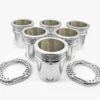
This conversion replaces the factory Lokasil cylinder bores in a Porsche M96/M97 engine block with closed-deck aluminum liners plated in nickel silicon carbide (Nikasil), while increasing displacement from 3.4L to 3.7L. The kit is available as a liner-only conversion or bundled with a matched piston set.
Why the Factory M96/M97 Block Needs This Conversion
Porsche’s factory M96 and M97 engines — used in the 996/997 Carrera and 986/987 Boxster/Cayman — use a cast-in cylinder liner material called Lokasil (a silicon-infused aluminum matrix). Lokasil is lightweight but has three well-documented failure modes:
- Bore scoring — the piston skirt scuffs and smears the soft Lokasil surface, especially during cold starts, leading to oil consumption and eventual seizure.
- D-chunking — thermal cycling causes the unsupported cylinder wall to crack and shed a chunk of material shaped like the letter “D,” usually at the top of the bore near the deck surface.
- Ovality — the open-deck design allows the cylinder bore to flex out of round under head-bolt torque and combustion pressure, accelerating ring wear and compression loss.
This conversion addresses all three failure modes by changing both the liner material and the block’s structural design, rather than patching the existing Lokasil surface.
What the Conversion Changes
1. Aluminum Wet Liners (Replacing Lokasil)
The new liners are machined from high-strength aluminum alloy rather than cast in place like the factory Lokasil.
- Matched thermal expansion — because the liner and the block are both aluminum, they expand and contract at the same rate under heat, maintaining a consistent, leak-free fit across the engine’s full temperature range. Cast-iron or steel sleeves, used by some other liner services, expand at a different rate than the aluminum block and can loosen (“drop”) over repeated heat cycles.
- Wet liner cooling contact — the liner sits in direct contact with engine coolant rather than being isolated inside the block casting. This pulls heat away from the piston rings more effectively than the stock indirect cooling path.
2. Nickel Silicon Carbide (Nikasil) Plating
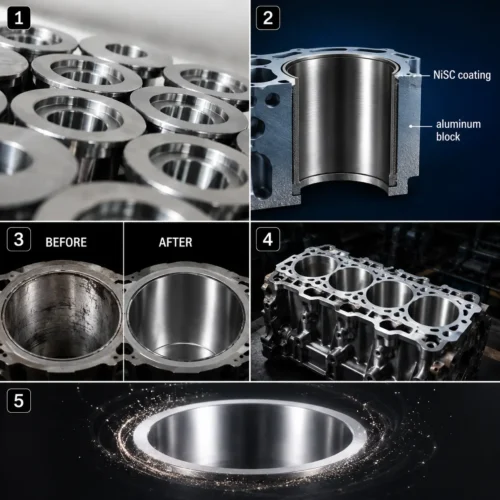
The liner bore surface is plated with nickel silicon carbide — the same coating technology used in Porsche’s air-cooled 911 engines and the Mezger-based GT3 and Turbo engines.
- Eliminates bore scoring — Nikasil is a hard, low-friction ceramic-metal composite surface. Unlike Lokasil, it does not scuff or smear under piston-skirt contact.
- Lower internal friction — the smoother plated surface reduces ring drag, improving oil control and recovering some horsepower otherwise lost to internal friction.
3. Closed-Deck Conversion (Structural Reinforcement)
The factory M96/M97 block uses an open-deck design, where the tops of the cylinder walls are unsupported by the surrounding block casting. This conversion adds a precision-machined support deck at the top of each cylinder, converting the block to a closed-deck configuration.
- Eliminates bore flex — the cylinder walls are locked in place at the deck surface, removing the flex that causes D-chunk cracks and ovality.
- Turbocharging and supercharging compatibility — the added structural rigidity allows the block to hold higher combustion pressures reliably, which the factory open-deck design cannot support long-term under forced induction.
Displacement and Fitment
| Specification | Value |
| Bore | 100mm |
| Stroke | 78mm |
| Resulting Displacement (this listing) | 3.7L |
| Base Engine Platform | Porsche M96 (996 Carrera, 986 Boxster) |
| Compatible Chassis | 996 Carrera (1998–2001), related 986/987 and 997 M96/M97 variants |
| Part Numbers | EL99634R (3.4L base), EL99637R (3.7L oversize) |
| Purchase Options | Liner conversion only, or bundled with matched piston set |
Why Matched Pistons Matter With This Conversion
Increasing bore diameter from the factory 3.4L specification to 3.7L changes the piston-to-wall clearance, compression height, and ring package required for correct sealing. Installing oversized liners without a piston set engineered to the new bore diameter will not achieve proper ring seal or compression. The bundled piston set option ships pre-matched to the exact bore diameter of this liner kit, removing the guesswork of sourcing compatible pistons separately.
Factory Block vs. This Conversion
| Feature | Porsche Factory (M96/M97) | This Conversion |
| Bore Material | Lokasil (silicon-infused aluminum matrix) | Nickel silicon carbide (Nikasil) plated aluminum liner |
| Cylinder Design | Open-deck (unsupported cylinder tops) | Closed-deck (fully supported cylinder tops) |
| Cooling Path | Indirect, through block casting | Direct wet-liner coolant contact |
| Known Failure Modes | Bore scoring, D-chunking, ovality | Structurally eliminated at the design level |
| Displacement | Fixed at factory spec | Oversize options available (e.g., 3.4L to 3.7L) |
| Forced Induction Suitability | Not recommended long-term | Rated for turbocharged/supercharged builds |
Frequently Asked Questions
What does “3.4L to 3.7L” mean on this conversion kit?
It describes the displacement change: the factory M96 block ships at 3.4L, and this liner kit’s 100mm bore combined with a 78mm stroke increases total displacement to 3.7L.
What is Lokasil, and why does it fail?
Lokasil is Porsche’s factory cylinder liner material — a silicon-infused aluminum casting. It fails because it’s soft relative to the piston skirt, leading to scoring, and because the open-deck block design leaves it structurally unsupported, leading to cracking and ovality over time.
What is D-chunking?
D-chunking is a specific crack failure where a section of the cylinder wall, shaped like the letter “D,” breaks away near the top of the bore. It results from thermal cycling stress on an unsupported (open-deck) cylinder wall.
Do I need to buy the piston set, or can I use my factory pistons?
Factory pistons are sized for the factory 3.4L bore and will not fit or seal correctly in the oversized 3.7L liner. A matched piston set — available bundled with this kit — is required for correct ring seal and compression.
Is this conversion suitable for a turbocharged build?
Yes. The closed-deck structural reinforcement is specifically what makes the block viable for forced induction, since the factory open-deck design cannot reliably hold the added cylinder pressure from turbocharging or supercharging.
How is this different from a simple Nikasil re-plating without liner replacement?
Direct re-plating coats the existing Lokasil bore surface but keeps the factory open-deck structure, so it does not address D-chunking or ovality. This conversion replaces the liner material and reinforces the deck structure, addressing all three failure modes rather than the surface issue alone.
Which Porsche models use the M96/M97 engine this kit is designed for?
The M96/M97 engine family covers the 996 and 997 Carrera, and the 986 and 987 Boxster and Cayman. This specific listing is fitted for the 996 Carrera (1998–2001), with related bore/stroke variants available for other M96/M97 chassis.
Will a wet aluminum liner run hotter than a steel sleeve?
No. Aluminum wet liners typically run cooler than steel sleeves in this application, because the liner’s thermal expansion rate matches the surrounding aluminum block, maintaining consistent coolant contact, while steel sleeves can develop expansion gaps that reduce cooling efficiency over time.
| Feature | Porsche Factory (M96/M97) | Our Closed-Deck Wet Liners |
|---|---|---|
| Bore Material | Fragile Lokasil (Silicon Matrix) | Ultra-Hard Nikasil Plating |
| Cylinder Design | Open-Deck (Unsupported) | Closed-Deck (Maximum Support) |
| Cooling | Indirect Heat Transfer | Direct \\\\\\\\\\\\\\\\\\\\\\\\\\\\\\\\\\\\\\\\\\\\\\\\\\\\\\\\\\\\\\\\\\\\\\\\\\\\\\\\\\\\\\\\\\\\\\\\\\\\\\\\\\\\\\\\\\\\\\\\\\\\\\\"Wet\\\\\\\\\\\\\\\\\\\\\\\\\\\\\\\\\\\\\\\\\\\\\\\\\\\\\\\\\\\\\\\\\\\\\\\\\\\\\\\\\\\\\\\\\\\\\\\\\\\\\\\\\\\\\\\\\\\\\\\\\\\\\\\" Coolant Contact |
| Durability | High risk of scoring/cracking | Lifetime Structural Integrity |
| Displacement | Fixed | Oversize Options (e.g. 3.4L to 3.7L) |




Related products
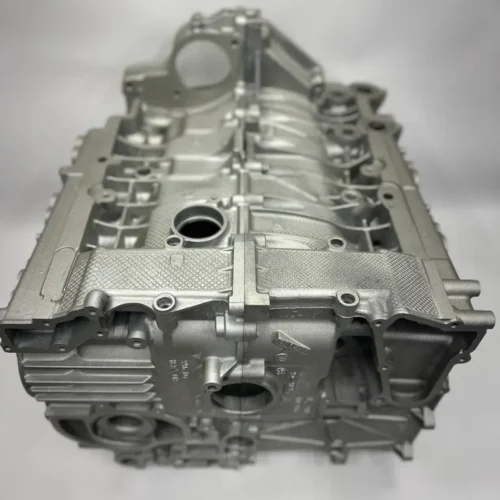
Porsche Engine Block for M96/M97 (2007-2008) 3.4L
Genuine OEM Porsche Engine Block for M96/M97 (2000-2004) 3.2L
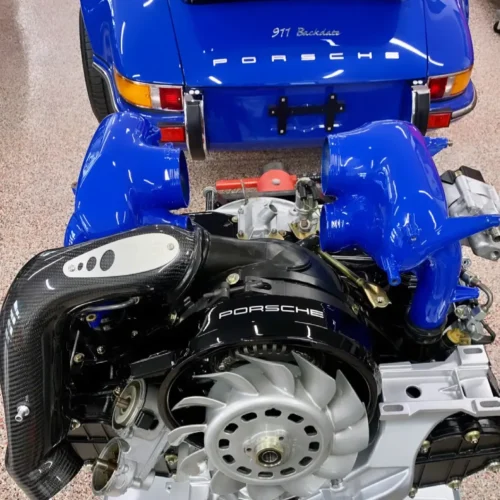
The Ultimate Air-Cooled Resurrection: Porsche 964 Engine Rebuild
Reviews
There are no reviews yet.