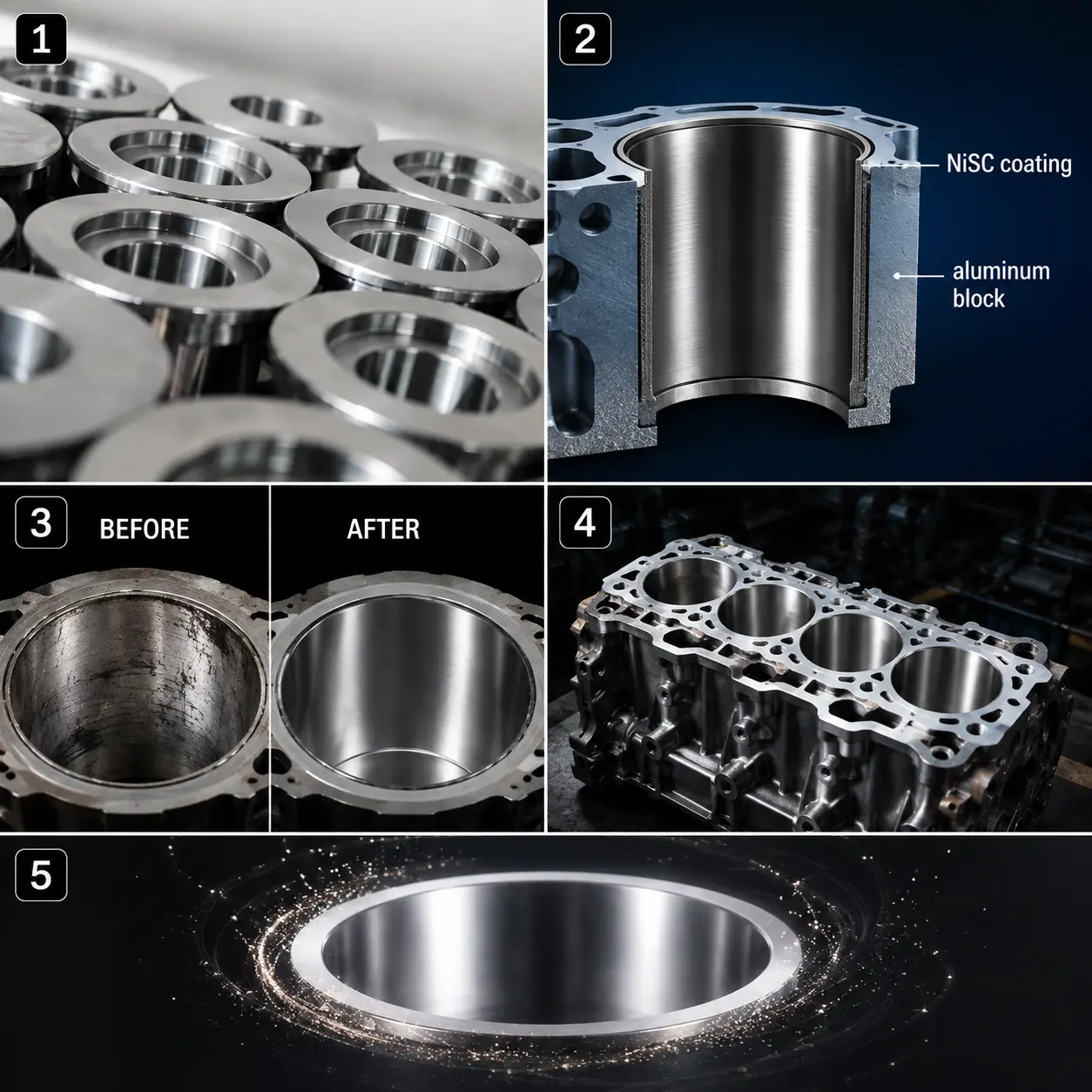

Nickel Silicon Carbide Coating (NiSC) for Aluminum Cylinder Bores
Call For Price
Nickel plating in cylinders—most commonly found as a Nickel Silicon Carbide (NiSC) coating (often referred to by the brand name Nikasil) or Electroless Nickel—is a high-performance surface treatment.

(203) 332 7244 Call Us
Description
Nickel Silicon Carbide, sold under the brand name Nikasil, is an electroless nickel-phosphorus coating with silicon carbide particles bonded into its matrix. We apply it directly onto aluminum cylinder bores to replace heavy cast-iron liners, giving you a lighter block, a harder bore surface, and better heat transfer to the coolant.
What Is Nickel Silicon Carbide Coating
NiSC is a composite coating made of two parts: an electroless nickel-phosphorus alloy (90-93% nickel, 7-10% phosphorus) as the base matrix, and finely divided silicon carbide, a ceramic almost as hard as diamond, dispersed through it at 20-30% by volume. We apply it through an autocatalytic chemical bath, not an electrical current, so the coating builds evenly across bores, recesses, and blind holes without edge buildup.
How Does the NiSC Electroless Plating Process Work
The plating bath operates at approximately 160°F and deposits the nickel-phosphorus-carbide matrix directly onto the prepared substrate through a chemical reduction reaction, not an electrical current. Because the process is autocatalytic rather than electrolytic, coating thickness stays consistent even inside deep bores and sharp corners, where electroplating typically causes thinning or edge buildup. After plating, most shops apply a heat treatment step, commonly between 450°F and 750°F depending on the base metal, to improve coating adhesion and raise final hardness.
What Are the Technical Specifications of NiSC Coating
| Specification | Value |
|---|---|
| Matrix composition | Electroless nickel-phosphorus, 90-93% nickel, 7-10% phosphorus |
| Carbide loading | 20-30% silicon carbide by volume |
| Coating thickness (automotive bores) | 0.05 mm to 0.1 mm |
| Coating thickness (industrial parts) | 0.0005 in to 0.002 in, held within ±0.0001-0.0002 in |
| Bath temperature | Approximately 160°F |
| Post-plating heat treatment | 450°F to 750°F, substrate dependent |
| Hardness, Knoop scale | 3,300 |
| Hardness, automotive bore surface (Vickers) | 500-700 HV |
| Compatible substrates | Aluminum, carbon steel, tool steel, stainless steel, brass |
| Surface finish | Polishable up to a #3 diamond finish |
How Does NiSC Hardness Compare to Other Coatings
Nickel Silicon Carbide ranks among the hardest surface treatments available for aluminum substrates. The table below places it against common alternatives using the Knoop hardness scale.
| Material | Knoop Hardness | Rockwell C Equivalent |
| Nickel Silicon Carbide (NiSC) | 3,300 | Not applicable to this scale |
| Silicon Carbide (bulk ceramic) | 2,500 | Not applicable to this scale |
| Hard Chrome Plating | 972 | 70 |
| Tool Steel, Hardened | 822 | 64 |
| Electroless Nickel, Heat Treated | 750 | 69 |
| Electroless Nickel, As Plated | 542 | 50 |
| Mild Steel | 164 | Not applicable to this scale |
Vickers hardness testing on automotive NiSC bore coatings typically reads between 500 and 700 HV, a range that still exceeds hardened tool steel and gives the bore surface long-term resistance to piston-ring friction.
Key Benefits of Nickel Silicon Carbide Cylinder Coating
- Superior wear resistance — embedded silicon carbide particles cut abrasive wear dramatically; Taber testing shows 16.5 cubic mils/hour of material loss versus 151.1 cubic mils/hour for hardened tool steel at 62 Rockwell C
- Faster heat dissipation — the thin coating layer lets combustion heat pass almost directly from the bore into the coolant, lowering cylinder wall temperature and reducing detonation risk
- Higher compression ratio capability — lower operating temperatures give you room to run more aggressive tuning safely
- Better oil retention and lower friction — the honed surface holds a thin oil film under ring pressure, and nickel’s lower coefficient of friction typically adds 2-4% horsepower
- Stronger corrosion resistance — the nickel-phosphorus matrix resists oxidation, ideal for marine engines, low-mileage vehicles, and high-sulfur fuel applications
- Lighter block, larger bore option — coating bonds directly to aluminum with no pressed-in iron sleeve, saving weight and allowing bigger bore diameters in the same casting
- Matched thermal expansion — piston and cylinder wall are both aluminum-based, so they expand at the same rate under heat
Which Substrates and Engines Is NiSC Applied To
NiSC bonds to aluminum, carbon steel, tool steel, stainless steel, brass, and select engineered plastics. On the automotive side, we apply it to open-deck and closed-deck aluminum cylinder blocks during full engine rebuilds, bore refinishing, and displacement-increasing sleeve conversions.
Where Is Nickel Silicon Carbide Coating Used
- High-performance and motorsport cylinder bores
- Mechanical shaft seals in pumps
- Textile machinery components
- Glass and ceramic processing tools
- High-speed paper handling rollers
- Ultrasonic transducer wear plates
- Precision gage blocks
- Extruder dies and industrial cutting blades
How Is NiSC Different From Hard Chrome and Nikasil
Nikasil is a specific trademarked implementation of nickel silicon carbide coating developed for motorsport and production engine cylinders, so the two terms describe the same coating family rather than two different products. Compared against hard chrome plating, NiSC offers more than three times the Knoop hardness, better heat transfer because it bonds in a thinner layer, and superior surface coverage inside blind holes and tight bore geometries, since electroless deposition does not depend on electrical current density the way chrome electroplating does.
What Applications Use Nickel Silicon Carbide Coating
Beyond high-performance and motorsport cylinder bores, nickel silicon carbide coating is used on mechanical shaft seals in pumps, textile machinery components, glass and ceramic processing tools, high-speed paper handling rollers, ultrasonic transducer wear plates, precision gage blocks, extruder dies, and industrial cutting blades, wherever a part needs a hard, corrosion-resistant, and dimensionally precise surface.
People Also Ask
Do I need to send my own cylinder block, or can I buy the coating service alone?
You send us your engine block or bare cylinder liners for coating. We inspect the bore for cracks, scoring, or out-of-round wear before plating, then machine and coat it to your exact bore specification.
How long does the NiSC coating process take from drop-off to pickup?
Turnaround typically runs 2 to 4 weeks, depending on bore condition and whether a bore-size increase or full engine rebuild is bundled with the coating. Rush service may be available on request.
Will NiSC coating fit my stock piston and ring set, or do I need new pistons?
In most cases you will need new pistons and rings sized for the coated bore, since NiSC coating adds material and tightens bore tolerance. We confirm exact piston clearance before starting the job so there are no fitment surprises.
What warranty comes with the NiSC coating service?
We warranty the coating against flaking, delamination, and premature bore wear under normal operating conditions. Warranty terms vary by engine platform and application, so confirm exact coverage when you request your quote.
Can a scored or damaged Nikasil bore be repaired instead of fully re-sleeved?
Yes, in most cases. We strip the failed coating, re-machine the bore to the next oversize, and re-plate it with fresh NiSC, restoring original tolerance without the added cost of a full sleeve conversion.




Related products
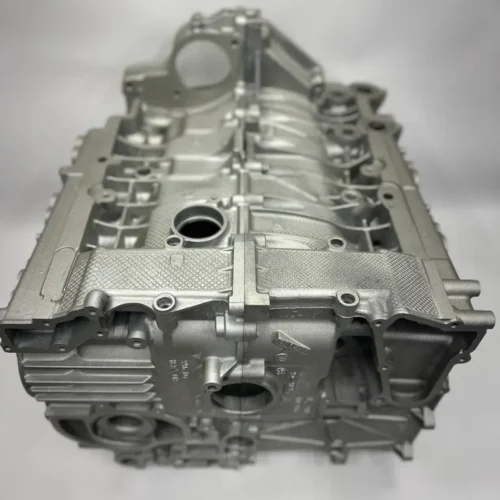
Porsche Engine Block for M96/M97 (2002-2005) 3.6L
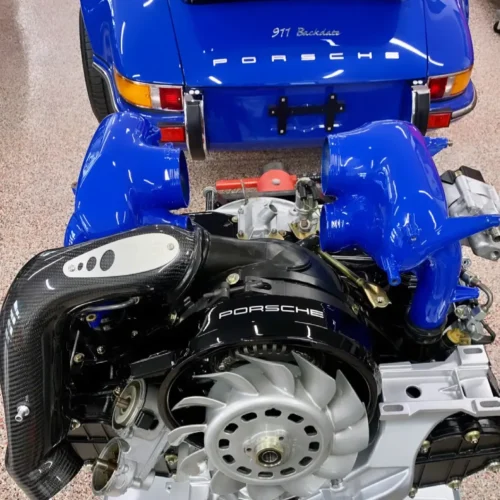
The Ultimate Air-Cooled Resurrection: Porsche 964 Engine Rebuild
Porsche Engine Block for M96/M97 (2006-2008) 3.8L
Reviews
There are no reviews yet.