
The Maintenance Philosophy
Call For Estimate
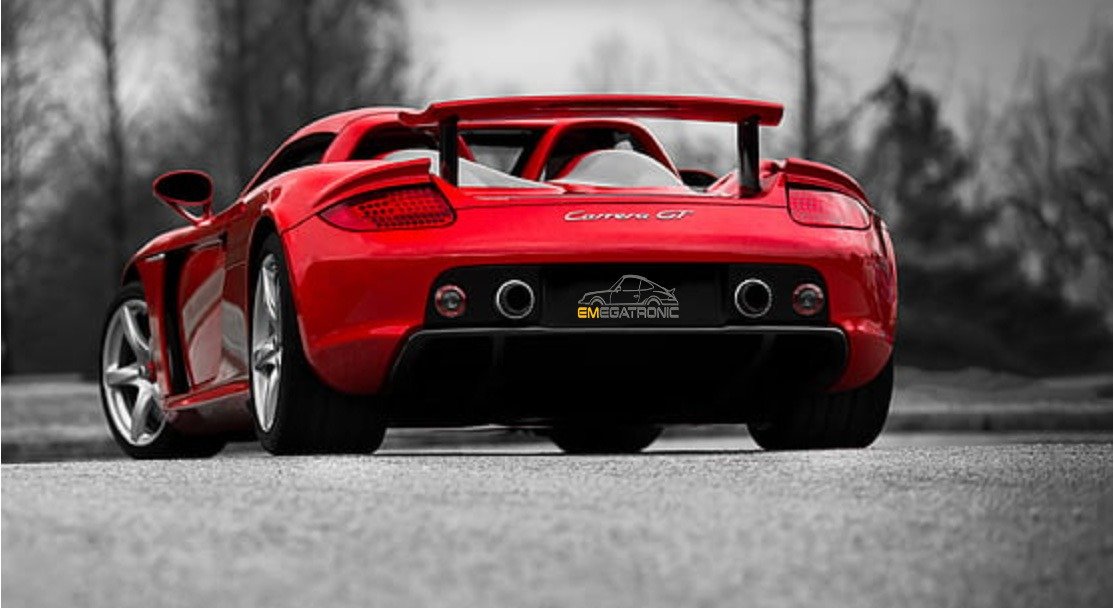
The Carrera GT is a race car disguised as a road car. Because it uses a carbon-fiber monocoque and a ceramic dry-sump lubrication system, standard “oil change” logic doesn’t apply. Precision is everything

(203) 332 7244 Call Us
Description
The Carrera GT is a race car disguised as a road car. Because it uses a carbon-fiber monocoque and a ceramic dry-sump lubrication system, standard “oil change” logic doesn’t apply. Precision is everything.
- The Major Service (The “Engine-Out”)
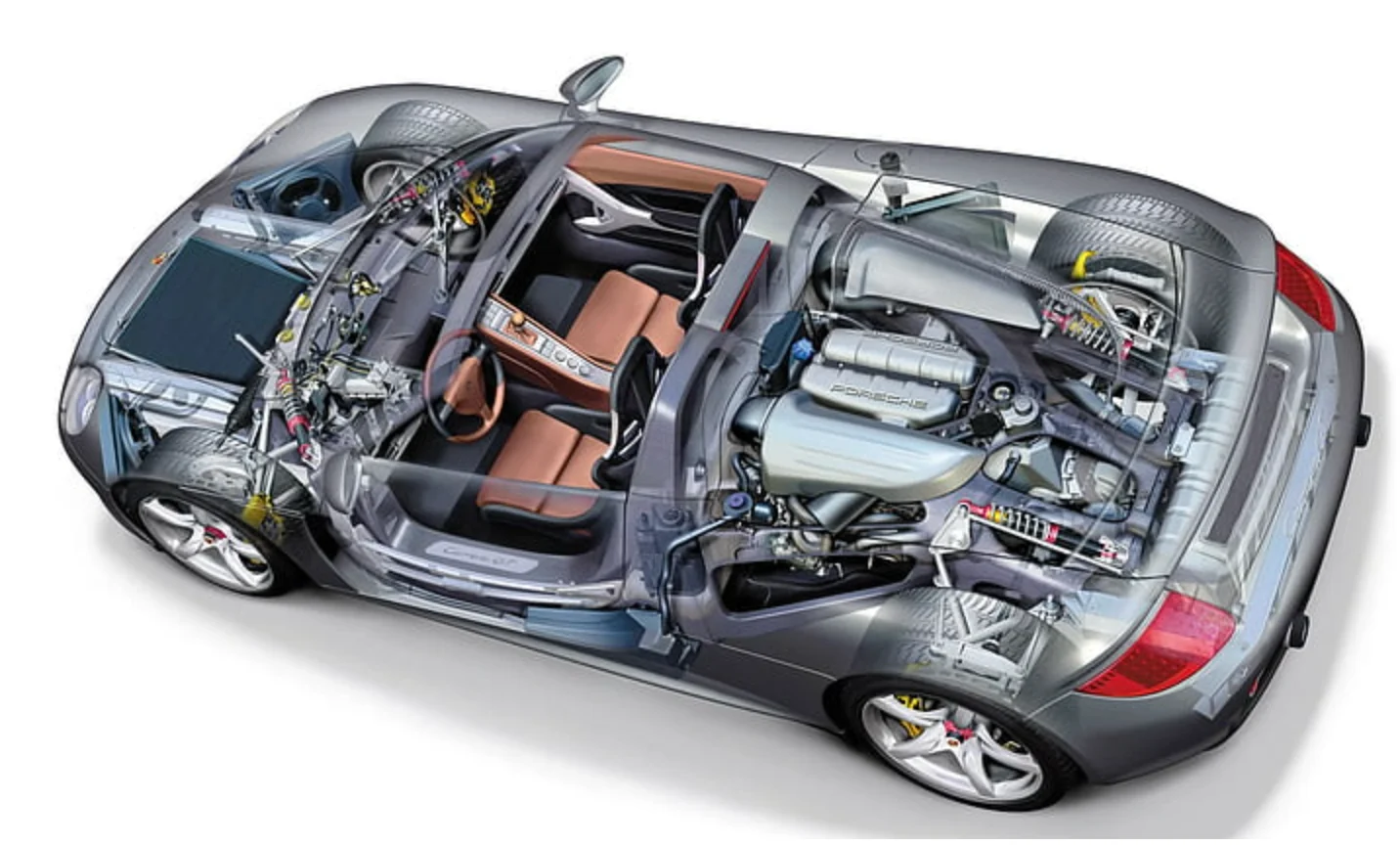
To perform significant belt work or valve adjustments, the entire rear drivetrain must be dropped from the chassis.
- Interval: Every 4 years or 15,000 miles.
- Focus: Spark plugs, engine belts, valve clearance checks, and a full inspection of the carbon fiber structure.
- Fluids & Filters
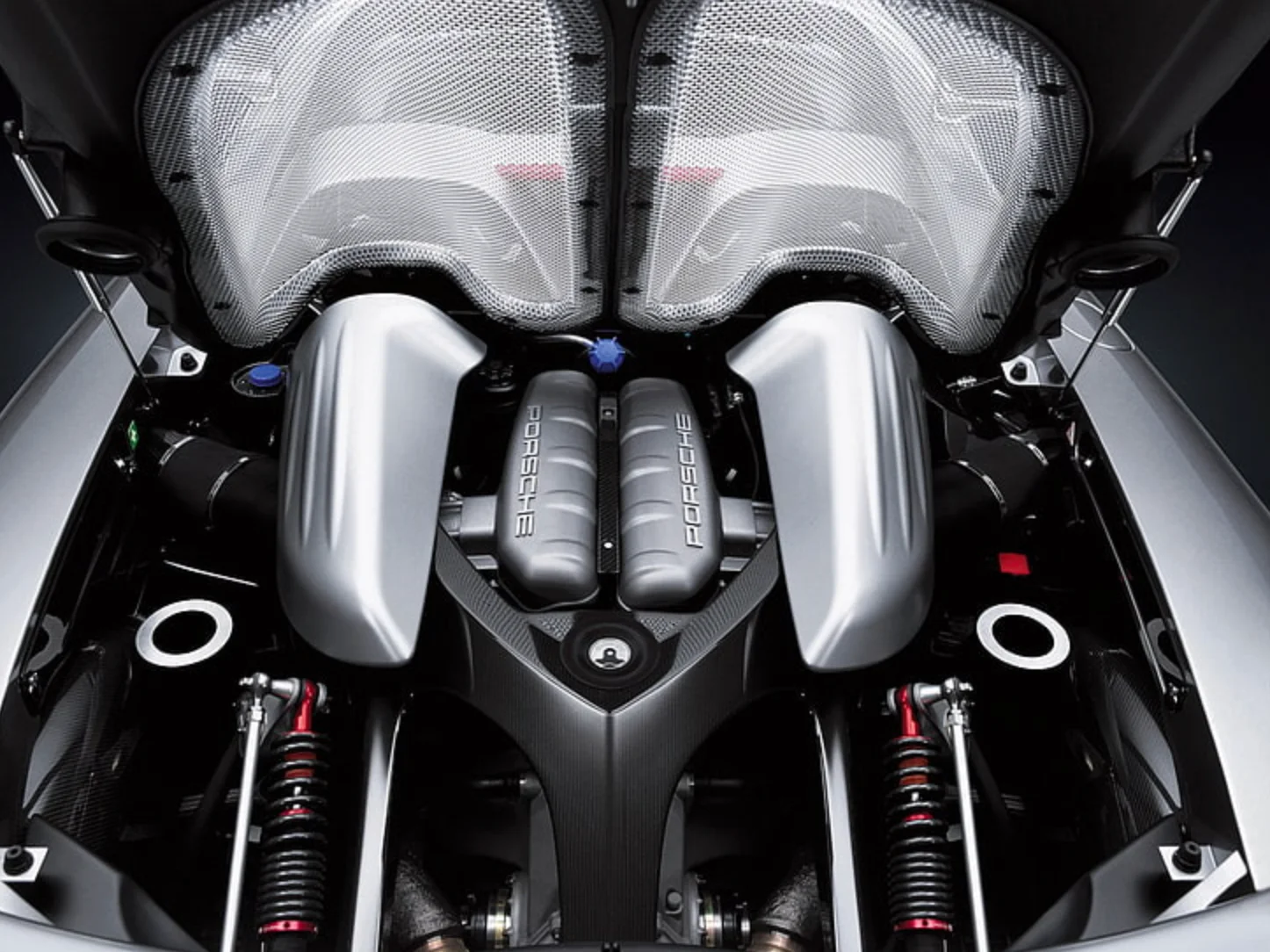
- Oil Change: Should be performed annually, regardless of mileage. The V10 requires specific Mobil 1 synthetic blends to protect the high-revving internals.
- Brake Fluid: The PCCB (Porsche Ceramic Composite Brake) system is incredible, but the fluid is hygroscopic. Flush it every 2 years to prevent pedal fade.
- Coolant: While “lifetime,” we recommend testing and refreshing every 5 years to protect the magnesium housing.
- The Clutch (The CGT’s “Heartbeat”)
The PCCC (Porsche Ceramic Composite Clutch) is legendary and sensitive.
- Measurement: Have a technician measure the clutch wear (via a specialized tool) at every service.
- Operation Tip: Never “slip” the clutch. To pull away, release the pedal slowly without touching the gas until the car is moving. This preserves the $20,000+ assembly.
Critical Components to Watch
| Component | What to Look For | Pro Tip |
|---|---|---|
| Tires | Date codes & dry rot | Even with 100% tread, tires older than 4 years are dangerous for a 605hp RWD car. |
| Battery | Low voltage | These cars hate sitting. Use a high-quality lithium-ion tender to avoid electrical gremlins. |
| Suspension | Leaking dampers | The pushrod suspension is robust, but the seals can dry out if the car isn’t driven. |
| TPMS Sensors | Battery life | Original 2004–2006 sensors are likely dead by now. Replace them during your next tire swap. |
Preservation & Care
- Carbon Fiber: The clear coat on the engine bay carbon can yellow over time due to heat. Use high-temp ceramic coatings to provide UV and thermal protection.
- Magnesium Wheels: These are ultra-light but can be brittle. Never use acidic wheel cleaners; stick to pH-neutral soaps and hand-drying.
- The Underside: The aerodynamics depend on a flat underbody. Inspect the trays for scraping or loose fasteners regularly.
Expert Note: Documentation is the most valuable “part” of a Carrera GT. Always keep a fastidious record of every service, no matter how small. It’s the difference between a driver-grade car and a world-class collectible.
The Carrera GT (Type 980) was a leap forward in materials science. Maintaining it requires understanding three specific areas: Thermal Management, Material Integrity, and Operational Technique.
- The “No-Gas” Clutch Technique
This is the most important piece of advice for a new owner. The PCCC (Porsche Ceramic Composite Clutch) is small, lightweight, and has a very low rotational mass.
- The Rule: Do not apply throttle when pulling away from a standstill.
- The Method: Slowly lift the clutch pedal until the anti-stall system engages and the car begins to creep. Once the clutch is fully engaged, you may apply power.
- Why? Slipping the clutch like a traditional manual will accelerate wear exponentially, leading to a massive repair bill.
- The Magnesium Factor
The Carrera GT features five-spoke wheels made of forged magnesium.
- Sensitivity: Magnesium is lighter than aluminum but more prone to corrosion if the paint is chipped.
- Torque: These use a center-lock nut (Blue for Right, Red for Left). They require a massive torque application (550 Nm or roughly 407 ft-lb). Ensure your service center has the specific 4-foot torque wrench required for this task.
- Chassis & Carbon Fiber Care
The monocoque and subframe are Carbon Fiber Reinforced Plastic (CFRP).
- Ground Clearance: The car is incredibly low. Any “bottoming out” doesn’t just scratch paint—it can structuraly damage the undertray. Regularly inspect the “skid pads” and replace them if worn.
- Visual Inspection: Every major service should include a visual “tap test” or ultrasound of the engine carrier mounts to ensure no heat-related stress fractures have occurred over the last 20 years.
Service Intervals: Beyond the Manual
| System | Frequency | Why it Matters |
|---|---|---|
| Valve Adjustment | Every 30,000 Miles | The V10 uses solid lifters. Unlike hydraulic lifters, these require manual shim adjustments to ensure the engine breathes perfectly at 8,400 RPM. |
| Drive Belts | Every 4 Years | Even if the car isn’t driven, the rubber perishes. A snapped belt on this engine can be catastrophic. |
| PCCB Inspection | At Tire Change | Check for “pitting” on the ceramic rotors. While they can last 100k miles, track use or stone chips can cause premature failure. |
| Hydraulic Wing | Annually | The rear wing actuators can leak or “stutter.” Ensure the fluid levels are topped up and the rails are lubricated with acid-free grease. |
Storage & Preservation
If the car is being kept as a “Garage Queen” or investment piece:
- Fuel Stabilizer: The 2004–2006 fuel systems aren’t fond of modern high-ethanol fuels sitting for long periods. Use a stabilizer and try to find ethanol-free gas.
- Tire Flat-Spotting: These cars are heavy enough to flat-spot the Michelin Pilot Sport Cup 2 tires in just 3 weeks. Use “tire cradles” or increase tire pressure to 50 PSI for long-term storage.
- Air Conditioning: Run the AC at least once a month. This keeps the seals lubricated and prevents the refrigerant from leaking out—a common issue on cars that sit.
The “Golden Rule” of CGT Ownership
Never skip the PPI (Pre-Purchase Inspection) or the Annual Health Check. Because the car is analog and lacks stability control (it only has Traction Control), the mechanical health of the suspension and tires is your only safety net.
Pro Tip: Always keep the specialized “Tool Kit” and the “Lug Nut Socket” in the car. Many shops—even Porsche dealers—may not have the Carrera GT-specific center-lock socket on hand if you have a flat tire on a road trip.
Related products
Porsche Engine Block for M96/M97 (2002-2005) 3.6L
Porsche Engine Block for M96/M97 (2006-2008) 3.8L
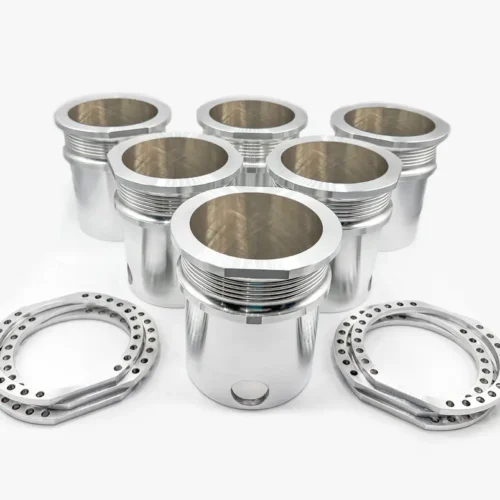
996 3.4L to 3.7L Conversion Nickel Silicon Carbide Liners Bore 100mm Stroke 78mm
Porsche Engine Block for M96/M97 (2000-2004) 3.2L
Recently Viewed Products


Reviews
There are no reviews yet.