Isotropic Superfinishing (ISF) for Porsche Crankshafts | EM-ISOTROPIC
$1,200.00
Part# EM-ISOTROPIC
Key Benefits of Isotropic Superfinishing
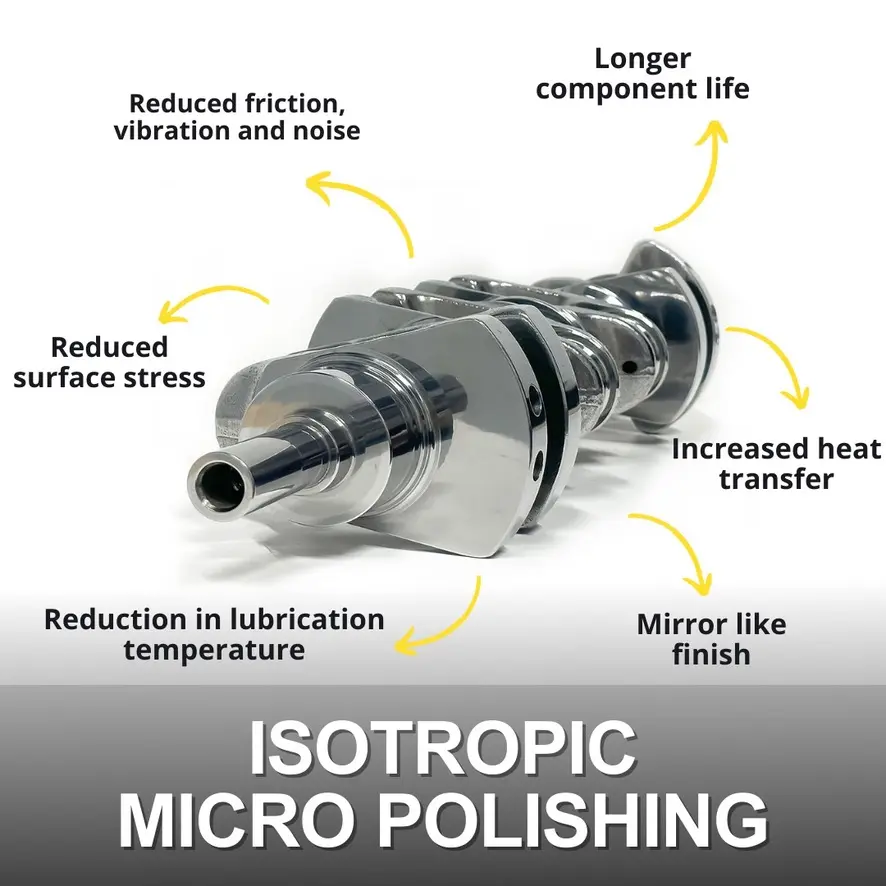
- Reduced Friction and Heat
Because the surface peaks are removed, there is significantly less “asperity contact” between the crankshaft journals and the bearings.

(203) 332 7244 Call Us
Description
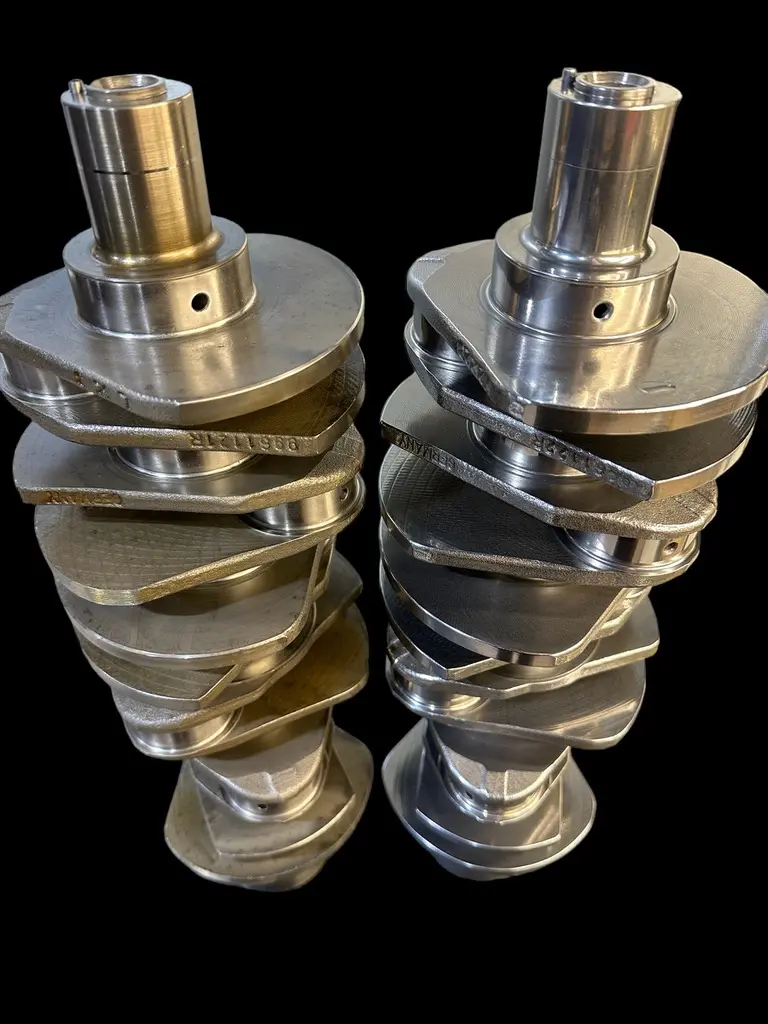
Isotropic Superfinishing removes microscopic surface peaks from crankshaft journals, cutting friction, extending fatigue life, and improving load capacity under high-performance operating conditions. Emegatronic applies this process to Porsche crankshafts used in track, turbocharged, and high-compression builds.
What Isotropic Superfinishing Does
Standard machined surfaces contain microscopic peaks and valleys, visible only under magnification. These peaks create “asperity contact” — direct metal-on-metal friction points between the crankshaft journal and the bearing surface. Isotropic Superfinishing eliminates these peaks through a controlled finishing process, leaving a surface texture measured in single-digit microinches Ra.
The result is a journal surface that behaves differently under load, heat, and lubrication than a conventionally ground or polished crankshaft.
Key Benefits
1. Reduced Friction and Heat
Removing surface peaks eliminates most asperity contact between the crankshaft journal and bearing.
- Lower oil temperatures — less friction converts into less waste heat.
- Efficiency gains — reduced internal drag can translate into measurable horsepower and torque improvements.
2. Enhanced Load-Carrying Capacity
Conventional surfaces contain valleys that break the oil film under extreme pressure. The isotropic surface supports a uniform hydrodynamic oil film instead, allowing the crankshaft to carry higher loads — including those generated in turbocharged and high-compression engines — without metal-to-metal contact with the bearing.
3. Increased Fatigue Life
Most crankshaft failures originate at microscopic surface imperfections, known as stress risers.
- Crack prevention — removing these jagged microscopic edges eliminates the sites where cracks typically initiate.
- Durability — this is why Isotropic Superfinishing (ISF) is a standard process in Formula 1, NASCAR, and endurance racing, where parts must survive extreme fatigue cycles.
4. Improved Oil Retention and Shedding
The finished surface looks mirror-smooth but retains microscopic dimples rather than linear scratches.
- Lubrication — the dimples function as micro-reservoirs that hold oil at the bearing interface.
- Windage reduction — on counterweights, the superfinished surface sheds oil faster, reducing windage losses — the parasitic drag caused by oil splashing inside the crankcase.
How the Process Works
Emegatronic uses a vibratory or isotropic finishing method that combines the crankshaft with specialized ceramic or polymer media inside a controlled chamber. The media abrades the surface peaks selectively, without cutting into the base metal or altering the shaft’s dimensional tolerances. Unlike grinding or honing, the process removes material non-directionally — meaning the surface has no dominant lay pattern, hence the term “isotropic.”
The process typically follows crankshaft machining and precedes final balancing, so the superfinished surface is the last mechanical step before assembly.
ISF vs. Standard Grinding or Polishing
| Attribute | Standard Ground Surface | Isotropic Superfinished Surface |
| Surface Pattern | Directional grind lines (anisotropic) | Non-directional, uniform texture (isotropic) |
| Surface Roughness (Ra) | 8–16 microinches typical | 1–4 microinches typical |
| Asperity Contact | Present, causes friction and heat | Largely eliminated |
| Oil Film Behavior | Can break down under high load | Remains uniform under high load |
| Crack Initiation Risk | Higher, due to surface stress risers | Lower, due to smoother micro-geometry |
| Typical Use Case | Stock/OEM engine builds | Turbocharged, high-compression, and racing builds |
Compatibility
Emegatronic performs Isotropic Superfinishing on crankshafts from Porsche flat-six and flat-four platforms, including M96, M97, and MA1/9A1 engine families used across 911, Boxster, and Cayman generations. Confirm engine code and generation with a specialist before ordering, since journal dimensions vary across model years.
Frequently Asked Questions
How much does Isotropic Superfinishing cost?
Emegatronic’s Isotropic Superfinishing service (Part# EM-ISOTROPIC) is priced at $1,200.00.
Does Isotropic Superfinishing change the crankshaft’s dimensions?
No. The process removes only microscopic surface peaks and does not alter the crankshaft’s dimensional tolerances or require re-machining of journal diameters.
Is Isotropic Superfinishing only useful for racing engines?
No. While ISF is standard in Formula 1, NASCAR, and endurance racing, it also benefits street-driven turbocharged or high-compression builds where reduced friction and higher fatigue resistance extend component life.
Can Isotropic Superfinishing be applied to a used crankshaft?
Yes, provided the crankshaft has been inspected and machined to spec beforehand. ISF is typically the final surface treatment applied after machining and before balancing.
Does Isotropic Superfinishing improve horsepower?
Indirectly. By reducing internal friction and drag at the crankshaft bearings, the process can free up horsepower and torque that would otherwise be lost to mechanical friction, though gains vary by engine configuration.
How is Isotropic Superfinishing different from polishing?
Polishing typically smooths a surface directionally and can still leave a directional lay pattern. Isotropic Superfinishing removes material non-directionally, eliminating the lay pattern entirely and leaving a uniform, dimpled micro-texture instead of a mirror-polished but still anisotropic surface.
Which Porsche engines is this service compatible with?
Emegatronic applies Isotropic Superfinishing to Porsche M96, M97, and MA1/9A1 flat-six and flat-four crankshafts used in 911, Boxster, and Cayman platforms.




Related products

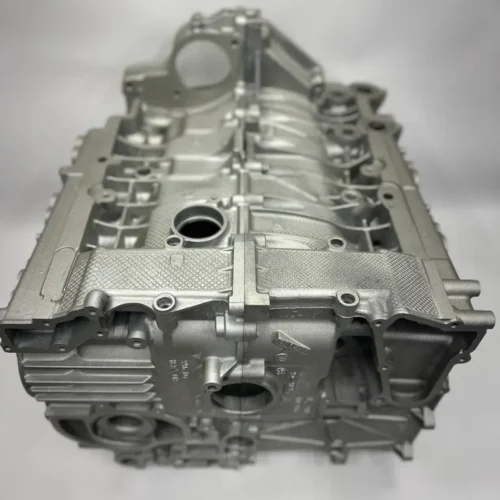
Porsche Engine Block for M96/M97 (2007-2008) 3.4L
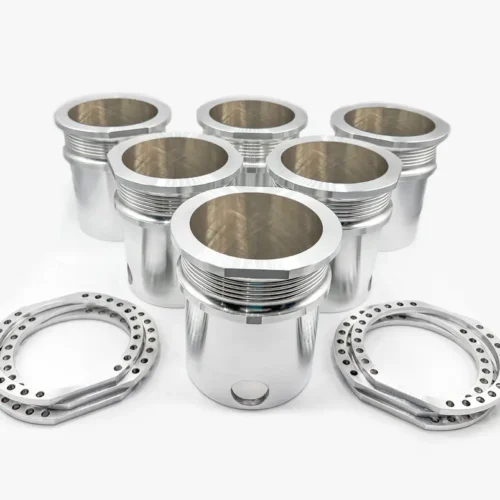
Porsche 997 M96 Engine Nikasil Cylinder Liners Conversion Kit: 3.8L to 4.1L
Porsche Engine Block for M96/M97 (2004-2006) 3.2L
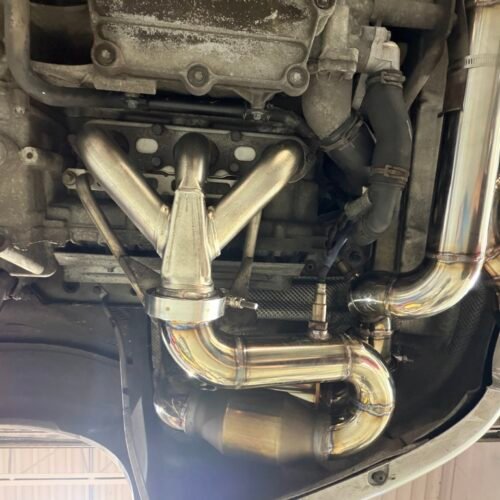
Custom Porsche Exhaust for 996, 997, Boxster and Cayman
Reviews
There are no reviews yet.