Porsche M96/M97 Evolution Engine Rebuild: Track-Ready & Street-Refined
Call For Estimate
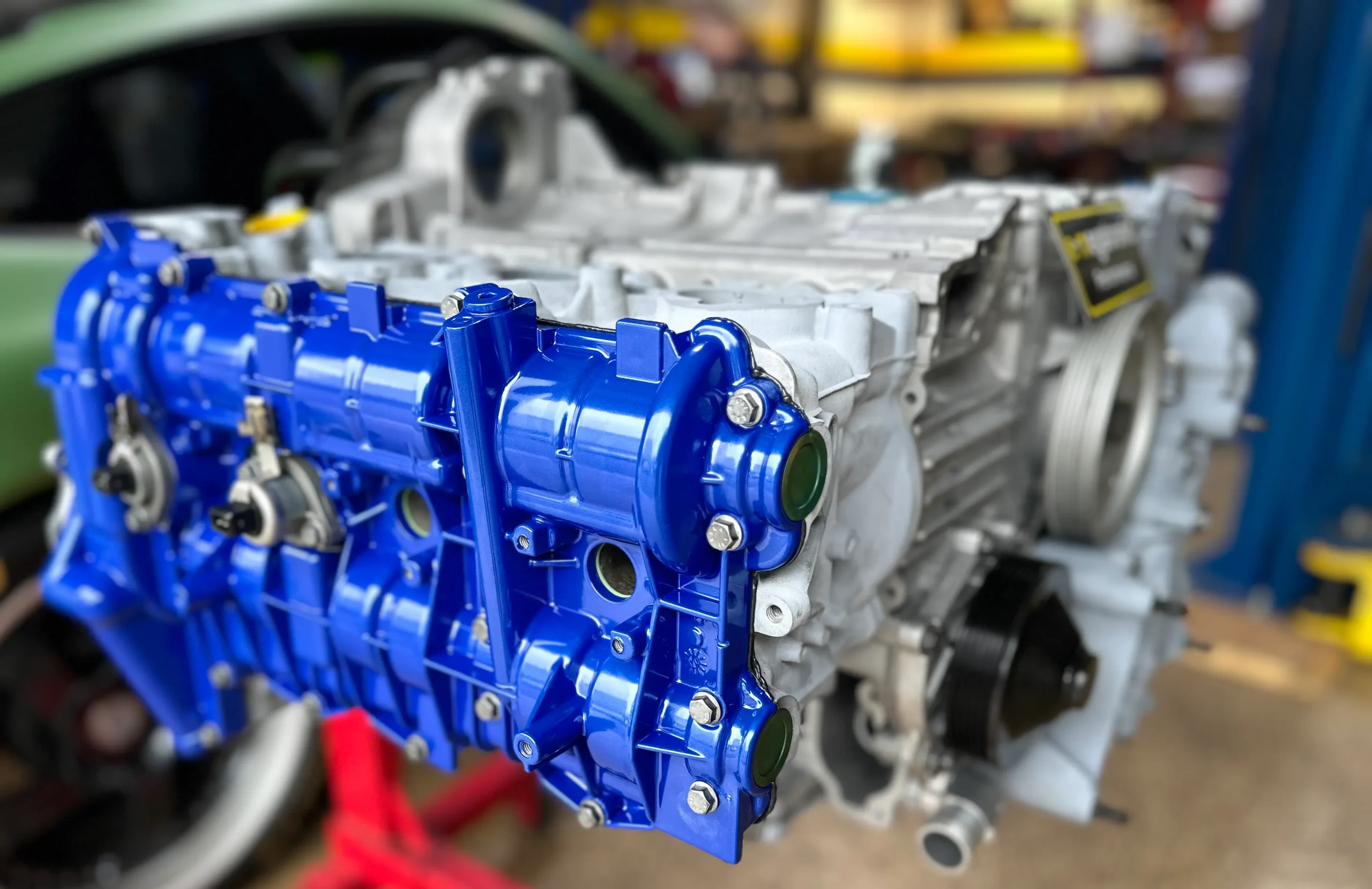
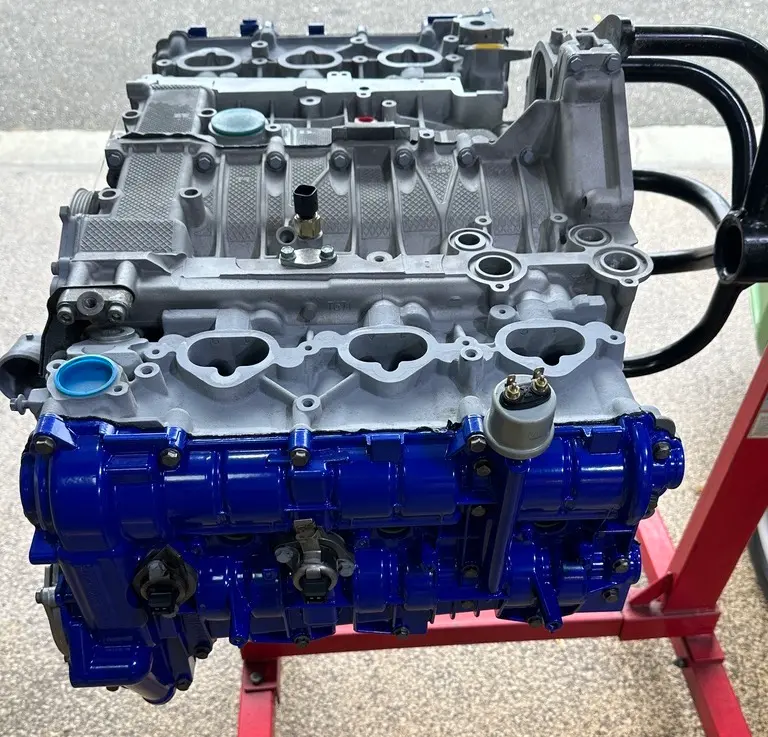
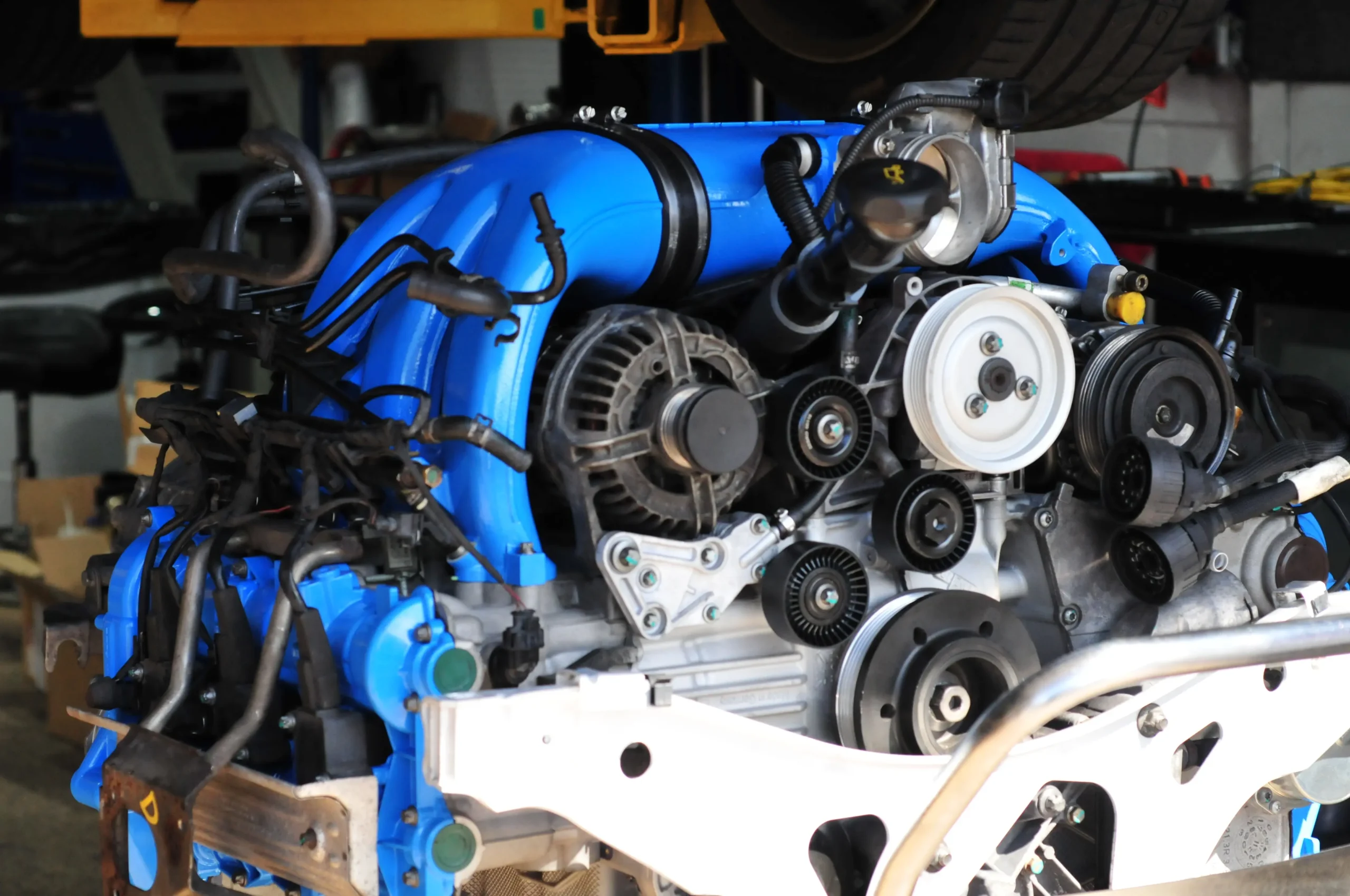
Elevate your Porsche M96 or M97 experience with an engine built to exceed factory standards. This isn’t just a rebuild; it is a comprehensive re-engineering of the flat-six power plant, designed for the enthusiast who demands 100% reliability on the track without sacrificing the soul of a daily driver.

(203) 332 7244 Call Us
Description
The Porsche M96 and M97 flat six engine powered the 986 Boxster, 987 Boxster and Cayman, 996 Carrera, and 997.1 Carrera between 1997 and 2008. It replaced the air cooled architecture with a water cooled, closed deck adjacent design that introduced new failure points the earlier engines never had.
Emegatronic rebuilds this engine to correct its known weaknesses at the source, not just replace worn parts with factory equivalents. The result is an engine that holds up to sustained track use while keeping the daily drivability the platform was built around.
What Is The M96 M97 Engine And Why Does It Need A Different Rebuild Approach
The M96 designation covers Porsche’s first water cooled flat six, produced from 1997 through 2004. The M97 designation covers the revised version introduced in 2005 with variable valve timing on the intake side and minor casting updates.
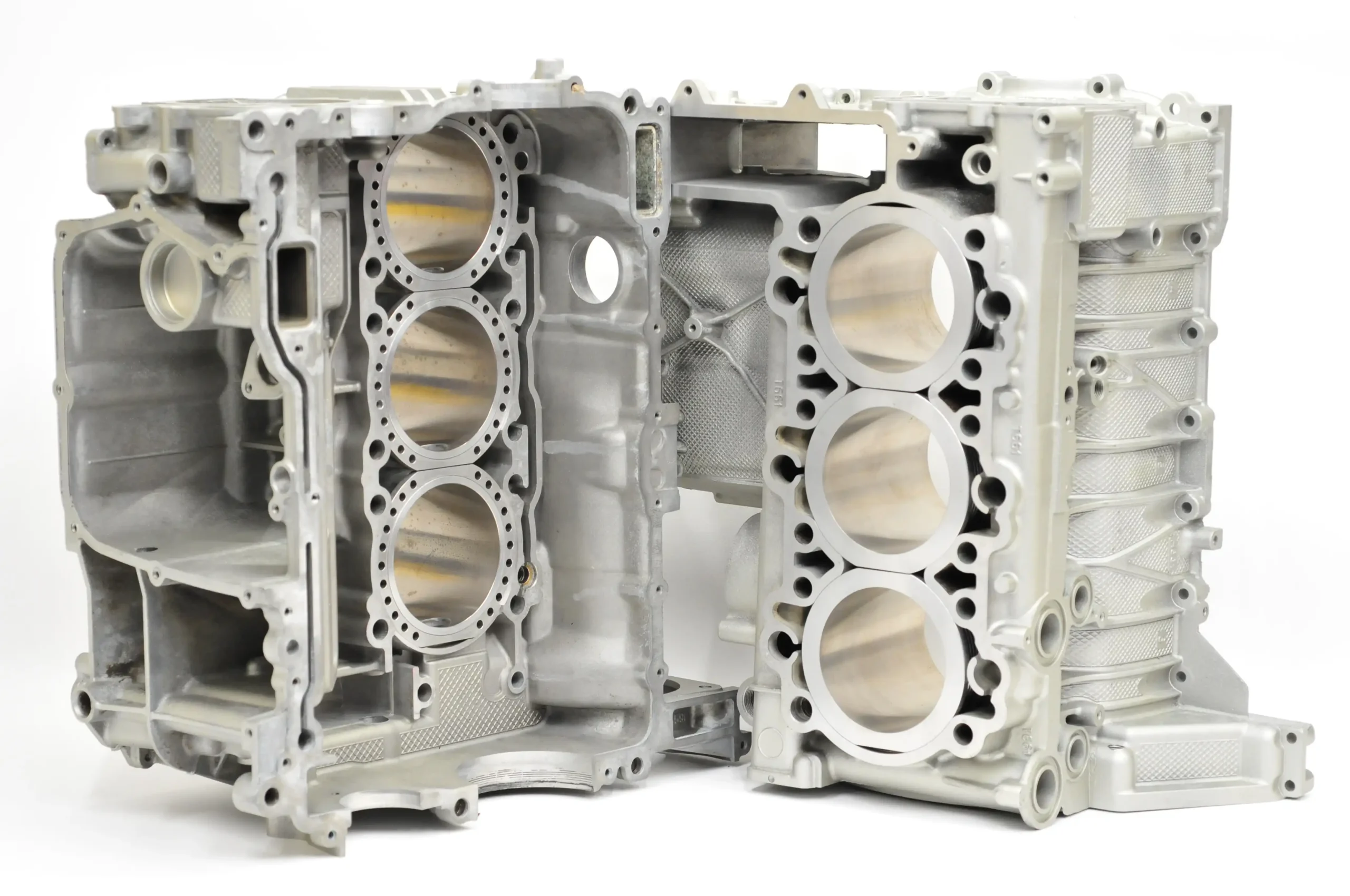
Both engines share the same architecture: an open deck aluminum crankcase, cast in Lokasil or Alusil cylinder liners, and a single intermediate shaft driving the camshafts off the crankshaft nose.
That architecture is why a straightforward parts swap does not solve the engine’s long term reliability problem. The intermediate shaft bearing, the open deck cylinder walls, and the crankcase casting all age in ways a factory spec replacement simply reproduces. A rebuild that skips these structural weak points typically fails again within a similar mileage window.
Which Porsche Models And Years Use The M96 Or M97 Flat Six Engine
| Engine Code | Displacement | Model | Chassis | Production Years |
| M96/00 | 3.4L | 911 Carrera | 996.1 | 1997 to 2001 |
| M96/03 | 3.6L | 911 Carrera | 996.2 | 2002 to 2004 |
| M97/01 | 3.6L | 911 Carrera | 997.1 | 2005 to 2008 |
| M97/21 | 3.8L | 911 Carrera S | 997.1 | 2005 to 2008 |
| M96/20 | 2.5L to 2.7L | Boxster | 986 | 1997 to 2004 |
| M96/21 | 3.2L | Boxster S | 986 | 2000 to 2004 |
| M97/20 | 2.7L to 2.9L | Boxster, Cayman | 987 | 2005 to 2008 |
| M97/24 | 3.4L | Boxster S, Cayman S | 987 | 2005 to 2008 |
What Causes Early Failure In The M96 And M97 Engine
Owners searching for this rebuild usually already know a short list of documented failure points. Fixing all of them in one build, instead of one at a time as they appear, is the real value of a full evolution rebuild.
Intermediate Shaft Bearing Failure
The intermediate shaft, or IMS, rides on a bearing lubricated by splash oiling rather than a pressurized feed. Engines built between 2000 and 2004 used a smaller single row bearing with a documented higher failure rate than the dual row bearing fitted from 1997 to 1999.
When the bearing collapses, the timing chains lose tension. The engine typically suffers valve to piston contact soon after.
Rear Main Seal And Case Half Weeping
The two piece crankcase design means the case halves meet at a vertical seam running the length of the block. Age and heat cycling shrink the factory sealant over time.
This produces the classic weeping pattern along the seam and around the rear main seal. Owners often mistake it for a simple seal replacement job.
Bore Scoring On Lokasil And Alusil Cylinders
Factory M96 and M97 blocks use cylinder liners cast directly into the aluminum crankcase, not pressed in steel sleeves. Cold starts, extended idle time, and a lean fuel trim can cause the piston skirt to score the liner surface.
This scoring contaminates the oil with metal and causes a permanent loss of compression in the affected cylinder.
Cylinder Head Cracking On Early D Chunk Castings
The earliest 1999 model year blocks carry a raised casting mark commonly called the D chunk. These blocks show a higher rate of case cracking near the head stud bosses.
Engines with this casting mark need closer inspection during teardown before a rebuild scope is finalized.
How Does The Evolution Rebuild Eliminate The Open Deck Weakness
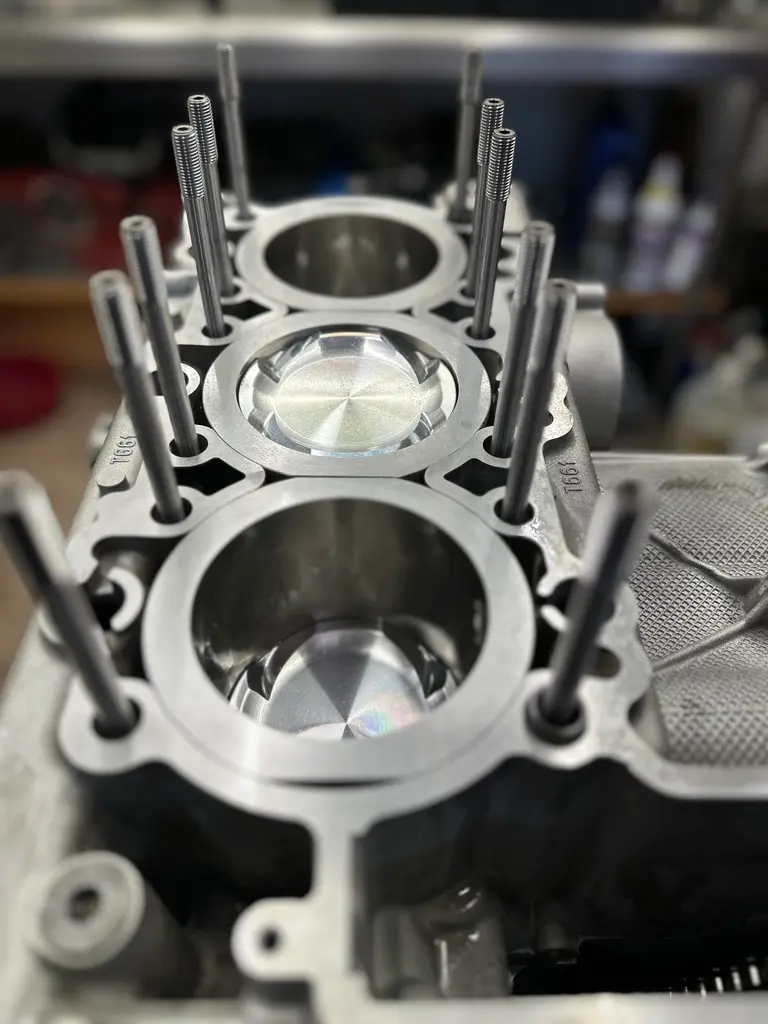
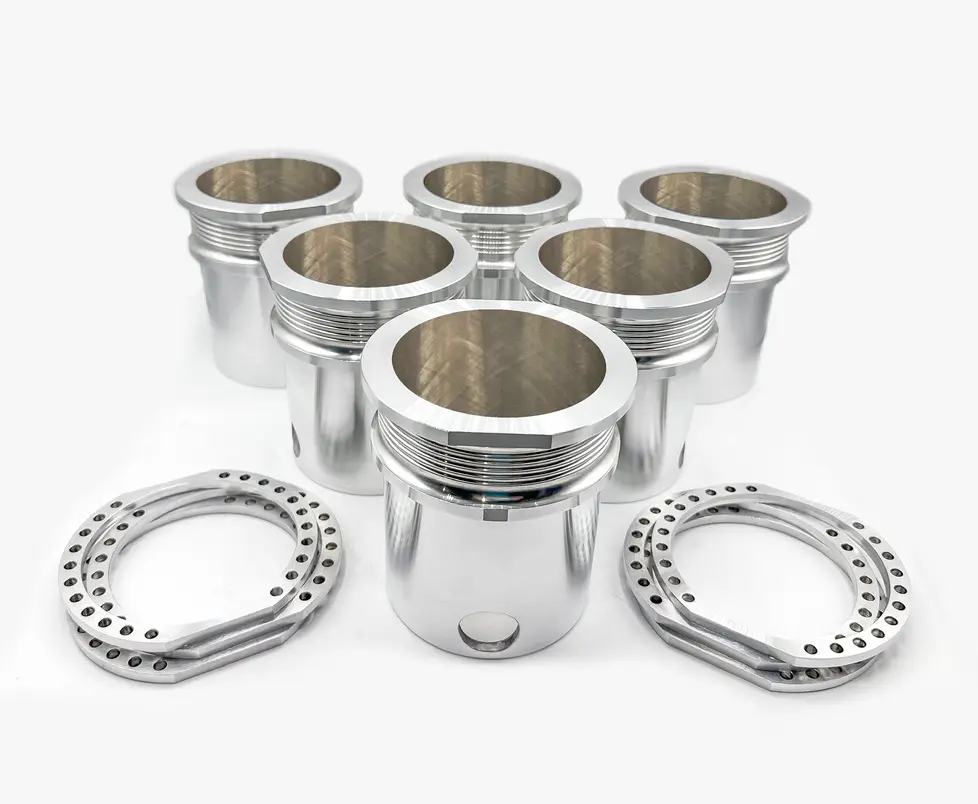
The upgraded rebuild addresses the open deck design directly rather than reinstalling factory geometry. The crankcase is bored and fitted with true closed deck cylinder construction, tying the cylinder walls to the deck surface across their full circumference.
This structure resists cylinder distortion under boost or high compression loading. It also removes the coolant flow path that contributes to head gasket and case sealing failures on the factory design.
What Cylinder And Crankcase Machining Work Does The Rebuild Perform
Every core goes through hot tank cleaning and a full dimensional inspection before any machining decision is made. Crankcase bores are checked against factory tolerance charts, then bored oversize and fitted with nickel silicon carbide plated cylinders in place of the factory Lokasil or Alusil liners.
This plating produces a hard, low friction bore surface that resists the scoring pattern common to the original casting. Case half line boring is checked and corrected where main bearing saddles have moved out of round, and oil galleries are flowed to confirm unrestricted supply to the IMS bearing, rod bearings, and main bearings.
What Cylinder Head And Valvetrain Upgrades Come With The Evolution Rebuild
The cylinder heads are CNC ported to improve intake and exhaust flow through the low to mid lift range, where the engine actually operates during street driving and track sessions. Valve seats are cut to match the ported profile.
New valve springs and retainers go in as standard, with titanium retainers available for engines built to hold a higher redline. Chain guide rails and tensioners are replaced as a complete set rather than inspected and reused.
What Crankshaft And Rotating Assembly Work Is Included
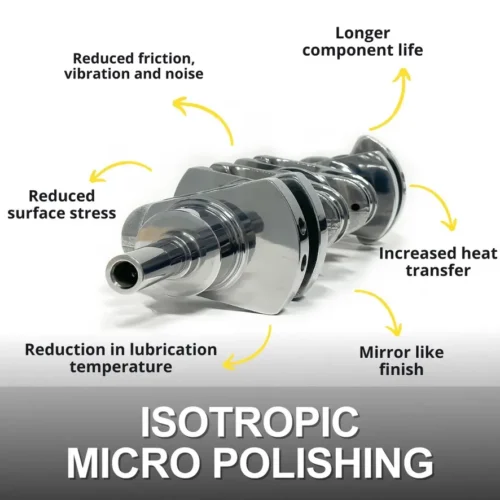
The crankshaft undergoes magnaflux crack detection followed by isotropic superfinishing, a chemically accelerated vibratory process that produces a non directional, mirror smooth journal surface. This finish reduces friction at the bearing interface and lowers operating oil temperature.
The rotating assembly, including the flywheel or flexplate, is dynamically balanced as a matched set rather than component by component.
Which IMS Bearing Solution Does Emegatronic Install
The factory intermediate shaft bearing is removed entirely and replaced with an upgraded single row bearing rated for extended service life under sustained oil temperature and boost. This upgrade happens while the crankcase is already split for machining.
That timing matters because it gives full access to the shaft, something a car still assembled cannot offer.
What Fasteners Bearings And Sealing Components Are Upgraded
Every rebuild uses genuine Porsche internal components for bearings, seals, chain guides, and gaskets rather than aftermarket equivalents. This preserves the factory harmonic behavior of the engine.
Case half sealing uses an upgraded compound rated for higher temperature cycling than the factory sealant, directly addressing the weeping seam pattern. Head studs and main bearing fasteners are upgraded to a higher clamping load rating where the build specification calls for it.
What Testing Happens Before The Engine Ships
Every rebuild goes through cylinder by cylinder leak down and compression testing before final sign off. The engine runs on a test stand cold and then to operating temperature to confirm oil pressure holds steady across the full RPM range.
Chain tension and coolant flow are checked across every cylinder bank. A written break in protocol ships with every engine to protect new rings, bearings, and cam lobes through the first heat cycles.
Technical Specification Reference
| Specification | M96 3.4L | M96 3.6L | M97 3.6L | M97 3.8L |
| Bore | 96 mm | 96 mm | 96 mm | 99 mm |
| Stroke | 78 mm | 82.8 mm | 82.8 mm | 82.8 mm |
| Displacement | 3387 cc | 3596 cc | 3596 cc | 3824 cc |
| Factory Compression Ratio | 11.3:1 | 11.0:1 | 11.3:1 | 11.8:1 |
| Factory Power Output | 296 hp | 315 to 320 hp | 325 hp | 355 hp |
| Factory Redline | 7300 rpm | 7300 rpm | 7300 rpm | 7300 rpm |
| Valvetrain | SOHC, 4 valve | SOHC, 4 valve | SOHC, VarioCam Plus | SOHC, VarioCam Plus |
| Cylinder Bore Material | Lokasil or Alusil | Lokasil or Alusil | Lokasil or Alusil | Lokasil or Alusil |
Figures reflect factory published specification at time of original production and vary by market and model year variant. Rebuilt power output depends on the chosen package and any displacement or compression changes made during the build.
Choose Your Rebuild Scope
| Package | What Is Included | Fits |
| Standard | Full teardown, crankcase and crankshaft machining, new bearings, seals, and gaskets, factory spec valve job, upgraded IMS bearing | Daily drivers and owners prioritizing long term reliability |
| Performance | Everything in Standard plus closed deck conversion, CNC ported heads, isotropic crankshaft finishing, upgraded valvetrain | Spirited road use and regular track days |
| Track | Everything in Performance plus nickel silicon carbide cylinder plating, forged pistons, titanium retainers, dyno verified tune | Dedicated track builds and sustained high RPM service |
Final pricing depends on the condition of the core engine, the parts selection chosen, and any custom scope confirmed after inspection.
What Warranty Comes With The Evolution Rebuild
Every Emegatronic M96 or M97 rebuild carries a 12 month or 12,000 mile warranty, whichever comes first. Coverage includes workmanship and the internal components installed during the build, including the crankcase, crankshaft, cylinder heads, valvetrain, IMS bearing, and case sealing.
The warranty excludes damage from skipped break in procedures, neglected oil or coolant service, and failures traced to ancillary systems outside the rebuild scope. Coverage stays active as long as the break in protocol is followed and the first scheduled oil service is completed on time.
Frequently Asked Questions
Should A Numbers Matching M96 Or M97 Core Be Rebuilt Or Replaced
If the case and crankshaft carry matching numbers tied to the vehicle VIN, rebuilding preserves that traceability. This affects resale and collector value more than the cost difference between rebuilding and sourcing a replacement core. For a driver focused car with no matching numbers history, a healthy replacement core can sometimes return the vehicle to service faster.
Does Every M96 Engine Have The IMS Bearing Problem
No. The dual row bearing fitted from 1997 to 1999 has a documented lower failure rate than the single row bearing used from 2000 to 2004. Every Emegatronic rebuild replaces the factory bearing regardless of the original configuration, since the bearing is not serviceable without splitting the case.
Can The Engine Be Converted To A Larger Displacement During The Rebuild
Yes, within the Performance and Track packages. Since the case is already open for machining, a displacement increase adds minimal redundant labor cost compared to pursuing it as a separate project later.
How Long Does A Full M96 Or M97 Rebuild Take
Turnaround depends on package scope and parts availability. It gets confirmed once the core is on the bench and the machining requirements are known. Standard package builds typically move faster than Track package builds involving custom displacement or forged internals.
What Happens If Case Damage Is Found During Teardown
Case porosity, hairline cracking near the head stud bosses, and IMS bore wear get checked during the initial inspection. If damage exceeds what a rebuild can economically correct, the customer gets contacted with photos and a revised scope before any further machining takes place.
Does The Rebuilt Engine Include A Test Report
Yes. Every rebuild leaves with a build sheet listing measured tolerances, parts installed by part number, and torque specifications used. It also includes leak down and compression test results. This documentation supports resale value, insurance valuation, and future service history.




Related products
M96/M97 Nikasil Liner Conversion Kit: 3.4L to 3.7L
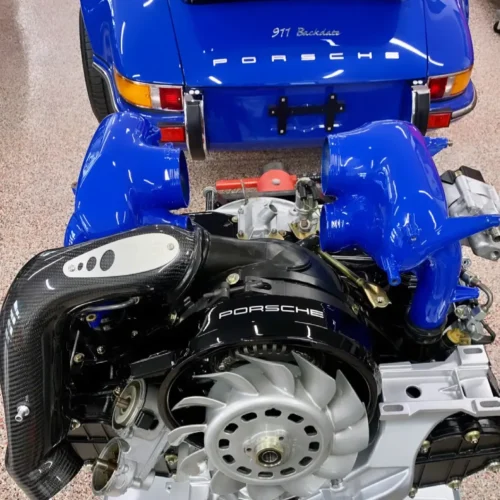
The Ultimate Air-Cooled Resurrection: Porsche 964 Engine Rebuild
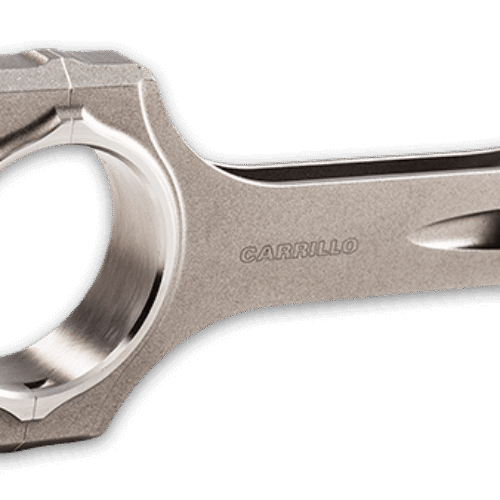
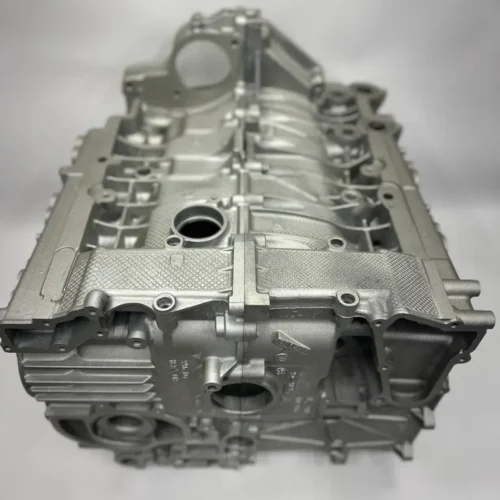
Porsche Engine Block for M96/M97 (1998-2001) 3.4L
Reviews
There are no reviews yet.